Tree health
Tree Disease and Pest Treatment
Treating a sick tree starts with naming the problem. Most decline in yard trees comes from roots, soil and stress rather than a single pest, and a product applied without a diagnosis usually does nothing except delay the real decision.
Call availability varies by area and time of day. Calls are answered by an independent tree service provider.
Can a sick tree be treated?
Often, if the problem is caught while most of the crown is still alive. Insects such as emerald ash borer and scale respond well to treatment, some leaf diseases are cosmetic and need none, and root rots and advanced trunk decay generally cannot be reversed.
- Good odds
- Borers caught early, scale insects, mites, iron deficiency and many foliage diseases.
- Managed, not cured
- Oak wilt, Dutch elm disease and bacterial leaf scorch, where treatment slows spread or protects nearby trees.
- Poor odds
- Root rot with mushrooms at the base, girdling roots that have strangled the trunk, and trees with more than half the crown dead.
Symptoms worth a diagnosis
Thinning from the top down
The upper crown is the farthest point from the roots and shows root and borer damage first.
D-shaped or S-shaped exit holes
Small holes in the bark, sometimes with woodpecker flaking around them, point to wood-boring beetles.
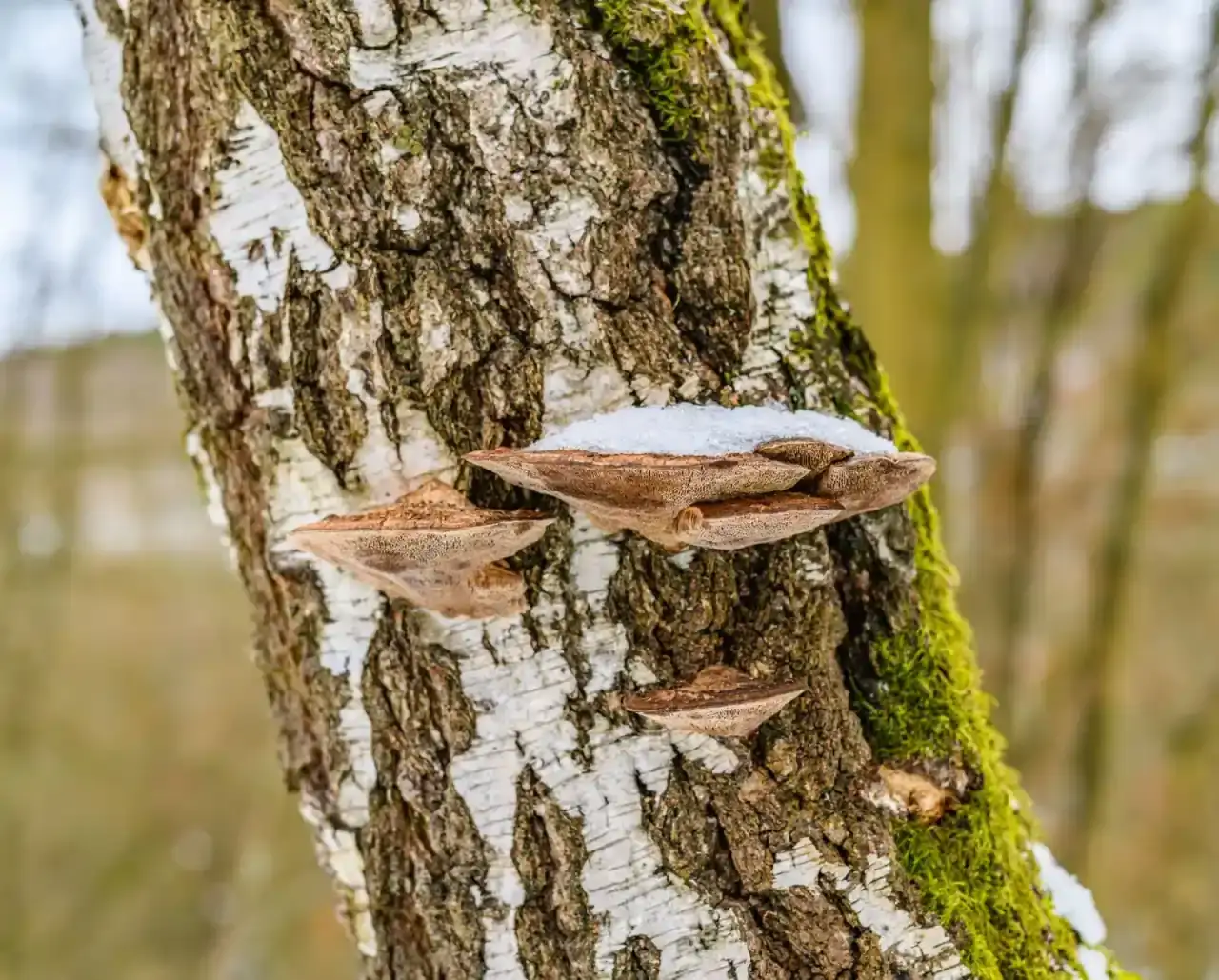
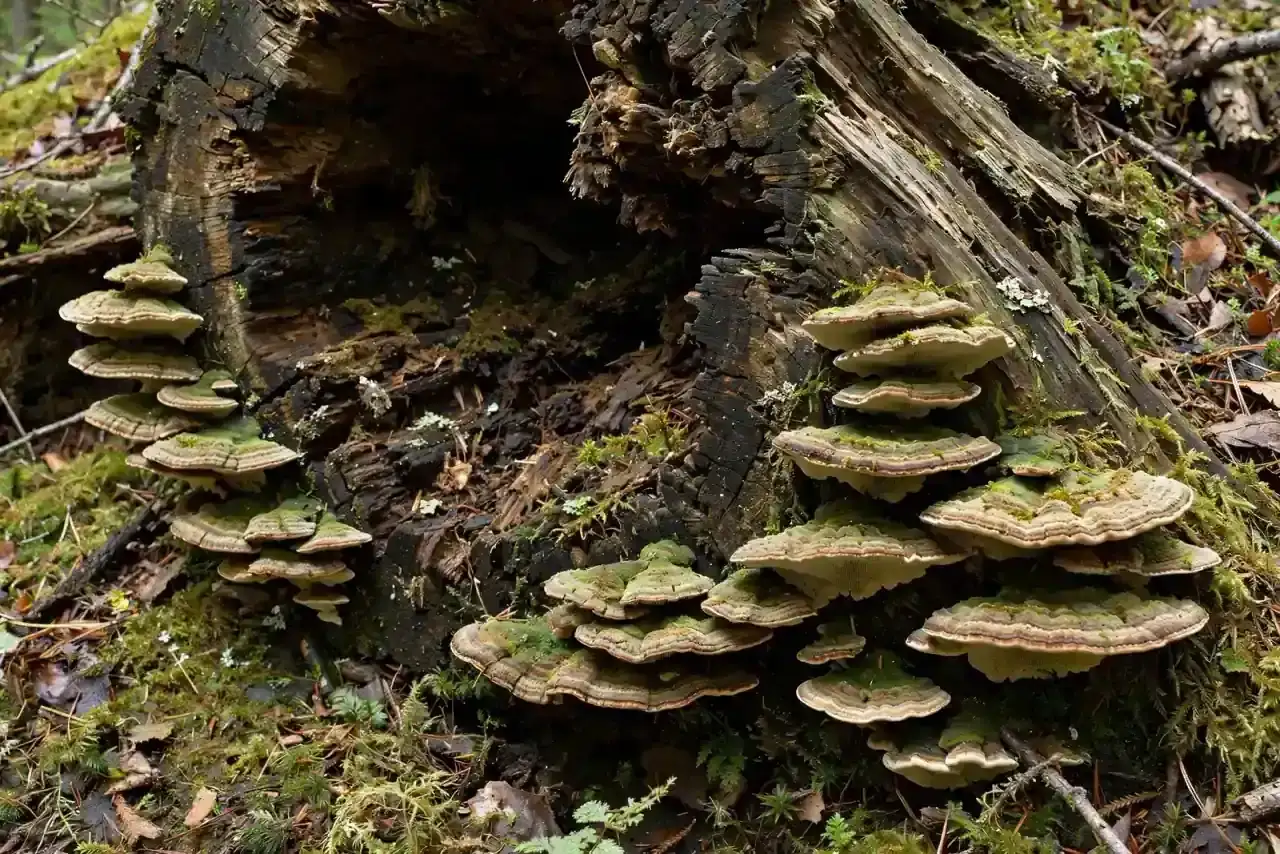
Shelf fungus or mushrooms on the trunk or roots
A fruiting body means decay is already established inside the wood.
Sticky leaves and black sooty mold
Sap-feeding insects such as scale and aphids are excreting honeydew from above.
Leaves yellow between green veins
Often a nutrient uptake problem caused by high soil pH, common with pin oaks and maples.
Sudden wilting in summer
A vascular disease can block water movement and brown a crown within weeks.
How treatments reach the tree
The delivery method matters as much as the product. Each one suits different pests and different sites.
| Method | How it works | Best suited to |
|---|---|---|
| Trunk injection | Product is placed directly into the sapwood through small drilled ports | Borers and vascular diseases on trees near water, gardens or neighbors |
| Soil drench or soil injection | Systemic product is applied at the base and taken up by the roots | Smaller trees and sucking insects, where roots are healthy |
| Basal bark spray | Product is sprayed on the lower trunk and absorbed through the bark | Thin-barked trees and quick treatment of many stems |
| Canopy spray | Foliage is covered directly | Leaf-feeding insects and some leaf diseases, with drift a concern near homes |
| Soil correction | Sulfur, organic matter, mulch or root zone aeration change the growing conditions | Nutrient symptoms, compaction and slow decline |
Pesticide applicators who work for hire must hold a state license. Ask for the license number and the product label before work starts.
What a tree health visit includes
History
When symptoms began, recent construction, grade changes, irrigation, and what has already been sprayed or applied.
Crown and trunk inspection
Dieback pattern, bark condition, exit holes, cankers and fungal growth are recorded.
Root collar check
Soil and mulch are pulled back at the base to look for girdling roots, rot and buried flare.
Samples if needed
Twigs, leaves or soil can go to a university extension diagnostic lab when the cause is not obvious.
A written plan
Product, method, timing and the number of years treatment is likely to be needed, plus what result would mean stopping.
Treat now or plan removal
Treatment makes sense when
- Less than about a third of the crown is affected
- The tree is a species worth keeping on the site
- The pest has a proven treatment
- The trunk and roots are sound
- You are willing to repeat treatment for years if required
Removal makes more sense when
- Dieback covers half the crown or more
- Decay is present in the trunk or main roots
- The species is short-lived or invasive locally
- The tree stands over a house or drive and is becoming brittle
- Treatment would only delay an inevitable failure
Dead and dying ash in particular become brittle quickly and are dangerous to climb. If treatment is not going ahead, plan dead tree removal before the wood deteriorates.
Problems treated most often in US yards
- Emerald ash borer
- Kills nearly every untreated ash it reaches. See emerald ash borer treatment.
- Oak wilt
- A fungal disease spread through root grafts and sap beetles. See oak wilt management.
- Southern pine beetle and bark beetles
- Attack drought-stressed pines. Prevention and quick removal of infested trees matter more than spraying.
- Scale insects
- Crape myrtle bark scale, magnolia scale and others. Systemic soil treatments work well.
- Anthracnose
- A wet-spring leaf disease on sycamore, ash and maple that looks alarming and rarely needs treatment.
- Iron chlorosis
- Yellow leaves on pin oak, red maple and river birch in alkaline soil. See tree fertilization and soil care.
Why stressed trees attract pests
Healthy trees defend themselves. They push sap and resin into wounds, wall off decay and produce chemicals that deter insects. A tree that has lost roots to a trench, been buried under fill, or gone through two dry summers has less energy for any of that.
Many borers and bark beetles are drawn to stressed trees by the chemicals those trees release. That is why an infestation is often a symptom of a deeper problem rather than its cause, and why the plan should include watering, mulching or soil work along with any product.
The same logic explains why trees near new construction often decline two to five years after the builders leave. The roots were cut or compacted, and the pests arrive later. A construction tree protection plan prevents most of it.
Tree treatment questions
Do tree injections hurt the tree?
Each injection makes a small wound. Healthy trees close them, which is why treatment intervals are spaced out and why injection is avoided on trees that are already badly declined.
Can I treat a tree myself?
Some soil drench products are sold to homeowners for small trees. Large trees, injections and restricted-use products need a licensed applicator, and dosing depends on trunk diameter.
How do I get a tree problem diagnosed?
A certified arborist can inspect it on site, and most state university extension services run plant diagnostic labs that accept samples by mail.
Will fertilizer cure a sick tree?
Rarely. Fertilizer helps only where a specific nutrient is missing. Applied to a stressed tree it can push soft growth that attracts more insects.
Talk to a tree disease and pest treatment provider
Call to be connected with an independent tree service company near you.
(844) 955-1716Call availability varies by area and time of day
Limbwright is a referral service. Your call goes to an independent tree service company that sets its own schedule and terms. Ask for proof of insurance and a written scope before work starts. How this works
Call now
Talk to a tree service provider in your area. Have the tree's location and what it is near ready.
(844) 955-1716Call nowCall availability varies by area and time of day