
Tree health · Oak wilt
Oak Wilt Management
Oak wilt is a fungal disease that blocks the water-conducting tissue of oaks. Red oaks can die within weeks of the first symptoms. Live oaks die more slowly and pass the disease to their neighbors through connected roots. Managing it is about stopping spread more than curing the tree that has it.
Call availability varies by area and time of day. Calls are answered by an independent tree service provider.
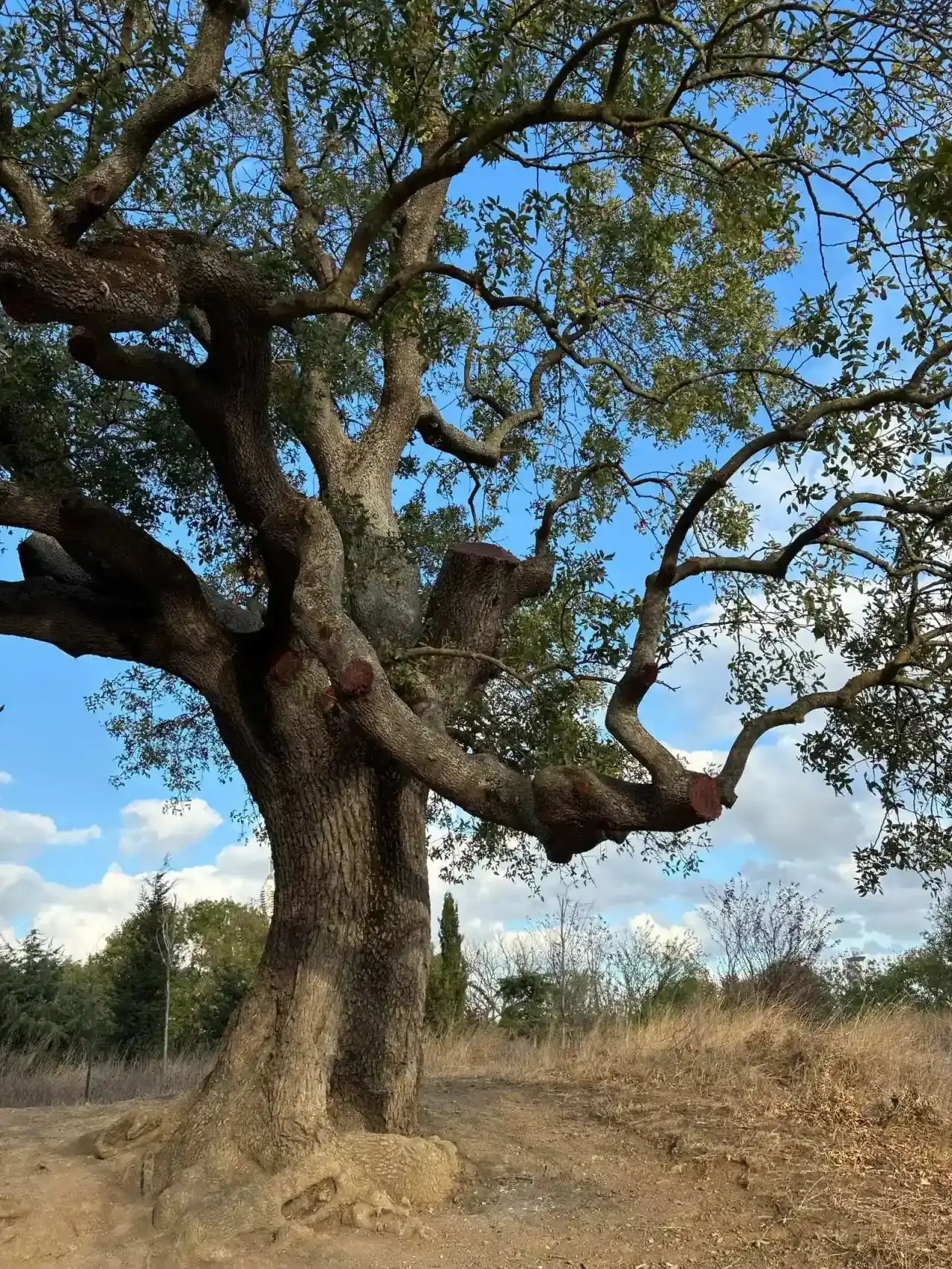
How oak wilt moves between trees
The fungus, Bretziella fagacearum, travels two ways. Below ground, it passes through root grafts, where the roots of neighboring oaks of the same group have grown together. This is how one infected live oak in Central Texas can lead to an expanding circle of dead trees over several years.
Above ground, infected red oaks can form spore mats under their bark the spring after they die. Small sap-feeding beetles visit the mats, pick up spores, and carry them to fresh wounds on healthy oaks within a few days. Pruning cuts, storm breaks and construction damage made in spring are the main entry points.
This is why oak wilt management focuses on breaking root connections, avoiding wounds in the high-risk months, and handling the wood of infected red oaks so it cannot produce mats.

Oak wilt symptoms by oak group
Red oaks: leaves wilting and browning from the edges in early summer
The whole crown often goes within a few weeks, and leaves drop while still partly green.
Live oaks: veinal necrosis
Leaves with yellow or brown veins against a green blade, a pattern specific to oak wilt.
Live oaks: dieback spreading through a group
Neighboring trees declining one after another in a widening circle.
White oaks: scattered branch dieback
White oaks resist oak wilt and usually show it only in part of the crown.
Cracks in the bark of a dead red oak
Can indicate a spore mat underneath pushing the bark apart.
Pruning seasons and wound paint
The Texas A&M Forest Service advises against pruning oaks from February through June, when beetles and spore mats are most active, and recommends painting every oak wound immediately, any time of year. Minnesota and Wisconsin advise avoiding pruning from April through July, with highest risk in spring.
Painting fresh cuts on oaks is the one common exception to the general advice against wound dressings. A thin coat of latex paint or pruning paint covers the wound before beetles can reach it.
Some cities and counties in oak wilt areas, including Austin, require certain practices when oaks are pruned or removed.
Management methods
| Method | What it does | When it is used |
|---|---|---|
| Root graft trenching | A trench about 4 to 5 feet deep, cut around the infection center, severs root connections | To stop underground spread to healthy oaks nearby |
| Fungicide injection | Propiconazole is injected into the root flare | To protect high-value oaks near an infection, or slow symptoms in live oaks |
| Removal of infected red oaks | Takes away the source of spore mats | Red oaks that have died or are wilting |
| Wood handling | Infected wood is chipped, burned where allowed, or split and sealed under plastic | Any oak wood from a confirmed infection |
| Pruning timing and paint | Prevents new beetle-borne infections | Every oak, every year |
Responding to a suspected case
Confirm it
Symptoms resemble drought and other diseases. A lab test of a branch sample, often through state forestry or extension, confirms oak wilt.
Map the trees
Infected, at-risk and healthy oaks are marked, along with likely root connections.
Install trenching
Where there are many connected oaks, a trench barrier is cut beyond the edge of the infection.
Inject selected trees
Valued oaks just inside or outside the barrier may be treated.
Handle the dead wood
Dead red oaks are removed and their wood managed so it cannot form spore mats.
Red oaks and white oaks
Red oak group
- Pointed leaf lobes with bristle tips
- Includes Texas red oak, northern red and pin oak
- Die quickly, often in one season
- Can produce spore mats
White oak group
- Rounded leaf lobes
- Includes white oak and bur oak
- Resistant; often survive with some dieback
- Rarely produce spore mats
Live oaks sit between the two. They do not produce many spore mats but spread the disease aggressively through their connected roots.
Firewood from oak wilt trees
- Do not move it
- Moving infected oak firewood is a major way oak wilt reaches new areas.
- Season it properly
- Wood that is split and dried thoroughly, usually for a year, is unlikely to produce spore mats.
- Cover it
- Texas guidance is to cover freshly cut red oak wood with clear plastic sealed to the ground until dry.
- Know the source
- Buy seasoned firewood locally, and avoid unseasoned red oak in spring.
Oak wilt questions
Can a tree with oak wilt be saved?
Red oaks almost never. Live oaks and white oaks can survive, and fungicide injection improves the odds for live oaks treated before heavy crown loss.
Where is oak wilt found?
Across much of the eastern half of the country, with the worst losses in Central Texas and the Upper Midwest. It has not been confirmed in the western states.
Does trenching damage my yard?
A trenching machine cuts a narrow, deep line through the ground, then the trench is backfilled. Lawns and beds along the line are disturbed but recover.
Is oak wilt the same as sudden oak death?
No. Sudden oak death is a different disease, caused by a water mold, and is found in coastal California and southwestern Oregon.
Talk to a oak wilt management provider
Call to be connected with an independent tree service company near you.
(844) 955-1716Call availability varies by area and time of day
Limbwright is a referral service. Your call goes to an independent tree service company that sets its own schedule and terms. Ask for proof of insurance and a written scope before work starts. How this works
Call now
Talk to a tree service provider in your area. Have the tree's location and what it is near ready.
(844) 955-1716Call nowCall availability varies by area and time of day