
Reports · Construction
Construction Tree Protection
Most trees damaged by construction do not die during the build. They decline two to five years later, after their roots were cut, compacted or buried. A protection plan prevents that by keeping machines, fill and trenches out of the area where the roots live.
Call availability varies by area and time of day. Calls are answered by an independent tree service provider.
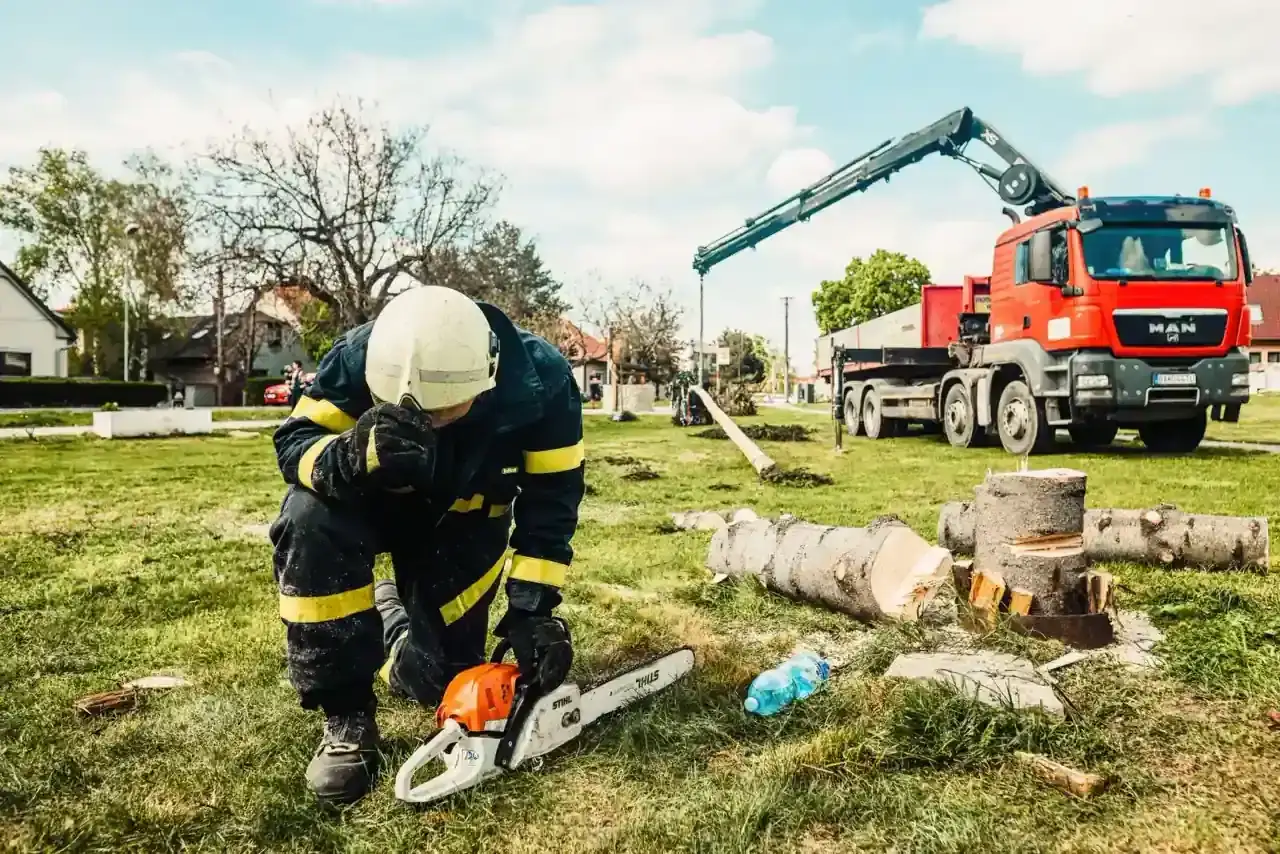
Why trees die years after construction
Most of a tree's absorbing roots are in the top 12 to 18 inches of soil and spread well beyond the branches. A single trench for a water line can cut a large share of them. Heavy equipment driving over the root zone squeezes air out of the soil, and a few inches of fill can suffocate roots that need oxygen.
The tree responds slowly. Leaves may look normal for a year or two while it lives on stored energy. Then the crown thins, dead branches appear, and pests attack the weakened tree. By then the cause is long forgotten, and the tree has to come down.
Prevention is far easier than repair. Damage that has already occurred can sometimes be eased with soil care, mulch and water, but cut roots cannot be replaced.
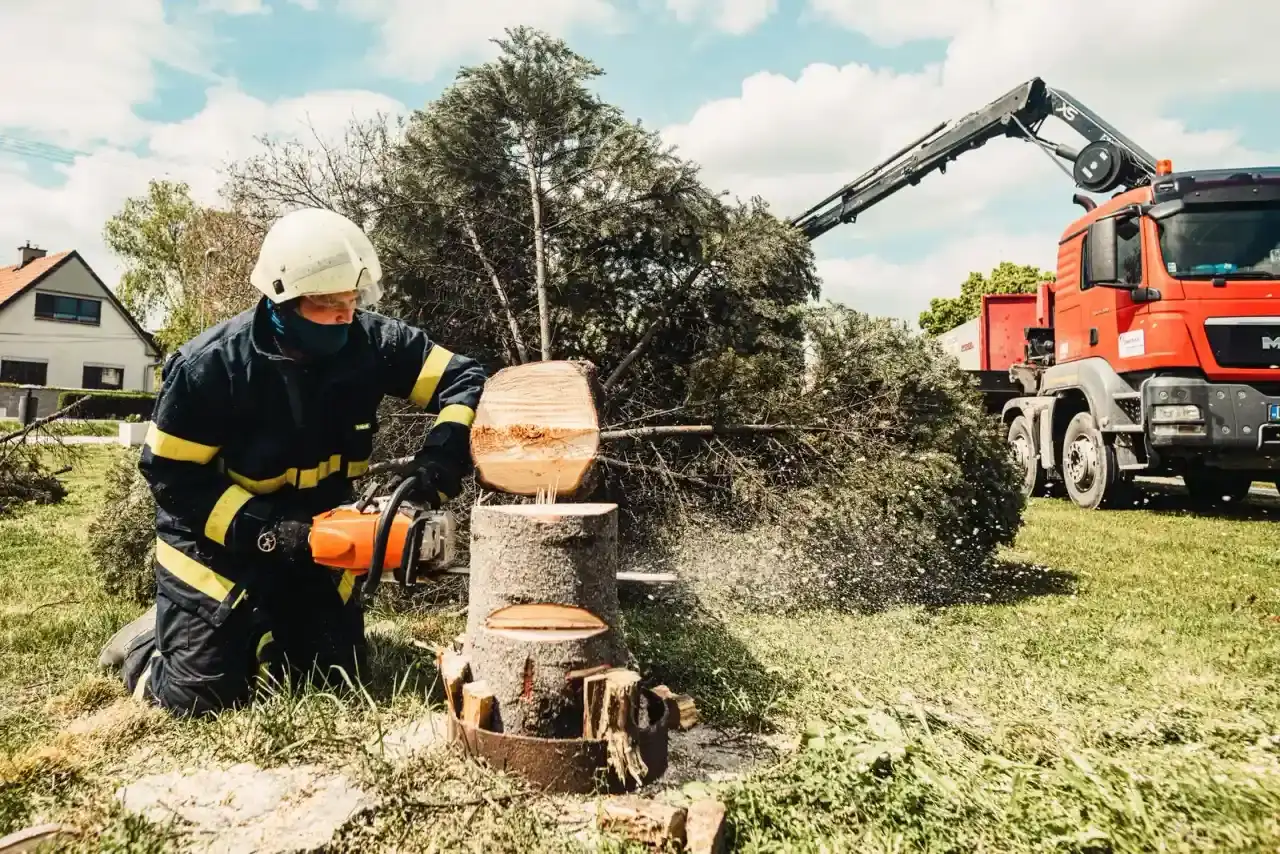
How large an area should be protected?
A common guide is a radius of 1 to 1.5 feet for every inch of trunk diameter. A tree with a 20-inch trunk would have a protection zone about 20 to 30 feet out from the trunk. Many cities define their own critical root zone, often at the drip line or a set multiple of trunk diameter.
- Inside the zone
- No digging, parking, material storage, fill or washing out of concrete trucks.
- At the edge
- Sturdy fencing marks the line and stays up for the whole project.
- Exceptions
- Any work inside the zone is planned with an arborist and done by hand or air tool.
Elements of a protection plan
Inventory and select
Decide which trees can be kept given the building footprint.
Set the zones
Mark protection zones on the site plan.
Install fencing
Chain-link or other rigid fencing around each zone, with signs, before any work starts.
Plan utilities
Route lines around zones, or bore under roots rather than trenching.
Monitor
An arborist checks the site at key stages and after any incident.
Construction damage and how to prevent it
| Damage | How it happens | Prevention |
|---|---|---|
| Root cutting | Trenches for utilities, footings and irrigation | Route around, bore under, or root prune cleanly by hand |
| Compaction | Vehicles and equipment driving over roots | Fencing, or mulch and plywood mats where access is unavoidable |
| Grade change | Fill added or soil scraped away | Retaining walls, tree wells or keeping grades unchanged |
| Trunk wounds | Equipment striking bark | Fencing and trunk wrapping with boards |
| Chemical injury | Concrete washout, fuel and paint | Designated washout areas away from trees |
Trenching or boring under roots
Open trench
- Fast for long runs
- Cuts every root in its path
- Can sever a large share of a tree's roots
Directional boring
- Passes under roots without cutting them
- Slower and needs specialized equipment
- Preferred inside protection zones
Boring at 2 feet or more below grade misses most roots. It is often required by city tree protection rules.
Signs a tree was damaged during building
Thinning crown a year or two later
Root loss shows up gradually.
Dead branches on one side
Matching the side of a trench or driveway.
Soil piled around the trunk
Fill burying the root flare.
Bark scraped from the trunk
Equipment strikes.
City tree protection rules
- Austin
- Protects heritage and protected trees during development and sets critical root zone rules. See Austin.
- Atlanta
- Requires tree protection plans on many permits. See Atlanta.
- Portland, Oregon
- Title 11 sets tree protection standards for development.
- Many other cities
- Require protection fencing on permitted projects near protected trees.
Construction tree protection questions
Can a tree survive having its roots cut on one side?
Often, if less than a quarter to a third of the root zone is affected and the tree is healthy. Losing more than that greatly raises the risk of decline or failure.
Does mulch protect roots from equipment?
A thick layer of wood chips, with plywood or mats on top, spreads loads and reduces compaction where access through a root zone is unavoidable.
When should the arborist be involved?
During design, before demolition, so that the building and utilities can be placed to save the best trees.
Can damaged trees be helped after construction?
Soil decompaction, mulch, watering and removing fill from the flare can help, but cannot replace cut roots.
Talk to a construction tree protection provider
Call to be connected with an independent tree service company near you.
(844) 955-1716Call availability varies by area and time of day
Limbwright is a referral service. Your call goes to an independent tree service company that sets its own schedule and terms. Ask for proof of insurance and a written scope before work starts. How this works
Call now
Talk to a tree service provider in your area. Have the tree's location and what it is near ready.
(844) 955-1716Call nowCall availability varies by area and time of day