
Palms
Palm Tree Services
A palm is not a tree in the botanical sense. It grows from a single bud at the top of the trunk, cannot repair wounds the way an oak can, and does not get thicker as it ages. Every rule of palm care follows from that.
Call availability varies by area and time of day. Calls are answered by an independent tree service provider.
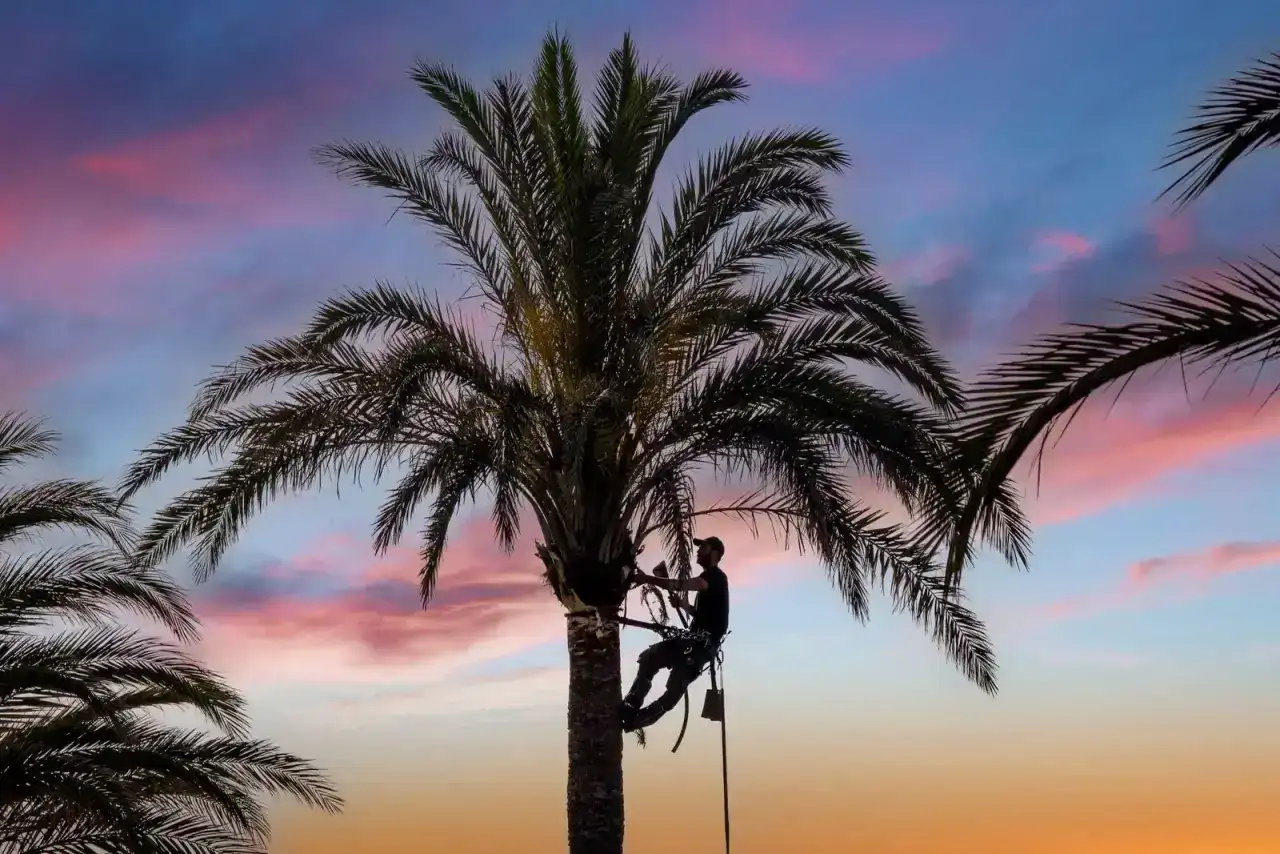
What makes palm work different?
There is only one growing point, the heart at the top of the trunk. Damage it and the palm dies. Cuts into the trunk never heal, the trunk cannot be shortened, and over-removing green fronds starves the palm rather than strengthening it.
- No topping
- A palm cut below its crown is a dead palm. Height can only be managed by removal.
- Fronds are its food
- Green fronds feed the palm and hold nutrients it moves into new growth.
- No climbing spikes on keepers
- Spikes leave permanent holes in the trunk, which open the way to disease. They are only used on palms being removed.
Palms you will see in US yards
- Queen palm
- Common in Florida and Southern California. Feathery fronds, heavy seed crops and prone to manganese deficiency.
- Mexican fan palm
- Very tall and thin. Old fronds form a dry skirt that is a fire and rodent concern.
- Canary Island date palm
- Massive and slow-growing. Susceptible to Fusarium wilt, which can spread on pruning tools.
- Sabal (cabbage) palm
- Native to the Southeast and very wind-tolerant. Often transplanted, and the state tree of Florida and South Carolina.
- Royal palm
- Smooth gray trunk and self-cleaning fronds. Shed fronds are heavy enough to damage cars.
- Coconut palm
- South Florida and Hawaii. Falling nuts make removing them a routine safety task.
Palm jobs and what each involves
| Job | What is done | Usual frequency |
|---|---|---|
| Frond trimming | Dead and hanging fronds removed, green fronds kept | Once or twice a year |
| Seed pod and flower stalk removal | Fruit stalks cut before they drop seed and fruit | With each trim |
| Trunk skinning | Old frond bases cut flush for a smooth trunk, on species that allow it | Every few years |
| Coconut removal | Nuts cut down before they fall | Several times a year |
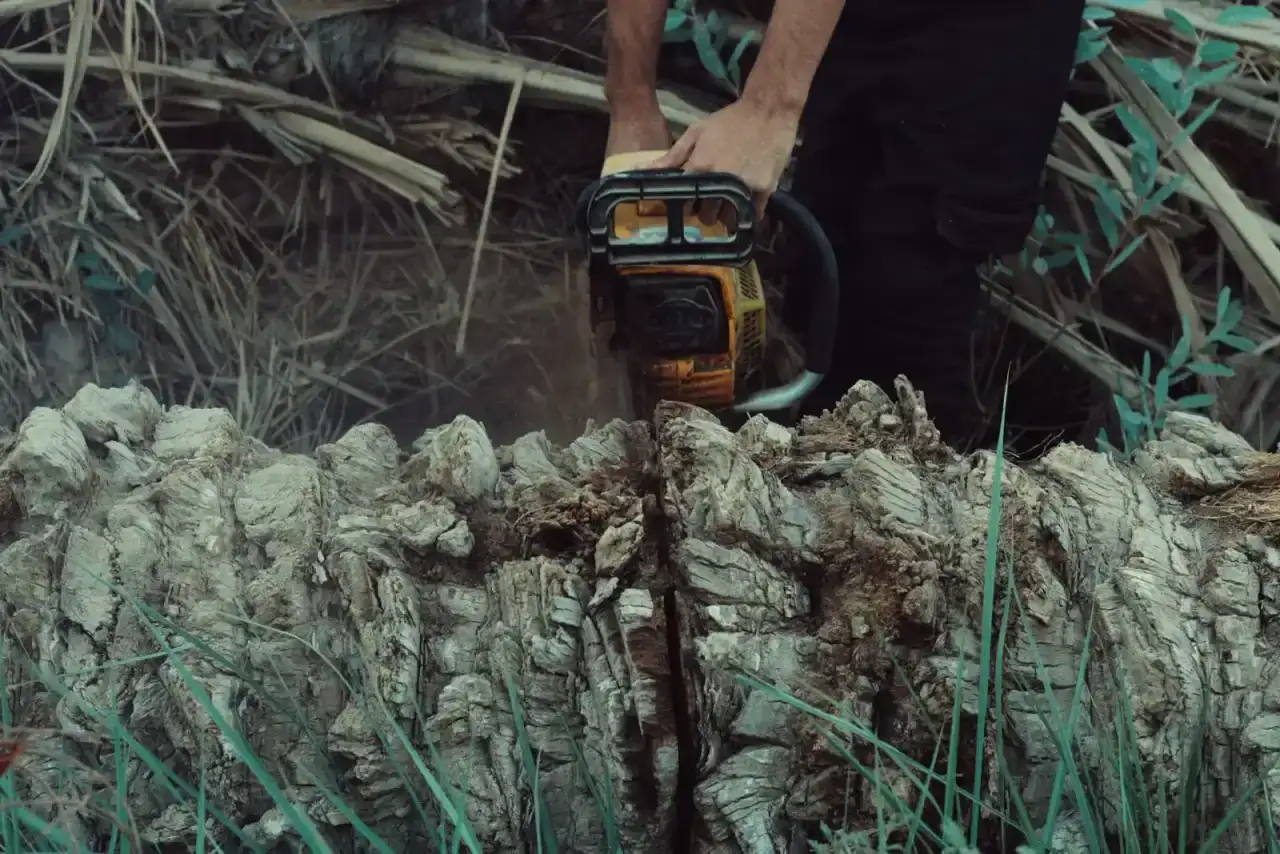
| Palm removal | The crown is taken off and the trunk sectioned down | Once |
| Nutrient treatment | Palm-specific fertilizer with potassium and magnesium | Several times a year in growing season |
How a palm crew works
Access
Short palms are trimmed from the ground or a ladder. Tall ones need a bucket lift or a climber using a belt and ropes.
Clean tools between palms
On date palms especially, saws are disinfected or blades swapped to avoid spreading Fusarium wilt.
Remove dead, then hanging fronds
Fronds hanging below horizontal may be removed. Those above stay.
Clear stalks and fruit
Seed and flower stalks are cut at the base.
Haul fronds
Palm fronds are fibrous and many chippers struggle with them, so they are often hauled whole.
Signs a palm is in trouble
New spear leaf collapses or pulls out
The bud may be rotting. This is often fatal.
Crown shrinking each year
Fewer fronds and a narrowing trunk top, called pencil-pointing, show long-term starvation or root trouble.
Frizzled, stunted new fronds
Typical of manganese deficiency, common in queen palms on alkaline soil.
Yellow-orange older fronds with green centers
Potassium deficiency, the most common palm nutrient problem in Florida.
Fronds dying on one side of the crown first
A classic Fusarium wilt pattern on Canary Island date and queen palms.
Keep trimming or take it down
Keep the palm
- Crown full and evenly green
- Trunk solid without cavities
- Height still workable for safe trimming
- No disease pattern in the fronds
Remove the palm
- The bud has died or the spear leaf has rotted
- Lethal bronzing or Fusarium wilt confirmed
- Trunk has a deep wound or cavity
- Leaning over a roof or pool after a storm
A palm with a dead bud cannot be saved. See palm tree removal for how tall palms are taken down safely.
Palms in hurricanes
Many palms handle hurricane wind better than broadleaf trees. Their flexible trunks bend instead of snapping, and fronds strip away, reducing the sail. Sabal palms are known for standing through storms that topple oaks.
Overtrimmed palms are the exception. When a palm is cut back to a few upright fronds, the bud loses the protection of the surrounding leaves, and the trunk narrows where the palm was starved. That narrow section is where wind snaps it.
For storm preparation, remove coconuts and loose dead fronds that would become projectiles, and leave the green crown alone. See hurricane tree cleanup for what to do after a storm.
Palm service questions
How many fronds should be left on a palm?
Every green frond that is at or above horizontal. A guide often used is the 9 o'clock to 3 o'clock line: fronds below it can go, fronds above it stay.
Can a tall palm be made shorter?
No. Palms grow only from the top. Removing the crown kills the palm, so height can only be dealt with by removing it.
Are palm fronds safe to put in a chipper?
Many chippers jam on palm fibers. Crews usually haul fronds whole or use machinery built for them.
Do palms need fertilizer?
In sandy and alkaline soils, often yes, using a palm-specific product with slow-release potassium and magnesium. Lawn fertilizer near palms can make deficiencies worse.
Talk to a palm tree services provider
Call to be connected with an independent tree service company near you.
(844) 955-1716Call availability varies by area and time of day
Limbwright is a referral service. Your call goes to an independent tree service company that sets its own schedule and terms. Ask for proof of insurance and a written scope before work starts. How this works
Call now
Talk to a tree service provider in your area. Have the tree's location and what it is near ready.
(844) 955-1716Call nowCall availability varies by area and time of day