
Tree health · Root collar
Root Collar Excavation
A healthy tree widens where it meets the ground, with the first roots visible at the surface. When that flare is buried by soil, fill or mulch, bark stays wet, decay can start and roots may wrap around the trunk. Root collar excavation removes the soil to find and fix the problem.
Call availability varies by area and time of day. Calls are answered by an independent tree service provider.
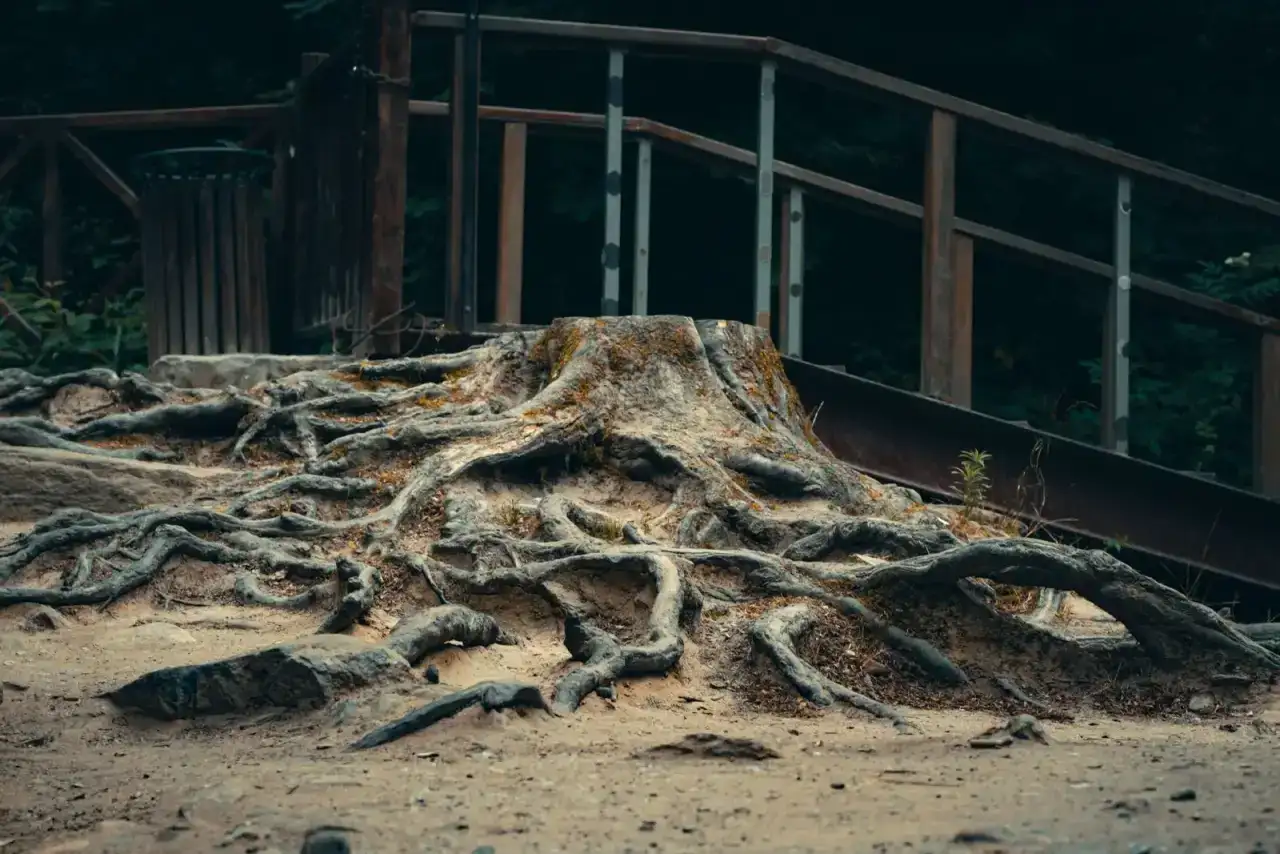
Signs of a buried root collar
Trunk goes straight into the ground like a pole
No visible flare means soil or mulch is covering it.
Volcano mulch
A mound of mulch piled up against the trunk.
One side of the crown thinning
A girdling root may be choking the roots on that side.
A flattened side to the trunk
Often where a root presses against it below ground.
Early fall color
Leaves turning weeks before neighboring trees of the same species.
Why does a buried flare matter?
Trunk bark is not built to be kept wet. Buried bark can decay, and it encourages roots to grow around the trunk instead of outward. Over years those girdling roots tighten as both grow, squeezing the trunk and cutting off water and sugar flow.
- Bark decay
- Fungi and bacteria attack bark kept moist by soil or mulch.
- Girdling roots
- Roots that circle the trunk compress it, often on one side.
- Weak anchorage
- Trees with circling roots can fail at the base in storms.
How the excavation is done
Pull back mulch
Any mulch is removed by hand from around the trunk.
Air excavate
A supersonic air tool blows soil away from the flare without damaging bark or roots.
Inspect
The arborist looks for the true flare, girdling roots, decay and wounds.
Correct roots
Small girdling roots are cut cleanly. Large ones may be removed in stages.
Leave the flare exposed
The soil is graded away and mulch is reapplied thinly, a few inches back from the trunk.
How root collars get buried
- Planted too deep
- Nursery trees often arrive with extra soil on top of the root ball.
- Volcano mulching
- Mulch added every year and piled against the trunk.
- Grade changes
- Fill brought in during construction or landscaping.
- Raised beds
- Edging and soil built up around existing trees.
Trees most prone to girdling roots
| Tree | Risk | Notes |
|---|---|---|
| Maples, especially Norway and red maple | High | Commonly develop girdling roots in nursery containers |
| Lindens | High | Frequently planted too deep |
| Pin oak | Moderate | Shallow roots near the surface |
| Honeylocust | Moderate | Fast-growing roots |
| Most conifers | Moderate | Container-grown stock can circle |
Cut the girdling root or leave it
Cut
- Root is smaller than about a third of the trunk diameter
- It has not yet grown into the trunk
- The tree is otherwise healthy
Leave or stage
- Root is large and fused to the trunk
- Cutting would remove too much root system
- The tree is already badly declined
Removing a large girdling root can do as much harm as leaving it. An arborist weighs how much of the root system it supports.
Preventing the problem
Planting at the right depth prevents most root collar problems. The top of the flare should sit at or slightly above the surrounding soil. Excess soil in nursery root balls should be scraped away before planting. See tree planting.
Mulch should look like a flat donut, not a volcano: wide, two to four inches deep, and pulled a few inches away from the bark. Renewing mulch means raking the old layer and adding just enough to keep that depth, not adding on top every year.
Root collar questions
Can I expose a buried root flare myself?
Gently, with a hand trowel and a brush, removing soil a little at a time. Air excavation is faster and safer for bark on large trees.
How deep can a flare be buried?
It is common to find flares 6 to 12 inches below grade on nursery-planted trees.
Will exposing the flare shock the tree?
Not usually. The bark at the flare is designed for air exposure.
Can girdling roots kill a tree?
Yes, over many years. They are a common cause of slow decline in mature maples and lindens.
Does soil care help after excavation?
Often. Tree fertilization and soil care covers mulching and decompaction, and tree root removal covers roots of removed trees.
Talk to a root collar excavation provider
Call to be connected with an independent tree service company near you.
(844) 955-1716Call availability varies by area and time of day
Limbwright is a referral service. Your call goes to an independent tree service company that sets its own schedule and terms. Ask for proof of insurance and a written scope before work starts. How this works
Call now
Talk to a tree service provider in your area. Have the tree's location and what it is near ready.
(844) 955-1716Call nowCall availability varies by area and time of day