
Tree health · Soil
Tree Fertilization and Soil Care
Forest trees are never fertilized. They live on decaying leaves and loose soil full of fungi. A yard tree often stands in compacted fill under turf that is raked clean every fall. Soil care tries to give it back some of that forest floor, and fertilizer is only one part of it.
Call availability varies by area and time of day. Calls are answered by an independent tree service provider.
Do trees need fertilizer?
Most established yard trees do not, especially in lawns that are already fertilized. Fertilizer helps when a soil test or leaf symptoms show a specific deficiency. For most declining trees, the bigger gains come from mulch, reduced compaction and watering in drought.
- Test first
- A soil test from a state extension lab shows pH, organic matter and nutrient levels.
- Treat the cause
- Nutrient symptoms are often caused by soil pH, not a lack of the nutrient itself.
- Avoid overfeeding
- Excess nitrogen pushes soft growth that attracts aphids and other pests.
What usually holds yard trees back
- Compaction
- Construction traffic and foot traffic squeeze out the pore space roots need for air and water.
- High pH
- In alkaline soils, iron and manganese are present but locked up, so leaves yellow.
- Turf competition
- Grass roots take water and nutrients from the top few inches where most tree roots live.
- Buried root flare
- Fill or deep mulch around the trunk base starves roots of oxygen.
- Drought
- Fertilizer cannot be taken up from dry soil and can damage roots.
Common deficiency symptoms
| Symptom | Likely cause | Commonly seen on |
|---|---|---|
| Yellow leaves with green veins | Iron deficiency from high pH | Pin oak, red maple, river birch, sweetgum |
| Yellow, frizzled new palm fronds | Manganese deficiency | Queen palm, royal palm |
| Pale green leaves throughout | Low nitrogen | Trees in sandy soil without fertilized turf |
| Orange-speckled older palm fronds | Potassium deficiency | Most palms in Florida |
| Scorched leaf edges in summer | Usually drought or root damage, not nutrients | Maples, dogwoods, beech |
A soil care program
Soil and leaf testing
Samples from the root zone go to a lab. Results guide what, if anything, should be applied.
Loosen compacted soil
An air excavation tool loosens soil in radial lines or across the root zone without cutting roots.
Add organic matter
Compost is worked into the loosened soil.
Mulch wide
Two to four inches of wood chip mulch out to as far as practical, kept off the trunk.
Apply nutrients if needed
Slow-release products at rates matched to the test, often by soil injection.
Surface application or deep root feeding
Surface application
- Granular product spread over mulch or soil
- Most tree roots are in the top foot anyway
- Simple and effective with irrigation or rain
Liquid soil injection
- Product injected under pressure a few inches deep
- Reaches below turf
- Common in lawns where surface products would feed the grass
Despite the name, deep root fertilization works because most absorbing roots are shallow. Injection deeper than about a foot can miss them.
When not to fertilize
During drought
Fertilizer salts in dry soil can injure roots.
Right after root damage
Construction or trenching wounds need time to regenerate first.
On newly planted trees
The first year is about root growth. Fertilizer pushes leaves instead.
Without a reason
If the tree is healthy and the lawn is fed, it is already getting nitrogen.
Why mulch does so much
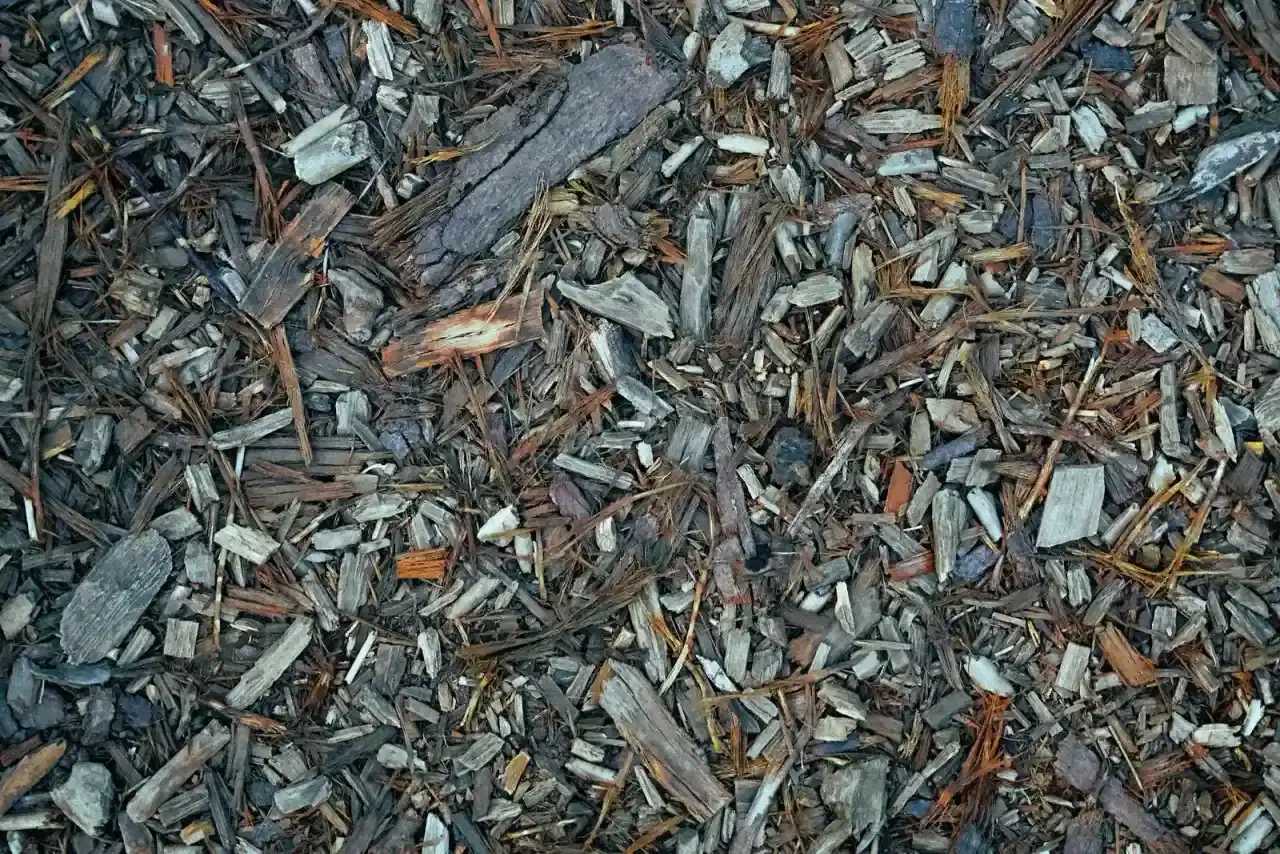
A wide ring of wood chip mulch mimics a forest floor. It keeps the soil surface cool and moist, feeds soil fungi and earthworms as it breaks down, and removes turf competition from the area it covers. Studies of urban trees consistently find better root growth under mulch than under grass.
Arborist chips, the mixed wood and leaves from tree work, are among the best mulches available, and tree companies often have them to spare. The key mistakes are piling mulch against the trunk and spreading it too deep, more than about four inches.
For a tree with a buried flare or girdling roots, see root collar excavation.
Tree fertilization questions
When is the best time to fertilize trees?
Spring or early fall, when soil is moist and roots are active. Avoid late summer for trees in cold climates, since new growth may not harden before frost.
Will lawn fertilizer hurt my trees?
Standard lawn fertilizer usually does not. Weed and feed products with certain herbicides, such as dicamba, can injure trees whose roots reach under the lawn.
How do I fix iron chlorosis in a pin oak?
Trunk injection of iron gives relief for a season or two. Lowering soil pH with sulfur works slowly. Severely affected trees are sometimes replaced with species suited to alkaline soil.
Does fertilizer help a tree recover from storm damage?
Not directly. Watering, mulching and proper pruning of broken limbs do more.
What if the trunk base is buried?
Fix that first. See root collar excavation, and for surface roots in lawns, tree root removal.
Talk to a tree fertilization and soil care provider
Call to be connected with an independent tree service company near you.
(844) 955-1716Call availability varies by area and time of day
Limbwright is a referral service. Your call goes to an independent tree service company that sets its own schedule and terms. Ask for proof of insurance and a written scope before work starts. How this works
Call now
Talk to a tree service provider in your area. Have the tree's location and what it is near ready.
(844) 955-1716Call nowCall availability varies by area and time of day