
Pruning · Deadwood
Deadwood Removal
Every mature tree carries some dead branches. Small ones fall harmlessly, but a dead limb thicker than a wrist above a roof, driveway or patio can do real damage. Deadwooding, also called crown cleaning, removes them on purpose before gravity does.
Call availability varies by area and time of day. Calls are answered by an independent tree service provider.
How to spot dead branches
Summer is the easiest time to see them. In winter, look closely at buds and bark.
No leaves in summer
A bare branch in a green crown stands out from the ground.
Bark peeling or missing
Dead wood loses its bark in patches within a year or two.
No buds in winter
Live twigs carry plump buds. Dead ones are smooth or shriveled.
Brittle twigs
They snap cleanly instead of bending.
Fungus on a limb
Shelf fungi or crusty growths on a branch mean decay is underway.
Color change
Dead branches often weather to gray or silver.
Which dead branches need removing?
Any that hang over a target: a roof, car, path, play area or street. Arborists generally focus on dead wood more than about one to two inches in diameter. Smaller twigs fall without doing harm and are often left.
- Over structures and parking
- Highest priority, and worth doing on a regular schedule.
- Over lawns and beds
- Lower priority, but large dead limbs still hurt people.
- In woodland edges
- Dead limbs and standing snags can be left for birds and insects where nothing is below.
How climbers remove deadwood
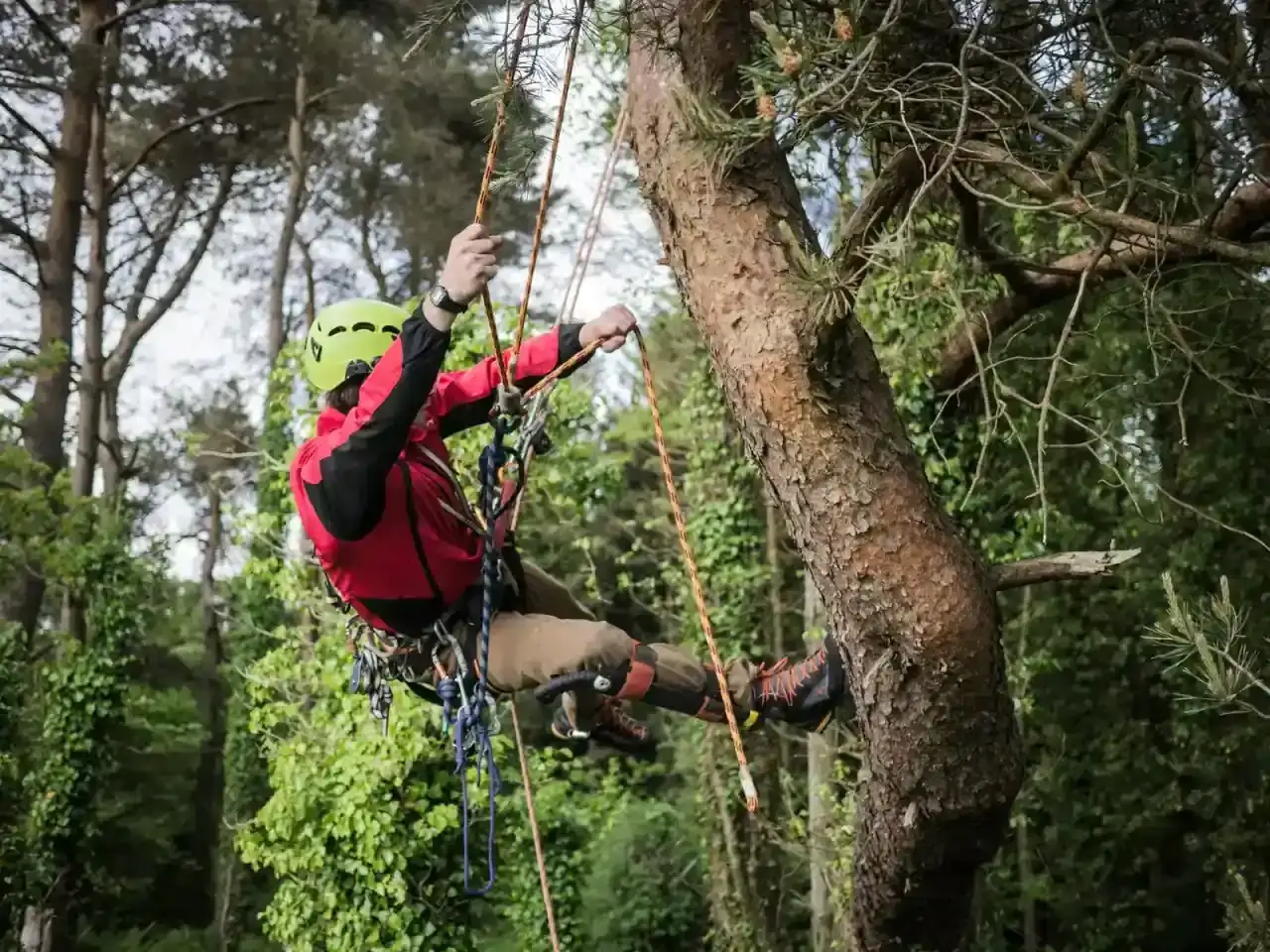
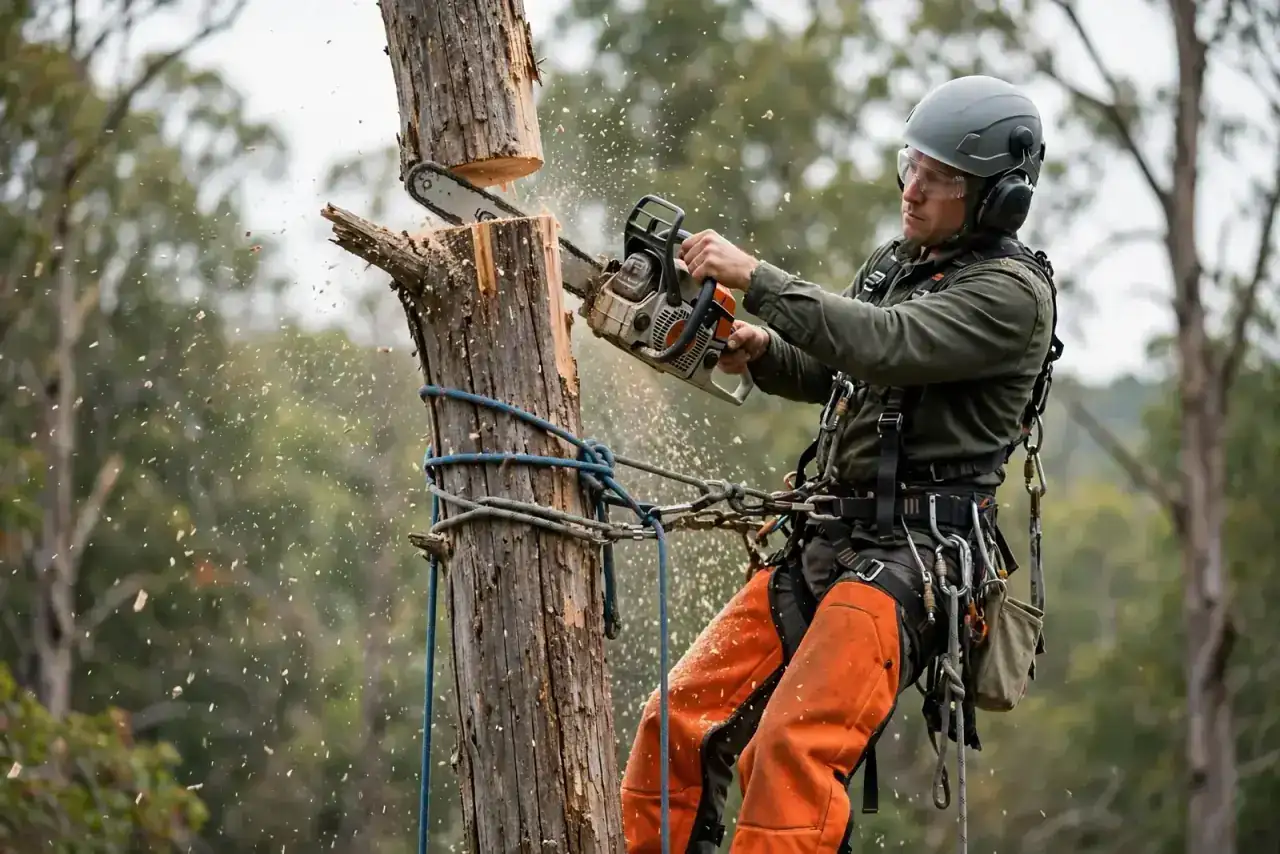
Map it from the ground
The crew spots dead limbs and plans a route through the crown before anyone climbs.
Anchor to live wood
Climbers tie into sound, living branches, never into dead ones, which can snap under load.
Cut at the collar
Dead branches are cut just outside the ring of living tissue at their base, which lets the tree seal the spot.
Lower the heavy pieces
Large dead limbs over roofs are roped down rather than dropped.
Pick up small debris
Twigs and bark are raked from the lawn and gutters.
Why dead limbs fall without warning
A dead branch dries, cracks and decays at its base while still looking solid from below. It can break in a light breeze, after rain soaks it and adds weight, or on a completely calm day. Arborists call large dead limbs hanging in a crown widowmakers, and the name is earned.
Some trees also drop healthy-looking limbs on hot, still summer afternoons. This summer branch drop is most often reported in oaks, elms, eucalyptus and London planes, and it is not fully understood. Long horizontal limbs over seating areas deserve a look for that reason too.
Dead wood is also a sign worth reading. A few dead branches scattered through the crown are normal. Dieback concentrated at the top, or increasing year after year, can point to root problems, borers or disease. See tree disease and pest treatment.
How often to check for deadwood
| Tree | Inspection interval | Notes |
|---|---|---|
| Mature shade tree over a house | Every one to two years | And after every major storm |
| Street trees | Every few years | Often handled by the city on a cycle |
| Young trees | During structural pruning | Dead wood is rare and usually small |
| Old or declining trees | Yearly | Note whether dieback is spreading |
| Trees over play areas and parking | Yearly | Low tolerance for any falling wood |
Deadwooding or removing the tree
Deadwooding is enough
- Dead branches are scattered, not concentrated
- Most of the crown is green and full
- No major decay in the trunk or roots
- Dieback is stable year to year
The tree may need to go
- Half or more of the crown is dead
- Decay or fungus at the trunk or roots
- Dieback spreading each year
- A pest such as emerald ash borer is confirmed
When dieback keeps climbing, the tree is probably declining as a whole. See dead tree removal.
Trees that build up deadwood
- Oaks
- Shed shaded interior branches as they age, often large ones.
- Pines
- Lower branches die naturally as the crown rises.
- Silver maple
- Fast growth, weak wood and frequent breakage.
- Ash
- Upper crown dieback is an early sign of emerald ash borer.
- Honeylocust
- Twig and branch cankers cause scattered dead wood.
Deadwood questions
Can dead branches be removed any time of year?
Yes. Removing dead wood does not stress the tree, so it is the one pruning job with no bad season.
Is deadwood a sign the tree is dying?
Not by itself. A little dead wood is normal in any mature tree. Increasing dieback, especially at the top, is the concern.
Can I remove dead branches myself?
Small ones you can reach from the ground. Anything that needs climbing, a ladder with a saw or a chainsaw overhead belongs to a crew.
Do dead branches attract insects?
Some beetles and fungi colonize dead wood, though most of them do not move on to healthy branches.
Can deadwood removal be combined with other work?
Yes. It is often done with crown raising, crown thinning or fruit tree pruning in the same visit.
Talk to a deadwood removal provider
Call to be connected with an independent tree service company near you.
(844) 955-1716Call availability varies by area and time of day
Limbwright is a referral service. Your call goes to an independent tree service company that sets its own schedule and terms. Ask for proof of insurance and a written scope before work starts. How this works
Call now
Talk to a tree service provider in your area. Have the tree's location and what it is near ready.
(844) 955-1716Call nowCall availability varies by area and time of day