Pruning · Thinning
Crown Thinning
Crown thinning takes out a portion of small live branches spread evenly through the canopy, mostly toward the outer edge. Done well, nobody can tell from the street that the tree was pruned. It lets more light reach the lawn below and lowers the density of the crown without changing its size or outline.
Call availability varies by area and time of day. Calls are answered by an independent tree service provider.
How much of a tree can be thinned?
For a mature tree, usually 10 to 15 percent of the live foliage in one session and rarely more than 25 percent. Young vigorous trees tolerate a little more. Old trees, drought-stressed trees and trees with decay should be thinned lightly or not at all, because every leaf removed is food the tree no longer makes.
- Light
- Five to ten percent, mostly crossing, rubbing and crowded branches. Suits most mature shade trees.
- Moderate
- Up to about 15 percent, spread evenly through the crown, for a dense tree shading out a lawn.
- Upper limit
- Twenty-five percent, on young, healthy trees only, and never repeated the following year.
Thinning versus lion-tailing
Correct thinning
- Branches taken from the outer two thirds of the crown
- Interior foliage kept along each limb
- Small cuts, usually under two inches across
- The crown keeps its natural outline
- The tree looks fuller than expected afterward
Lion-tailing
- Interior branches stripped from the limbs
- Foliage left only in tufts at the tips
- Weight and leverage pushed out to the ends
- Bark exposed to sunscald
- Limbs more likely to break in the next storm
If a crew offers to clean out the inside of a tree, ask them to describe the cuts. Interior foliage is not clutter. It feeds the limb, thickens it where it joins the trunk and damps its movement in wind.
Branches chosen in a thinning
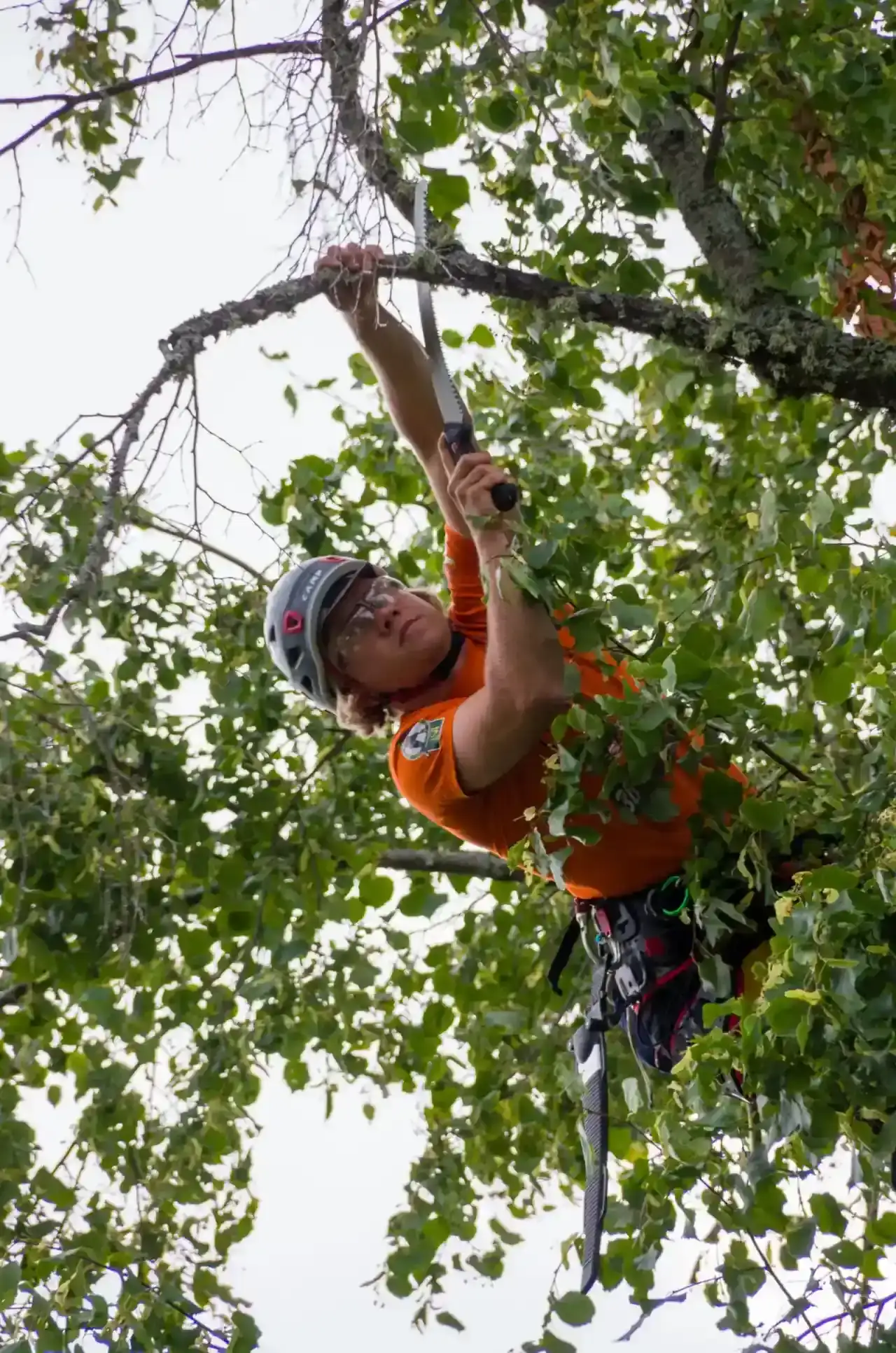
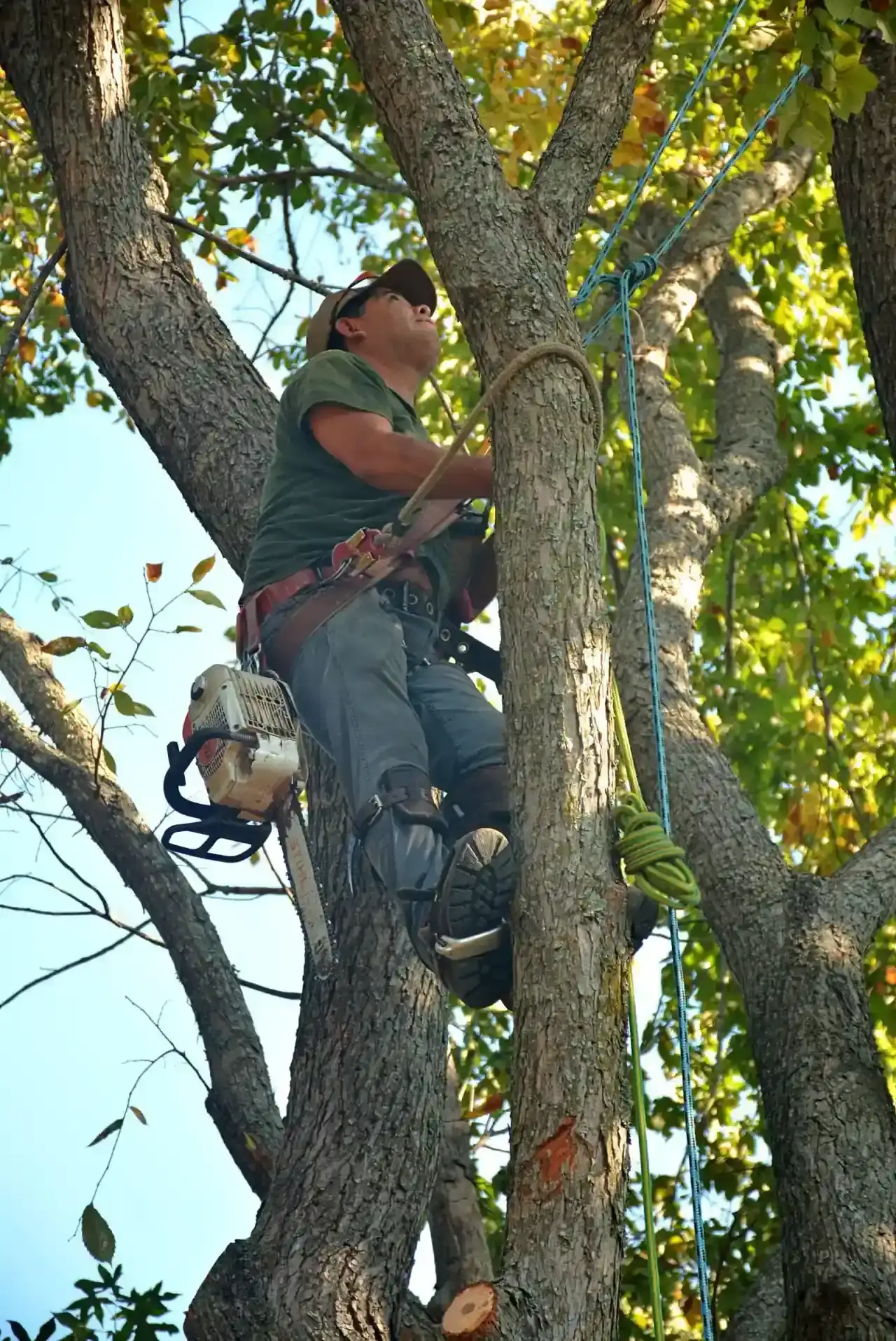
A climber works through the crown looking for specific faults, not simply for branches to cut.
- Crossing and rubbing branches
- Where two branches touch, bark wears through and decay can enter. One of the pair is removed.
- Water sprouts
- Fast upright shoots growing from limbs, often the result of earlier heavy pruning. A few are kept to replace lost wood.
- Clusters at one point
- Where several branches leave a limb at the same spot, one or two are removed to space the rest.
- Weak attachments
- Narrow V-shaped unions with bark pinched in the joint are thinned out while they are small.
- Branches growing back into the crown
- Shoots pointing inward add density without adding much useful foliage.
Trees that respond well and trees that do not
| Tree | Response to thinning | Notes |
|---|---|---|
| Live oak | Good when light | Keep the interior foliage along each long limb |
| Silver maple | Good | Answers heavy cuts with a flush of water sprouts |
| Honeylocust | Good | Already open and airy, so it rarely needs much |
| Sugar maple | Moderate | Bleeds sap in late winter, which is harmless |
| Beech | Poor | Thin bark sunburns when suddenly exposed |
| Pines and spruces | Rarely needed | Remove dead wood instead; bare conifer wood does not regrow needles |
Does thinning reduce wind damage?
Less than many people assume. Thinning does lower wind load slightly, but studies of trees after hurricanes and wind tunnel tests suggest the effect is modest, and heavy thinning makes trees sway more freely and can increase breakage. A crown that has had its interior removed also loses the damping effect of branches knocking against each other.
The work that protects a tree in storms is reducing the length of long, heavy limbs and correcting weak forks. See crown reduction and storm preparation pruning.
Where thinning does help is with light and air. A lawn struggling under a dense maple may get enough extra sun to hold on, and leaves in a more open crown dry faster after rain, which cuts down on some fungal leaf diseases.
How a climber thins a crown
Remove dead wood first
Dead branches come out before any live ones, because they change how dense the crown really is.
Work from the outside in
Thinning cuts are made toward the outer edge, where branches are small and wounds close quickly.
Spread the cuts
No one section is cleared out more than the others, so the crown stays balanced.
Cut to a branch or the collar
Each cut ends at a side branch or just outside the collar where the branch joins its parent.
Step back and look
The climber or ground worker checks the shape from the yard before taking any more.
Signs a tree may benefit from thinning
Grass dying in deep shade
Some light can be let through, though turf under big trees rarely becomes perfect.
Branches rubbing each other
Removing one prevents a wound that would let decay in.
A thicket of sprouts after old topping
The best few shoots are kept and the rest thinned over two or three visits.
Repeated leaf spot or mildew
Better airflow helps leaves dry, especially in humid summers.
Crown thinning questions
How often should a tree be thinned?
Every three to five years for most mature shade trees. Fast growers such as silver maple may need it more often, slow growers such as white oak less.
When is the best time to thin a tree?
Late winter suits most species, because the branch structure is visible. In oak wilt areas, avoid wounding oaks in spring and early summer.
Will thinning make my grass grow under the tree?
It can help, but very shady areas under large trees may still do better with mulch or shade-tolerant groundcover.
Is thinning the same as trimming?
Thinning is one type of pruning. The others include raising for clearance, reduction for size and cleaning for dead wood. A single visit often combines several.
Talk to a crown thinning provider
Call to be connected with an independent tree service company near you.
(844) 955-1716Call availability varies by area and time of day
Limbwright is a referral service. Your call goes to an independent tree service company that sets its own schedule and terms. Ask for proof of insurance and a written scope before work starts. How this works
Call now
Talk to a tree service provider in your area. Have the tree's location and what it is near ready.
(844) 955-1716Call nowCall availability varies by area and time of day