Pruning · Raising
Crown Raising
Crown raising removes or shortens the lowest branches to make room underneath: for people on a sidewalk, cars in a driveway, trucks on a street or a view across the yard. The aim is clearance, and it should leave live branches on at least the top two thirds of the tree's height.
Call availability varies by area and time of day. Calls are answered by an independent tree service provider.
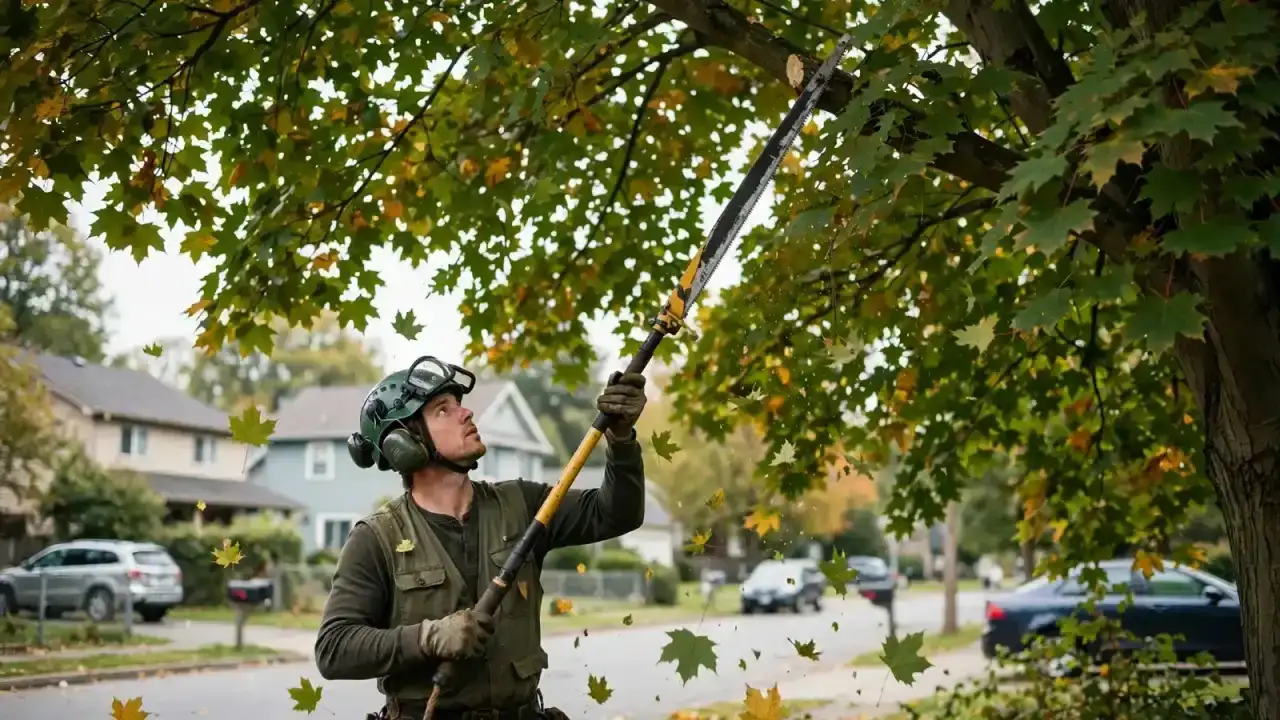
Typical clearance heights
Many cities write these numbers into their codes. Check yours, especially for trees between the sidewalk and the curb.
| Over | Common clearance | Why |
|---|---|---|
| Sidewalks | About 8 feet | Pedestrians, umbrellas and strollers |
| Residential streets | About 13 to 14 feet | Garbage trucks, school buses and fire engines |
| Driveways | About 12 feet | SUVs, vans and delivery trucks |
| Lawns | As needed for mowing and light | Often 6 to 8 feet |
| Traffic signs and signals | Clear sight line | Codes often require full visibility from a set distance |
Many cities put the duty to keep sidewalk and street clearance on the adjoining property owner, even for trees the city planted.
How high can a tree be raised?
Live branches should cover at least the top two thirds of the tree's height. A 30-foot tree should keep its live crown down to about 10 feet. Raising further than that shifts weight to the top, slows trunk growth at the base and can leave the tree top-heavy in wind.
- Young trees
- Raise gradually over years, removing a few low branches each visit as the tree grows taller.
- Mature trees
- Avoid cutting large lower limbs at the trunk. Shorten them to a side branch above the clearance line instead.
- Conifers
- Spruce and fir look best with branches near the ground. Remove only what is truly in the way.
How raising is done
Mark the clearance
Agree on the height needed over each area: walk, drive, street or lawn.
Cut small branches first
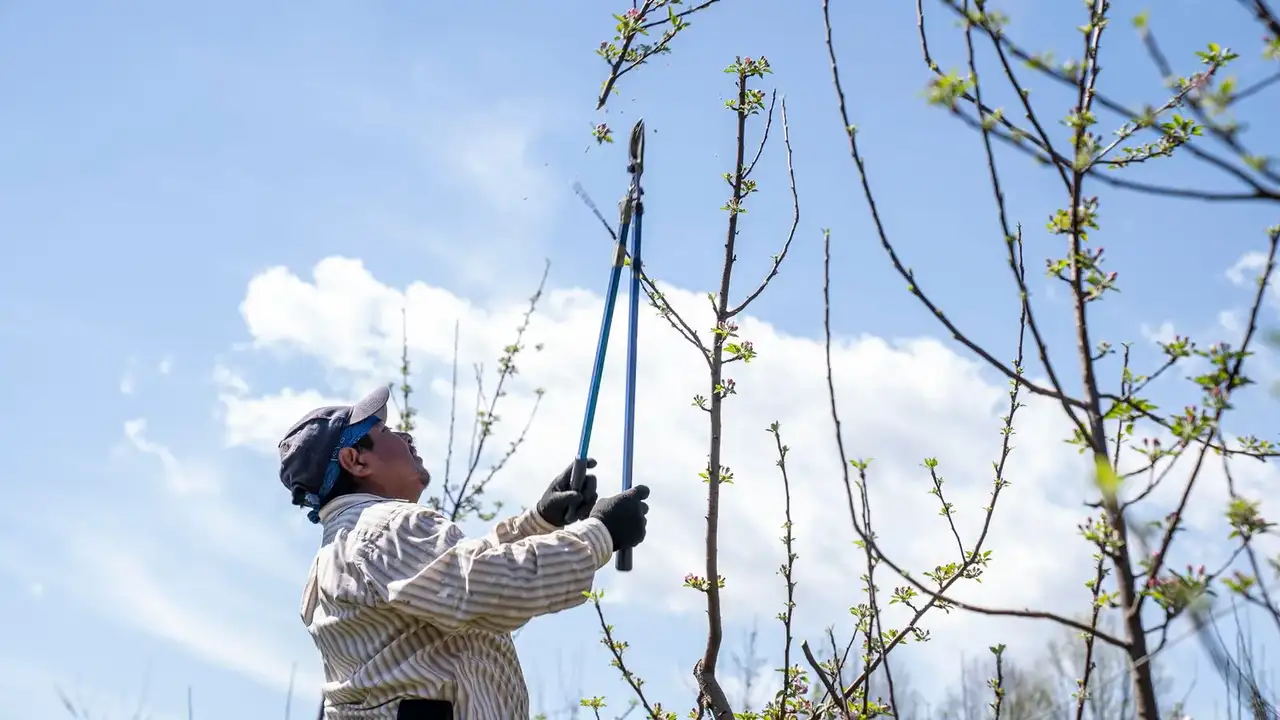
Pole saws handle small limbs from the ground. Climbers or lifts reach the rest.
Reduce larger limbs
A big low limb is often shortened to a branch that grows above the clearance line, rather than removed.
Make proper cuts
Each cut sits just outside the branch collar, never flush with the trunk and never leaving a stub.
Check from below
Branches spring up when their tips are removed, so final clearance is checked after cutting.
Remove the limb or shorten it
Remove at the trunk
- Right for small branches
- Quick and clean
- Leaves a wound the trunk must close
- Large wounds can let decay into the trunk
Reduce
- Right for large limbs
- Keeps more leaves working for the tree
- Smaller wounds farther from the trunk
- The limb may be removed later in stages
Removing a lower limb more than about a third of the trunk's diameter leaves a wound that may decay inward. Reduction is usually the better first step, with full removal saved for a later visit if still needed.
Signs it is time to raise
Branches brushing cars or people
On drives, streets and walks, especially after rain weighs the leaves down.
A code notice from the city
Many cities send notices when street or sidewalk clearance falls short.
Blocked signs or streetlights
Codes often require clearance around signs, signals and lights.
Mowing under branches
Low limbs block mowers and light alike.
Raising mistakes that weaken trees
- Taking too much at once
- Removing many large low limbs in one visit cuts deep into the tree's food supply.
- Flush cuts
- Cutting into the trunk tissue behind the collar opens a large wound that does not close well.
- Leaving stubs
- Stubs die back, rot and send decay toward the trunk.
- Ignoring street tree rules
- Some cities, including New York, require a permit to prune a street tree.
- Raising conifers to bare poles
- Many conifers never regrow lower branches once removed.
Raising for wildfire safety
In wildfire country, crown raising removes ladder fuels: the low branches, shrubs and dead material that let a ground fire climb into tree canopies, where it spreads faster and burns hotter. Fire agencies often recommend raising lower branches six to ten feet or about a third of the tree's height on small trees.
Raising works together with spacing and with clearing what lies underneath. A raised tree surrounded by dry brush is still a fire path. See defensible space tree clearing for spacing distances around houses.
Crown raising questions
Who is responsible for trimming a street tree over a sidewalk?
It varies by city. Many put the duty on the adjoining owner, while others prune their own street trees on a cycle. Call public works or the city forester before cutting.
Can I raise a tree myself?
Small branches you can reach from the ground with a pole saw, yes. Anything near power lines, anything above head height with a chainsaw, or any large limb is crew work.
Will raising a tree make it fall over?
Not if live crown is kept on the top two thirds. Over-raised trees are more likely to break in wind than to tip over.
When is the best time to raise a crown?
The dormant season for most species, though small clearance cuts can be made any time.
Talk to a crown raising provider
Call to be connected with an independent tree service company near you.
(844) 955-1716Call availability varies by area and time of day
Limbwright is a referral service. Your call goes to an independent tree service company that sets its own schedule and terms. Ask for proof of insurance and a written scope before work starts. How this works
Call now
Talk to a tree service provider in your area. Have the tree's location and what it is near ready.
(844) 955-1716Call nowCall availability varies by area and time of day