
Pruning · Fruit trees
Fruit Tree Pruning
Fruit trees are pruned harder and more often than shade trees, because the goal is fruit within reach and sunlight on every branch, not a tall canopy. Timing matters by type: apples and pears in late winter, peaches close to bloom, and cherries after harvest in some areas.
Call availability varies by area and time of day. Calls are answered by an independent tree service provider.
When to prune each fruit tree
Late winter is the default in cold and temperate climates. The exceptions below come from disease risk and fruiting habit.
| Tree | Best time | Usual form |
|---|---|---|
| Apple | Late winter, before buds swell | Central or modified leader |
| Pear | Late winter | Central leader |
| Peach and nectarine | Late winter into bloom | Open center |
| Plum | Late winter to early spring | Open center |
| Cherry | Late winter, or just after harvest in the Pacific Northwest | Modified leader |
| Fig | Late winter | Low bush or small tree |
Why prune fruit trees at all?
To let sun reach every branch so fruit colors and sweetens, to keep the tree low enough to pick and spray, to remove diseased wood before it spreads and to balance new growth against fruit production. An unpruned fruit tree crops heavily one year and little the next, with small fruit high out of reach.
- Light
- Fruit on shaded branches is smaller, paler and less sweet.
- Size
- Annual pruning can hold a standard tree at picking height.
- Disease
- Removing infected wood is the main control for fire blight and black knot.
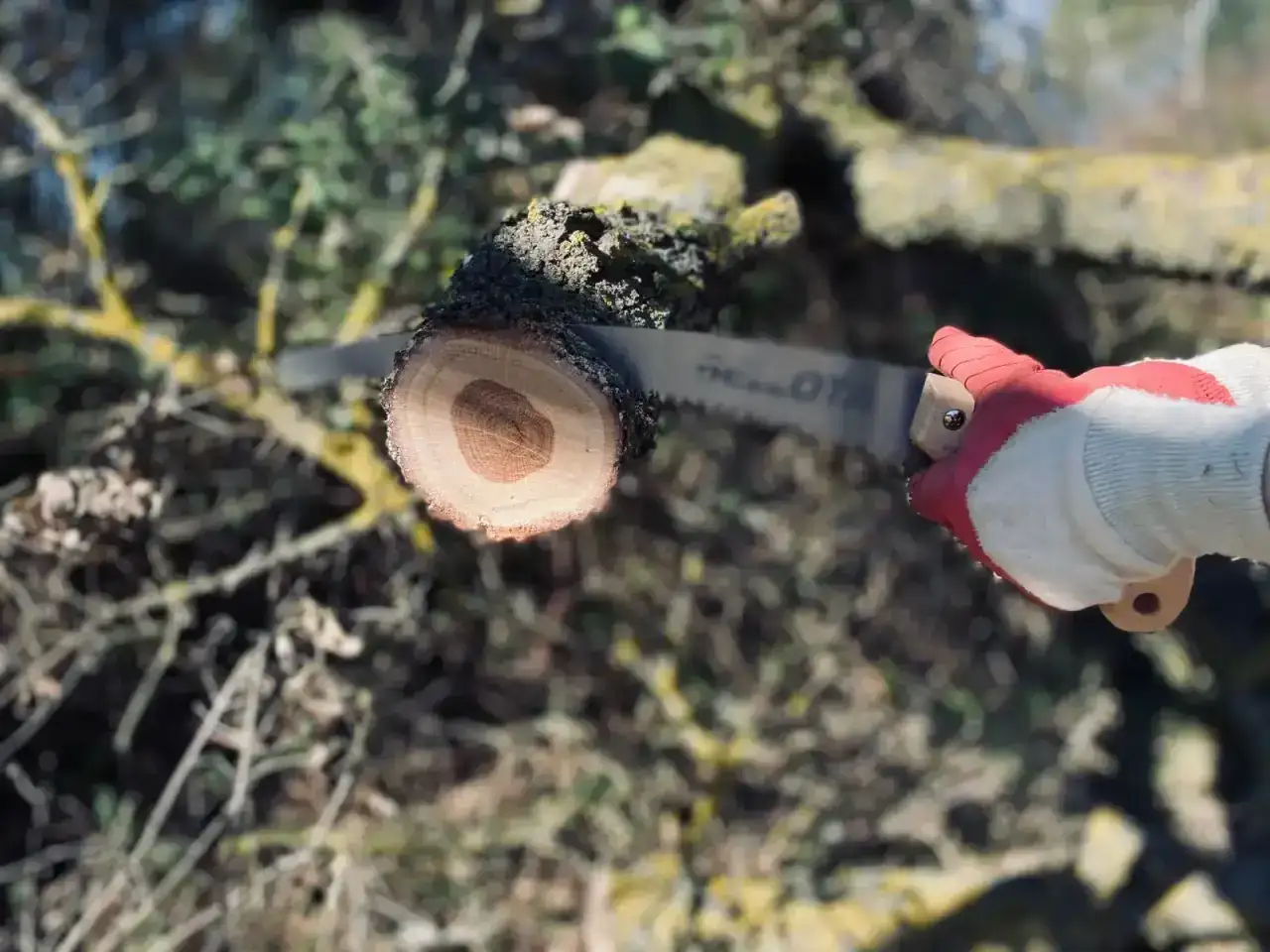
A dormant pruning visit
Remove dead and diseased wood
Cuts go well below visible infection, with tools disinfected between cuts on blighted trees.
Take out water sprouts
Vigorous vertical shoots that shade the tree and rarely fruit.
Open the center or keep the leader
Depending on whether the tree is trained as a vase or a pyramid.
Shorten overlong branches
To side branches, keeping fruit within reach.
Thin crowded spurs
On old apples and pears, where too many fruiting spurs produce small fruit.
Disease signs to prune out
Fire blight
Pear and apple shoots that look scorched, with a bent shepherd's crook tip. Cut 8 to 12 inches below the damage.
Black knot
Hard black swellings on plum and cherry twigs. Remove in winter.
Cankers
Sunken, cracked bark, sometimes oozing amber gum on stone fruit.
Brown rot mummies
Shriveled fruit left hanging on peaches and plums, which carry the fungus to next year.
Central leader or open center
Central leader
- One main trunk with tiers of branches
- Used for apples and pears
- A taller, pyramid-shaped tree
- Strong structure for heavy crops
Open center
- Three or four main limbs from a short trunk
- Used for peaches, nectarines and plums
- A lower, vase-shaped tree
- Sun reaches the middle of the tree
Peaches fruit only on wood that grew last year, so they need heavier pruning every year than apples, which fruit on long-lived spurs.
Common fruit tree pruning mistakes
- Pruning stone fruit in fall
- Wounds stay open through wet weather and invite canker diseases.
- Heading every branch
- Cutting all branch tips produces masses of new shoots and fewer fruit buds.
- Using dirty tools on blighted trees
- Fire blight bacteria travel on saw blades and pruners.
- Letting the tree get tall
- Height is much harder to bring down later than to prevent.
- Cutting off the fruiting spurs
- On apples and pears, the short stubby twigs are where the fruit forms.
Restoring a neglected fruit tree
An old apple or pear that has not been pruned in decades can often be brought back over three winters, taking out about a third of the overgrowth each time. Cutting it all at once triggers a thicket of water sprouts and can stress the tree badly.
The first winter goes to dead wood, crossing limbs and the tallest leaders. The second and third thin the crown and lower it in steps. Fruit quality usually improves noticeably by the second season.
Very old trees with hollow trunks can still fruit but may be unstable, especially when loaded with fruit. See tree risk assessment if a large old tree stands near a house, fence or path.
Fruit tree pruning questions
Can I prune fruit trees in summer?
Light summer pruning slows growth and removes water sprouts. Main structural pruning is done in late winter.
How much should I prune a mature apple tree?
Usually 10 to 20 percent of the wood in a year. More than that pushes vigorous shoots instead of fruit.
Why is my peach tree not fruiting?
Late spring frosts, too few winter chill hours for the variety, or pruning off last year's growth are the common causes.
Should pruning cuts on fruit trees be sealed?
Generally not. Clean cuts made at the right spot close without help.
Talk to a fruit tree pruning provider
Call to be connected with an independent tree service company near you.
(844) 955-1716Call availability varies by area and time of day
Limbwright is a referral service. Your call goes to an independent tree service company that sets its own schedule and terms. Ask for proof of insurance and a written scope before work starts. How this works
Call now
Talk to a tree service provider in your area. Have the tree's location and what it is near ready.
(844) 955-1716Call nowCall availability varies by area and time of day