Pruning · Reduction
Crown Reduction
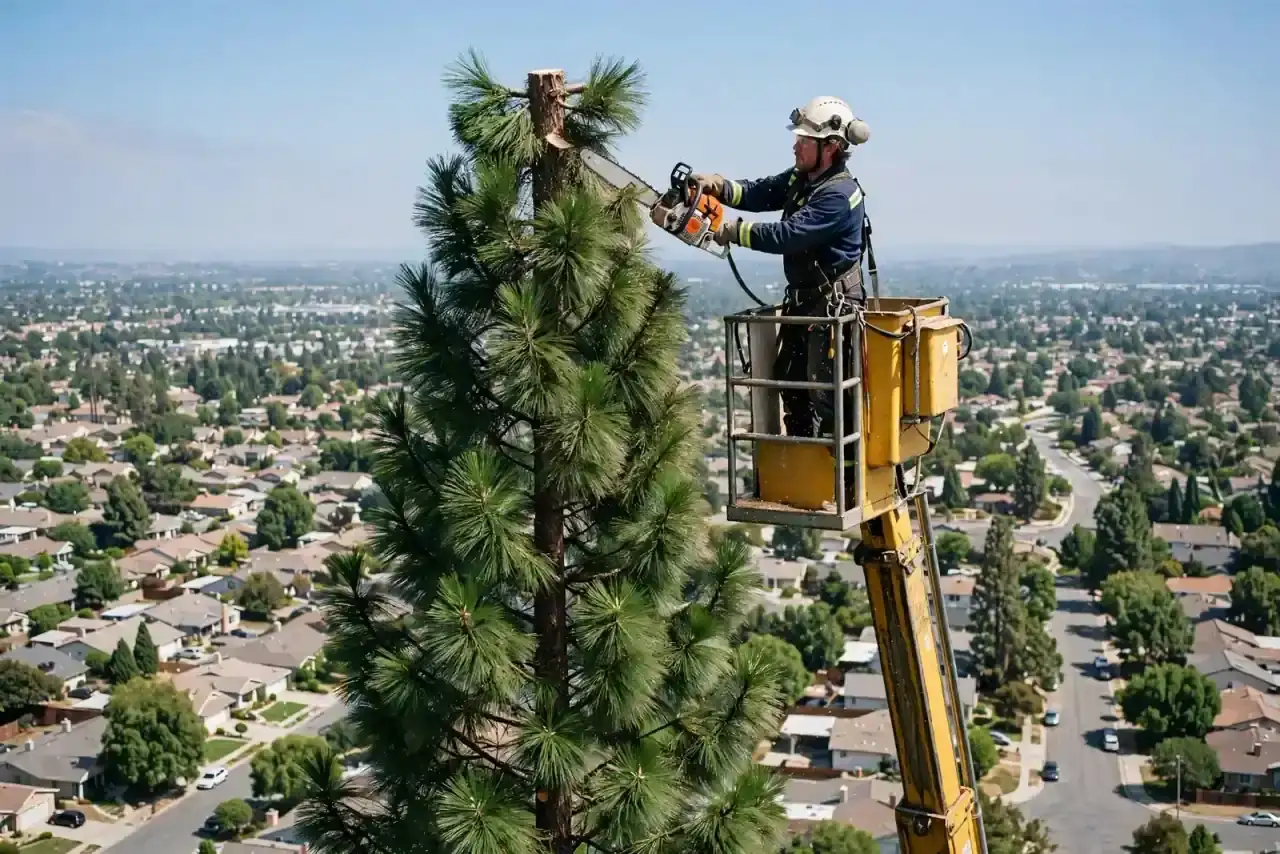
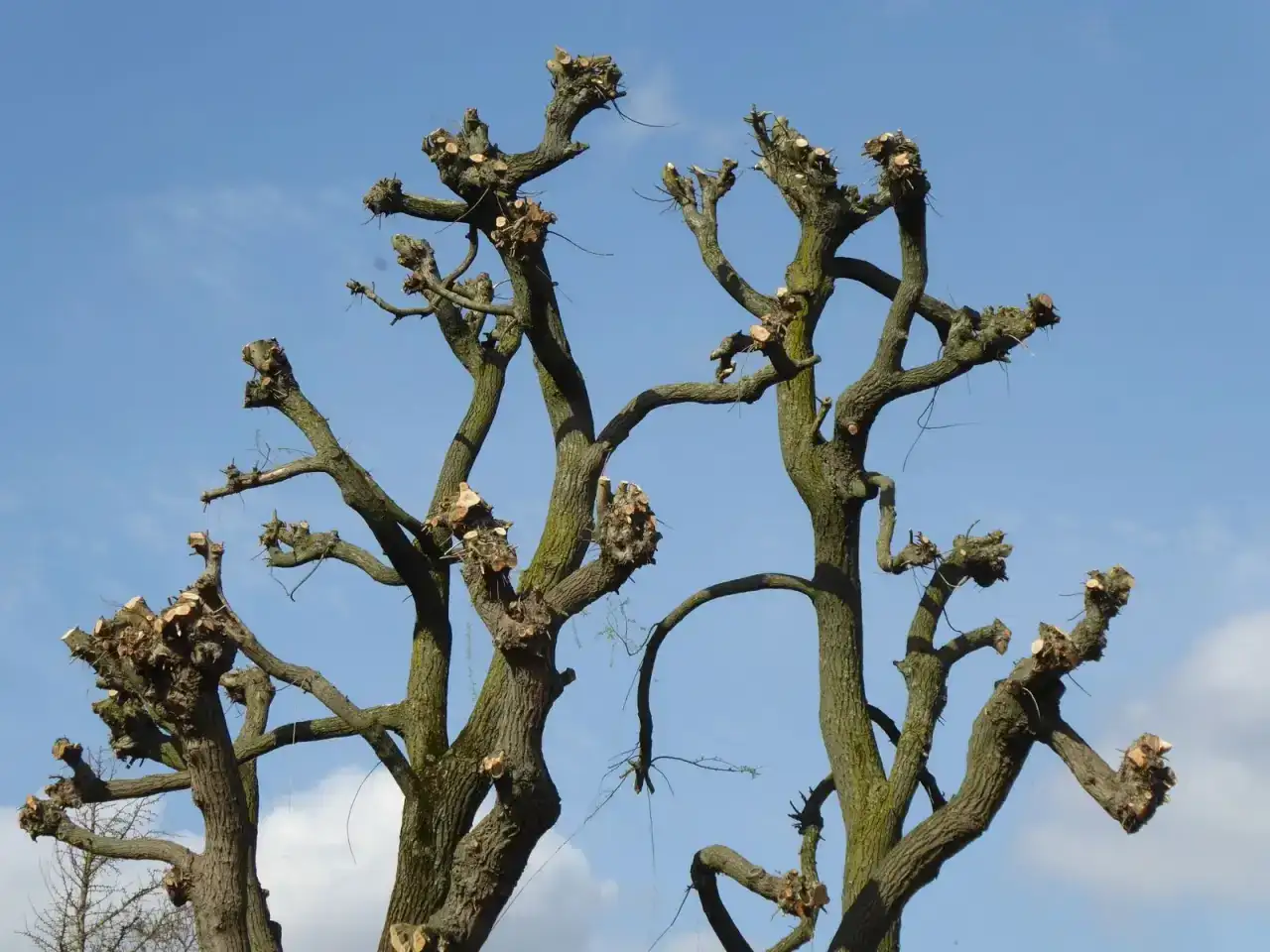
Crown reduction shrinks a tree by cutting branches back to a side branch at least a third of the diameter of the stem being removed. That side branch becomes the new tip. The result is a smaller tree that still looks natural, unlike topping, which leaves stubs and a flush of weak sprouts.
Call availability varies by area and time of day. Calls are answered by an independent tree service provider.
Reduction or topping
Crown reduction
- Each cut ends at a side branch
- The tree keeps its natural shape
- Limited regrowth near the cuts
- Small wounds that the tree can close
- Repeated every few years as needed
Topping
- Branches cut to stubs at an arbitrary height
- Dozens of fast, weakly attached sprouts
- Decay enters the large stubs
- The tree regains its height within a few years
- Often more dangerous than before
Topping is rejected by the ANSI A300 pruning standard and by every major arboricultural organization. If a company offers to top a tree, find another company.
How much can a tree be reduced?
Usually 10 to 20 percent of height or spread in a single session. Larger changes are made in stages over several years, giving the tree time to respond. The one-third rule for cuts, cutting to a branch at least a third the diameter of the removed stem, is what keeps reduction from turning into topping.
- Light reduction
- A few feet off the longest limbs to keep them off a roof or out of a neighbor's yard.
- Moderate reduction
- Up to about a fifth of the crown, typically to relieve a weak fork or a limb over a target.
- Staged reduction
- A larger change in size spread over two or three visits a few years apart.
Reasons to reduce a crown
A weak fork
Shortening the two stems lowers the leverage on the joint between them.
A long limb over a roof
Reducing it keeps the shade without the risk of the whole limb landing on the house.
Growth toward wires
Directional reduction trains branches away from service lines.
Decay in the trunk
Lowering the height reduces wind load on a trunk with a known weakness.
A tree recovering from past topping
Reduction and sprout thinning over several visits can rebuild a sound crown.
How a reduction is done
Choose the targets
The arborist decides which limbs to shorten, by how much, and why.
Find lateral branches
Each cut is placed just above a side branch facing a useful direction, usually outward and upward.
Cut in small steps
Heavy limbs are taken back gradually, often with rope rigging or a lift.
Balance the crown
The outline is shaped evenly rather than cut flat across the top.
Note follow-up
The crew records what was done so the next visit can continue from there.
Trees that tolerate reduction
| Tree | Tolerance | Notes |
|---|---|---|
| Oaks | Good | Avoid the spring and early summer oak wilt risk period |
| London plane and sycamore | Good | Recover well from moderate cuts |
| Lindens and elms | Good | Respond with healthy new growth |
| Beech | Poor | Large cuts decay; reduce lightly if at all |
| Birch and cherry | Poor | Prone to decay behind cuts |
| Most conifers | Limited | They do not regrow from bare wood, so cuts must leave green growth |
After a reduction
- Expect some sprouting
- Reduced limbs often push new shoots near the cuts in the first year or two.
- Plan a follow-up
- A light visit in two to three years selects the best sprouts and removes the rest.
- Water in dry spells
- Especially the summer after a significant reduction.
- Skip wound paint
- Research shows dressings do not stop decay and can trap moisture.
Reduction and support systems together
When a tree has a weak fork, arborists often combine reduction with a cable. Reduction takes weight off the ends of the stems so less force reaches the fork. The cable limits how far the stems can spread when wind does hit.
Neither works as well alone. A cable on a long, heavy, unreduced stem carries large loads and can fail, and reduction alone does not stop a fork that is already starting to separate. See tree cabling and bracing.
Reduction is also the main tool for keeping a large tree in a small space over the long term. A specimen oak beside a house can be held at a stable size for decades with light reductions every few years.
Crown reduction questions
Can crown reduction save a tree near my house?
Often, if the tree is healthy and of a species that tolerates it. Reduction can keep a tree clear of the roof for years.
How often does a reduced tree need pruning?
Every three to five years for most species, depending on growth rate.
Is reduction the same as topping?
No. Reduction cuts to side branches large enough to take over. Topping cuts to stubs, wherever the height limit happens to fall.
Can a tree be made half as tall?
Rarely without severe harm. A tree that must lose half its height is usually better replaced with a smaller species.
What other pruning types might a tree need?
Many visits combine reduction with crown thinning, crown raising for clearance and branch clearance from the roof.
Talk to a crown reduction provider
Call to be connected with an independent tree service company near you.
(844) 955-1716Call availability varies by area and time of day
Limbwright is a referral service. Your call goes to an independent tree service company that sets its own schedule and terms. Ask for proof of insurance and a written scope before work starts. How this works
Call now
Talk to a tree service provider in your area. Have the tree's location and what it is near ready.
(844) 955-1716Call nowCall availability varies by area and time of day