
San Francisco, California
Tree Removal and Tree Service in San Francisco
San Francisco maintains every street tree itself through the StreetTreeSF program, and it regulates private trees that stand within 10 feet of the public right-of-way. Rear-yard trees further back are the owner's call, though getting one out of a rowhouse block is its own problem.
- County
- City and County of San Francisco
- Tree rules
- Public Works Code Article 16. Bureau of Urban Forestry, San Francisco Public Works.
- Key local rule
- Permit to remove a street tree, a significant tree or a landmark tree
- Electric utility
- PG&E
- Main hazards
- Pacific windstorms, saturated soil, aging cypress, pine and eucalyptus
The March 2023 windstorm and what it showed
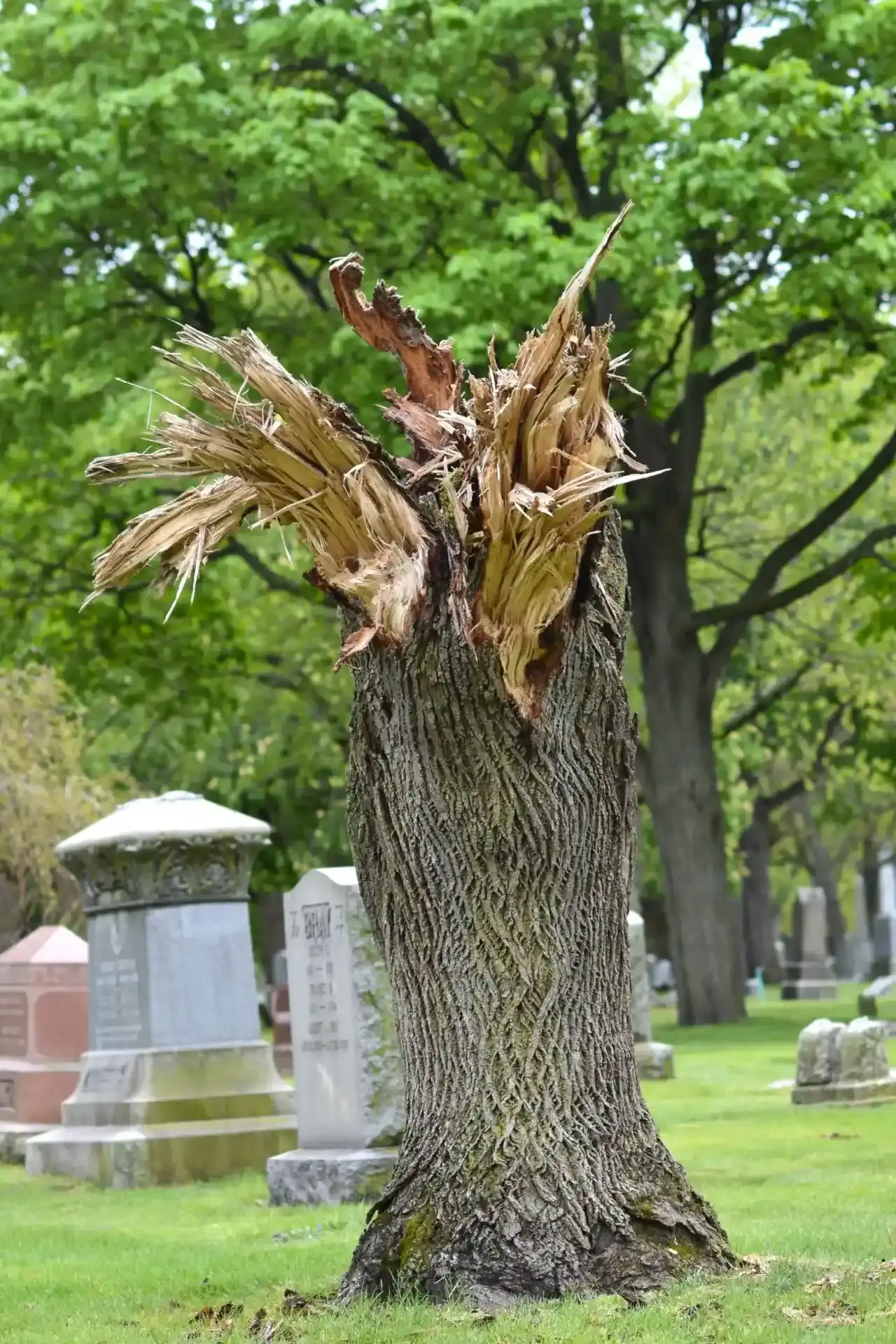
On March 21, 2023 a compact, intense low came ashore near the Golden Gate with gusts that broke windows downtown. Local reporting put the count at about 700 trees and large limbs down across the city in a single day, and two people in San Francisco were killed by falling trees.
The storm arrived at the end of a winter of repeated atmospheric rivers. Soil in the western neighborhoods is sand over old dunes, and after months of rain it held roots poorly. Tall Monterey cypress and pine planted a century ago in the Presidio, Golden Gate Park and the Sunset went over whole.
Summer brings a different pattern. Fog drip keeps crowns heavy while roots stay dry, and large eucalyptus and ficus limbs fail on calm days.
Article 16: street, significant and landmark trees
Any tree in the public right-of-way is a street tree. Since July 2017 the city, not the fronting owner, has maintained them under StreetTreeSF. Pruning or removing one yourself without permission violates Article 16 of the Public Works Code. If a street tree is in poor health or structurally unsound, Public Works removes it after a public notice period.
A significant tree is on private property within 10 feet of the public right-of-way and has a trunk of more than 12 inches in diameter, a height over 20 feet or a canopy wider than 15 feet. Removing one needs a permit, and Public Works says a permit is generally not granted for a tree that is healthy and sound.
Landmark trees are designated individually by the Board of Supervisors and are protected wherever they stand. Replacement planting or an in-lieu condition normally follows an approved removal.
Getting a tree out of a rowhouse backyard
Most San Francisco houses share side walls, so the rear yard has no path to the street.
Walk the route
The company checks whether wood can travel through a garage, a tradesman's passage or the house itself, and measures doors and stairs.
Protect the interior
Floors and walls along the carry route are covered before the first piece moves.
Dismantle small
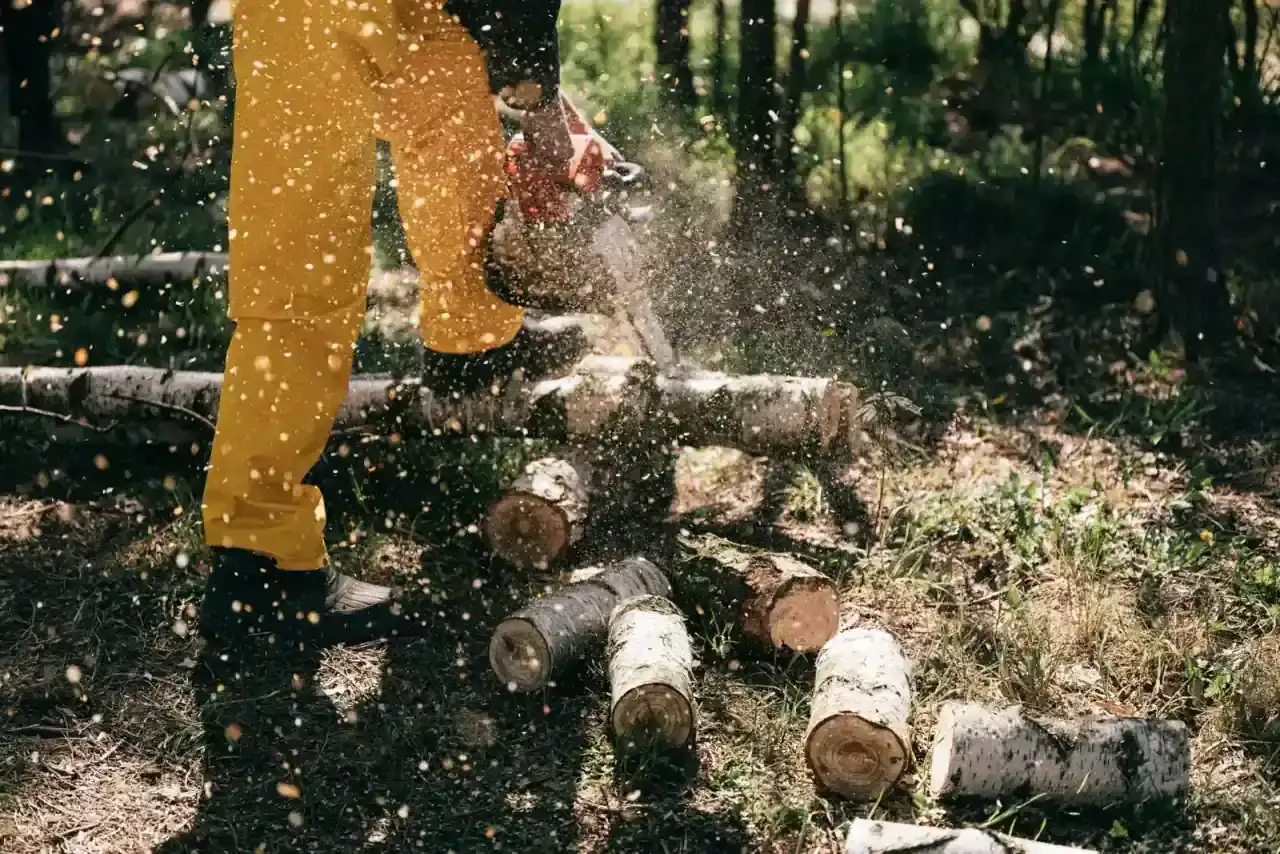
A climber lowers the tree on ropes in pieces a person can carry. Nothing is dropped whole in a 25-foot-wide yard.
Consider a crane
On some blocks a crane parked in the street lifts sections over the roofline. That needs a street space permit and attention to overhead Muni wires.
Plan the stump
Compact grinders that fit through a standard doorway are used, or the stump is cut low and left.
Common San Francisco trees and how they fail
| Tree | Where it grows | Typical problem |
|---|---|---|
| Monterey cypress | Presidio, Richmond, Sunset, Lake Merced | Whole-tree failure in saturated sand. Large limbs tear out with age. |
| Monterey pine | Western parks and older yards | Short-lived here. Pitch canker dieback and brittle tops. |
| Blue gum eucalyptus | Mount Sutro, Glen Canyon, park edges | Very heavy limbs and long strips of bark. Tall trees near houses. |
| Indian laurel fig | Street plantings citywide | Limbs split at weak unions. The city has been replacing many. |
| New Zealand Christmas tree | Sidewalk plantings in the avenues | Aerial and surface roots lifting pavement |
| London plane | Market Street and civic areas | Anthracnose and pollarding regrowth |
Trouble signs on a windy, foggy hill
A cypress leaning more than it did last season
Compare with an old photo. Movement in sandy soil tends to be gradual and then sudden.
Resin streaming down a pine with brown branch tips
Pitch canker. Infected tops and limbs die and break.
A ficus with a seam where two stems meet
Included bark. These unions open under their own weight.
Mushrooms or a cavity at the base on the uphill side
Root or butt decay on a slope leaves little holding the tree.
Wood resting on a service drop or Muni wire
Do not touch it. Call the utility or 311.
What the city handles and what the owner handles
City responsibility
- Pruning and removal of street trees under StreetTreeSF
- Sidewalk damage caused by street tree roots
- Emergency response to street trees down in the roadway, reported through 311
Owner responsibility
- Every tree on the private lot, front or rear
- Permit applications for a significant tree near the property line
- Damage from a private tree that falls on a neighbor's building
If you cannot tell whether a front-yard tree is in the right-of-way, ask the Bureau of Urban Forestry before hiring anyone to cut it.
San Francisco tree questions
Can I prune the street tree in front of my San Francisco house?
Not without permission from the Bureau of Urban Forestry. The city maintains street trees on a pruning cycle, and unpermitted pruning is a violation of Article 16.
What makes a tree significant in San Francisco?
It stands on private property within 10 feet of the public right-of-way and is more than 12 inches in trunk diameter, taller than 20 feet or wider than 15 feet in canopy. Any one of the three sizes is enough.
Do I need a permit for a tree deep in my backyard?
Usually not, unless it is a designated landmark tree. Backyard trees more than 10 feet from the right-of-way fall outside the significant tree rule.
Who do I call when a street tree falls?
Report it to 311. If wires are involved, stay clear and call PG&E or 911.
Reach a tree service in San Francisco
Call to be connected with an independent tree company that works in the San Francisco area, or leave your number and one will call you back.
(844) 955-1716Call availability varies by area and time of day
Limbwright is a referral service. Your call goes to an independent tree service company that sets its own schedule and terms. Ask for proof of insurance and a written scope before work starts. How this works
Call now
Talk to a tree service provider in your area. Have the tree's location and what it is near ready.
(844) 955-1716Call nowCall availability varies by area and time of day