Stumps · Roots
Tree Root Removal
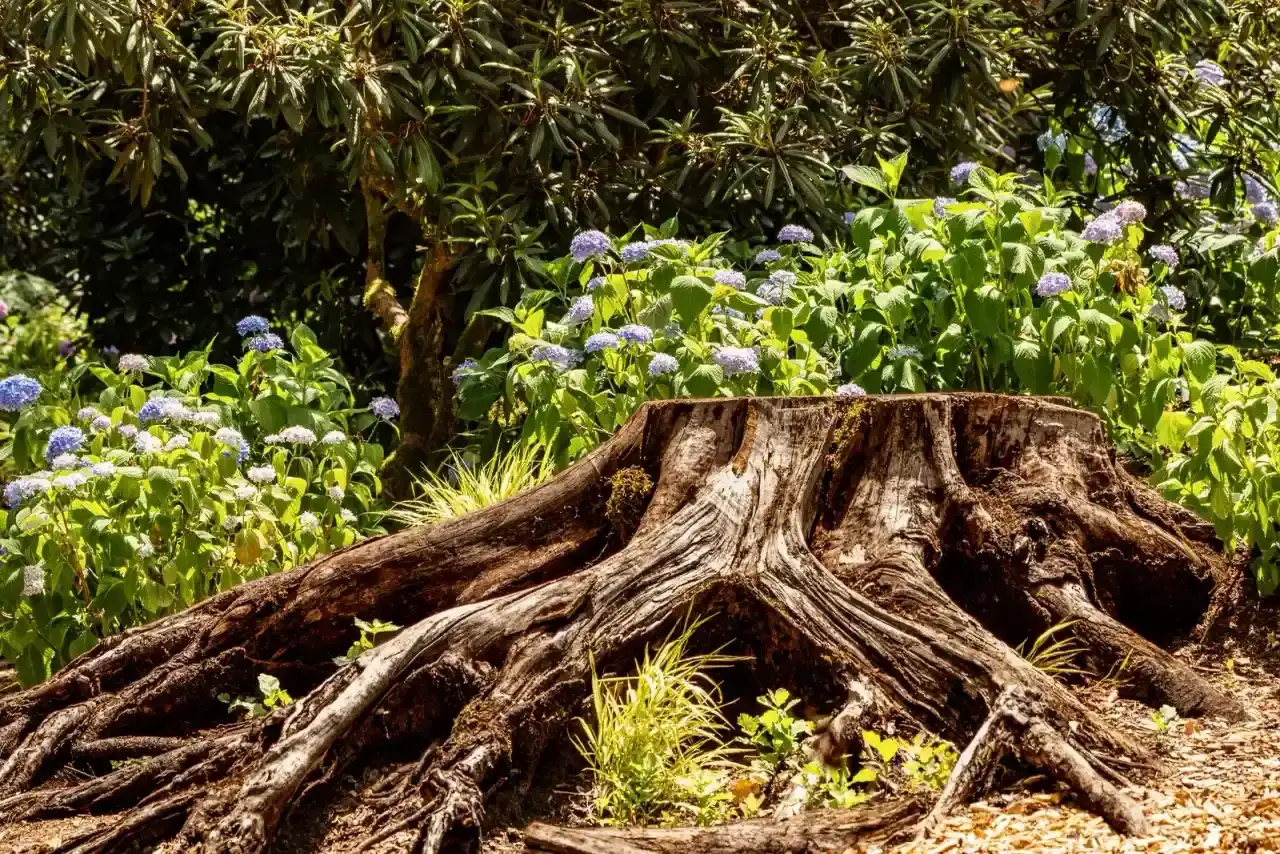
Roots of a removed tree can be ground out with the stump. Roots of a living tree are another matter: cutting the wrong ones can kill it or make it fall. Most of this work is about knowing how close to the trunk a root can safely be cut.
Call availability varies by area and time of day. Calls are answered by an independent tree service provider.
How close to a tree can roots be cut?
A common rule of thumb is to avoid cutting large roots closer to the trunk than about three to five times the trunk diameter. For a tree 12 inches across, that means no cuts within roughly 3 to 5 feet. Closer cuts remove anchoring roots and raise the risk of the tree falling.
- Small roots far out
- Usually safe to cut cleanly.
- Large roots near the trunk
- Can compromise stability; get an arborist's opinion first.
- More than one side
- Cutting roots on several sides at once multiplies the harm.
Common root problems
- Surface roots in lawns
- Common with silver maple, sweetgum and pin oak. They catch mowers and trip people.
- Lifted sidewalks and drives
- Roots grow under paving where soil is moist and expand as they thicken.
- Roots in sewer lines
- Roots find cracks and joints in old clay and cast iron pipe.
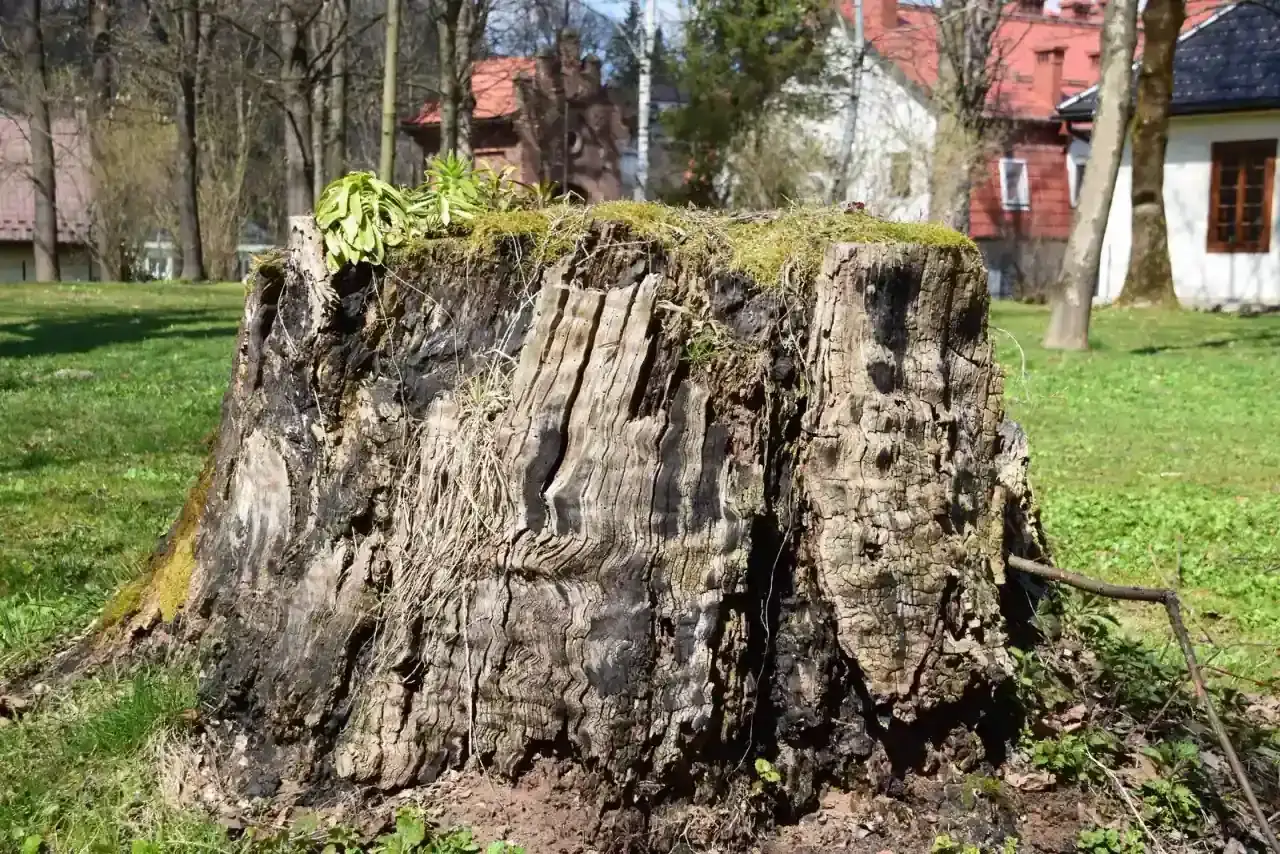
- Roots left after removal
- Large roots running across a yard from a removed tree.
How roots are cut or ground
Locate utilities
Call 811. Roots often wrap around buried lines.
Expose the root
Soil is removed by hand or air tool to see the root's size and direction.
Cut cleanly
A sharp saw or root cutter makes a clean cut. Torn roots heal poorly.
Grind if dead
Roots of removed trees can be ground with a stump grinder along their length.
Backfill
The trench is filled with soil and the area restored.
Options by situation
| Situation | Usual approach | Notes |
|---|---|---|
| Surface roots of a living tree | Mulch over them instead of cutting | Adding soil over roots more than a couple of inches can suffocate them |
| Root lifting a sidewalk | Ramp or bridge the walk, or cut one root far from the trunk | Check city rules for street trees |
| Roots of a removed tree | Grind along the root or leave to decay | Decay takes years |
| Roots in a sewer line | Plumber clears and repairs the pipe | Lining the pipe stops future intrusion |
Signs root cutting hurt a tree
Dieback on the side that was cut
Roots and crown on the same side are connected.
New lean
Anchor roots may have been lost.
Thin leaves and early color
Stress from loss of water uptake.
Mushrooms at the cut
Decay entering large root wounds.
Cutting roots or working around them
Cut
- Roots are small and far from the trunk
- The tree is young and vigorous
- Only one side is affected
Work around
- Large roots near the trunk
- Older or stressed tree
- Bridge, curve the path or use flexible paving
Root barriers installed along new sidewalks redirect roots downward and can prevent future lifting.
Roots and sewer lines
Tree roots do not break into sound pipes. They find leaks, where moisture and nutrients seep out, and grow into the gap. Old clay pipe with loose joints is the most common victim.
Removing the tree does not fix a cracked line, and new roots from other trees will find it. The usual fix is clearing the pipe and lining or replacing the damaged section. Copper sulfate products can slow root growth inside pipes but are restricted in some areas.
Root removal questions
Can I grind surface roots of a living tree?
Grinding roots of a living tree damages it and can introduce decay. Mulching over the roots is usually better.
Will roots die after the tree is removed?
Yes, for most species. Some, such as poplar and black locust, sprout from roots for a time.
Who fixes sidewalks lifted by a street tree?
It depends on the city. Some repair sidewalks; others assign the duty to the property owner.
How long do roots take to rot after removal?
Small roots decay in a few years; large roots of dense species may take ten or more.
Talk to a tree root removal provider
Call to be connected with an independent tree service company near you.
(844) 955-1716Call availability varies by area and time of day
Limbwright is a referral service. Your call goes to an independent tree service company that sets its own schedule and terms. Ask for proof of insurance and a written scope before work starts. How this works
Call now
Talk to a tree service provider in your area. Have the tree's location and what it is near ready.
(844) 955-1716Call nowCall availability varies by area and time of day