
Pruning · Storm season
Storm Preparation Pruning
Trees that come through storms well are mostly trees that were pruned well when young, with dead wood removed and weak forks corrected. Stripping foliage the week before a storm does more harm than good.
Call availability varies by area and time of day. Calls are answered by an independent tree service provider.
What pruning helps trees survive storms?
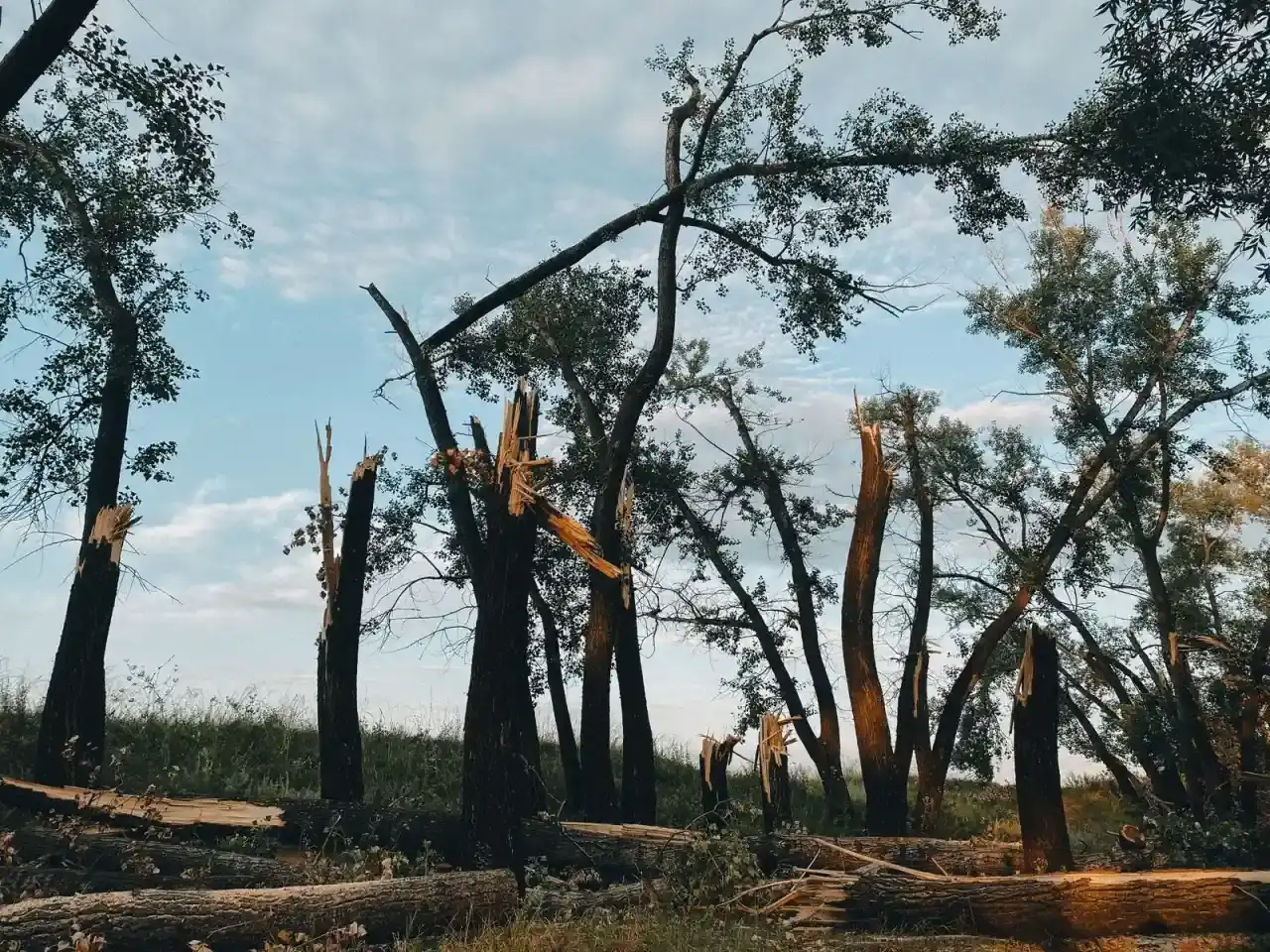
Removing dead and broken branches, correcting weak forks, shortening overlong limbs and keeping one dominant trunk. University of Florida surveys after the 2004 and 2005 hurricanes found that trees given structural pruning lost far fewer limbs than unpruned trees or trees that had been heavily thinned.
- Helps
- Deadwood removal, reduction of long limbs, structural correction of codominant stems.
- Does not help
- Heavy thinning, lion-tailing and topping, all of which leave trees weaker.
- Timing
- Months before the season, not in the rush before a named storm.
What a storm visit targets
- Dead branches
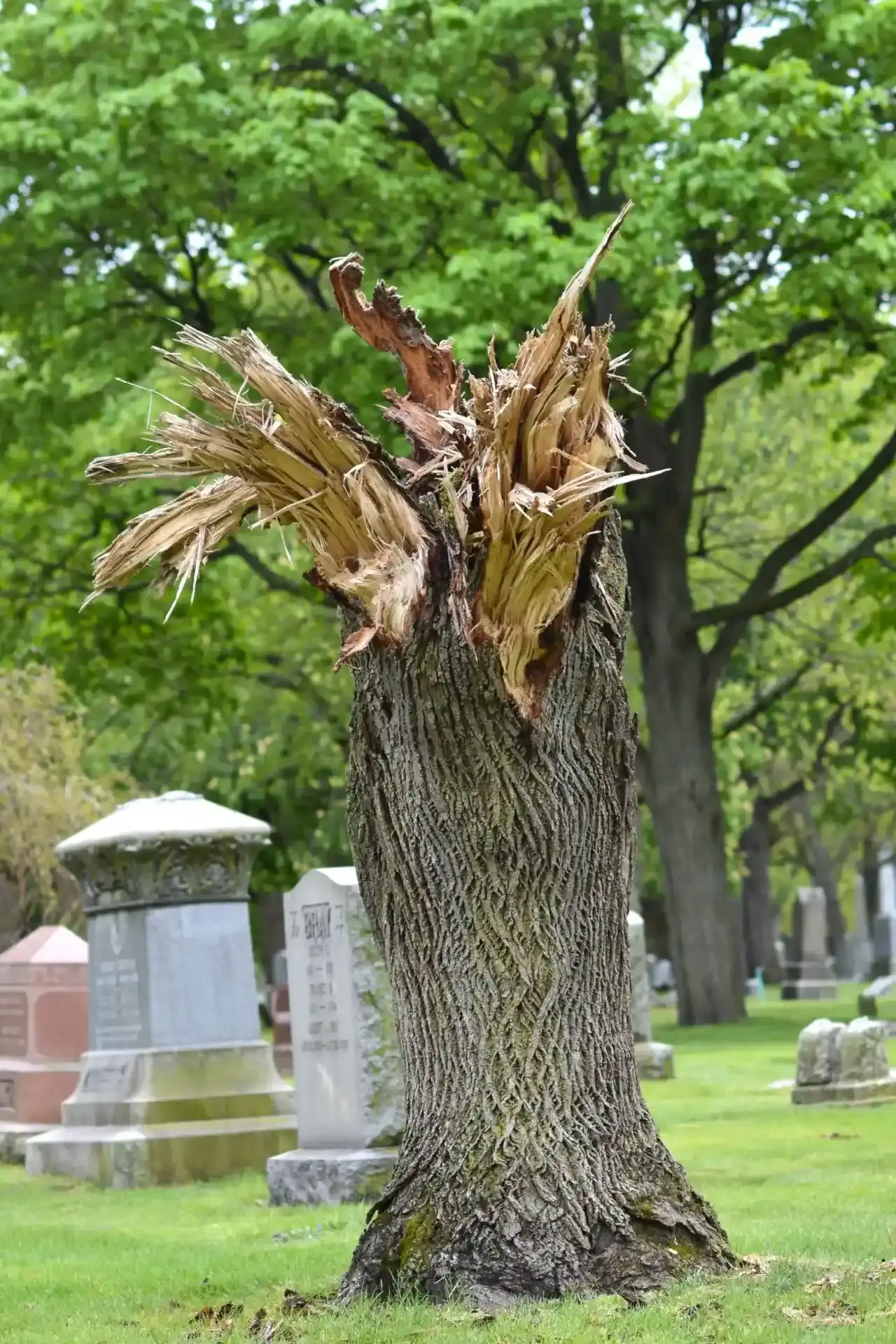
- First to break, and the main source of projectiles hitting windows and cars.
- Codominant stems
- One of the pair is shortened so the other becomes dominant and the fork carries less load.
- Overextended limbs
- Long, heavy limbs over roofs and drives are reduced back to side branches.
- Cracked limbs
- Removed or reduced before wind finishes them.
- Trees with poor wind resistance
- Laurel oaks, water oaks and queen palms close to the house may be better replaced.
Wind resistance of common Southeastern trees
| Higher resistance | Medium | Lower resistance |
|---|---|---|
| Live oak | Southern magnolia | Laurel oak |
| Sabal palm | Red maple | Water oak |
| Bald cypress | Loblolly pine | Sand pine |
| Crape myrtle | Sweetgum | Queen palm |
| Southern red cedar | Slash pine | Carrotwood |
Rankings follow University of Florida IFAS surveys of urban trees after Southeastern hurricanes. Local soils and tree condition change the picture for any single tree.
Good preparation and harmful cutting
Good preparation
- Scheduled months ahead of the season
- Small, targeted cuts
- Crown density mostly kept
- Weak trees near the house identified and removed
Harmful cutting
- Heavy thinning days before landfall
- Topping to make trees shorter
- Lion-tailing to let wind through
- Fresh wounds and debris left on site as the storm arrives
Overthinned trees sway more and can break more easily. Cut piles left at the curb before a storm also become windborne debris.
A storm preparation visit
Walk the property
Every tree that could reach the house, drive or a neighbor is noted.
Rank the targets
Trees over bedrooms and main living areas come first, then drives and lines.
Prune or remove
Correct structure where the tree is sound; remove trees that are failing.
Clear loose material
Coconuts, dead palm fronds and hanging branches go before the season.
Haul the debris
Nothing is left at the curb to blow around.
Trees to remove before storm season
Dead trees within reach of the house
They will almost certainly fail in hurricane-force wind.
Leaning trees with heaving soil
The root plate is already moving.
Large trunk cavities
Especially in laurel and water oaks over 50 years old.
Split forks
They separate the rest of the way under wind load.
Scheduling before the season
Atlantic hurricane season runs from June 1 through November 30, with most landfalls from August through October. Tree companies along the Gulf and Atlantic coasts are busiest in early summer and after storms, so booking structural work in winter or spring gets better availability and gives trees time to respond before wind loads arrive.
In ice storm regions the logic is the same, a season earlier. Late fall pruning removes weak and dead limbs before freezing rain adds weight. See ice storm tree damage.
If a storm is already on the way, limit work to clearly dead branches and loose items such as coconuts. Major pruning in the final days usually cannot be finished or cleaned up in time.
Storm preparation questions
Should I cut down trees before a hurricane?
Only those that are dead, failing or very likely to hit the house. Healthy, well-structured trees break wind and protect roofs.
Does thinning reduce hurricane damage?
Research does not support heavy thinning. Structural pruning and reducing long limbs do more.
When should I schedule storm preparation pruning?
Several months before the season, in winter or early spring along the hurricane coast.
Are palms safe in hurricanes?
Many are, especially sabal palms. Palms that have been overtrimmed to a few fronds are more likely to snap.
Talk to a storm preparation pruning provider
Call to be connected with an independent tree service company near you.
(844) 955-1716Call availability varies by area and time of day
Limbwright is a referral service. Your call goes to an independent tree service company that sets its own schedule and terms. Ask for proof of insurance and a written scope before work starts. How this works
Call now
Talk to a tree service provider in your area. Have the tree's location and what it is near ready.
(844) 955-1716Call nowCall availability varies by area and time of day