
Rochester, New York
Tree Removal and Tree Service in Rochester, New York
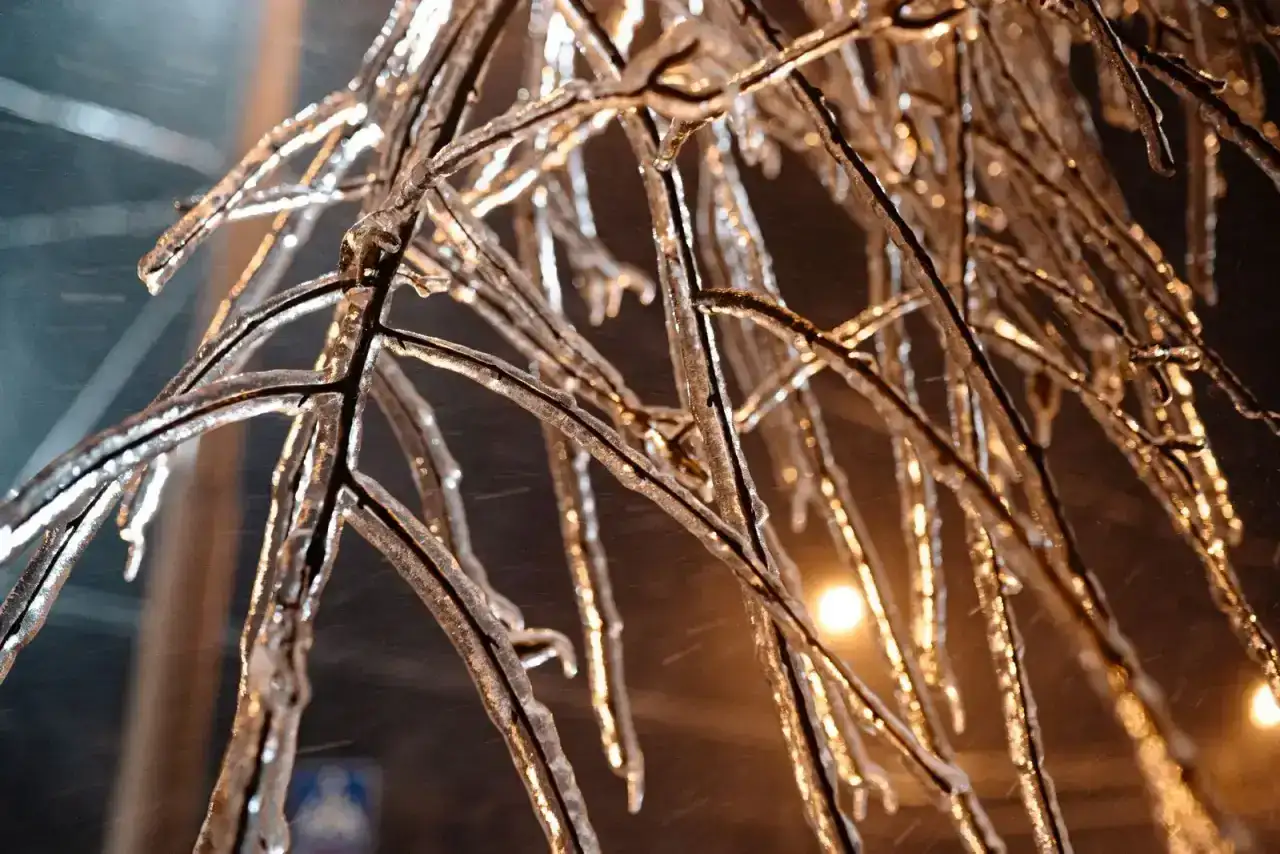
In early March 1991, freezing rain coated Rochester and Monroe County in thick ice. More than 10,000 city trees were destroyed, and some counts put the figure above 14,000. A study of the city's street trees afterward found that one in five had lost at least half its crown, and it took years to replant.
- County
- Monroe
- Tree rules
- City of Rochester Forestry manages street trees
- Key local rule
- Street trees are city trees; private trees are the owner's responsibility
- Electric utility
- Rochester Gas and Electric (RG&E)
- Main hazards
- Ice storms, lake effect snow, windstorms, aging maples
How bad was the 1991 ice storm for Rochester's trees?
Among the worst urban tree disasters on record in the Northeast. A 1995 study in Arboriculture and Urban Forestry found that 3,391 city street trees, 5.8 percent, lost 75 percent or more of their crowns, and 8,606, 14.7 percent, lost 50 to 74 percent. Local accounts say two of every three trees in the community were damaged.
- City trees
- Between 10,000 and 14,000 destroyed, by different counts.
- Power
- Many homes were without electricity for more than a week.
- Recovery
- Replanting took more than four years, and the city planted more trees than it lost.
What the street tree study found
The study classified damaged street trees by how much of the crown was lost. Trees in the worst category, R1, lost three quarters or more and were generally removed. Those in R2 lost half to three quarters, and many were kept and restored with corrective pruning over several years.
It also found that species and prior maintenance mattered. Trees with good structure and strong wood fared far better than fast-growing, weak-wooded species.
March 1991
Freezing rain fell for hours on March 3 and 4, building up ice an inch or more thick on branches and wires across the region. Trees that had grown without pruning, with crowded crowns and weak forks, broke apart. Shallow-rooted trees and many conifers did poorly. Lilacs, Rochester's signature shrub in Highland Park, came through with surprisingly little damage.
Parks officials later called the storm a wake-up call. The city had not maintained its urban forest as well as it should have, and much of the damage was to trees that structural pruning could have strengthened.
The same pattern appears after every major ice storm: well-pruned, well-structured trees lose limbs; poorly structured trees lose their crowns. See ice storm tree damage.
Signs worth checking in Rochester trees
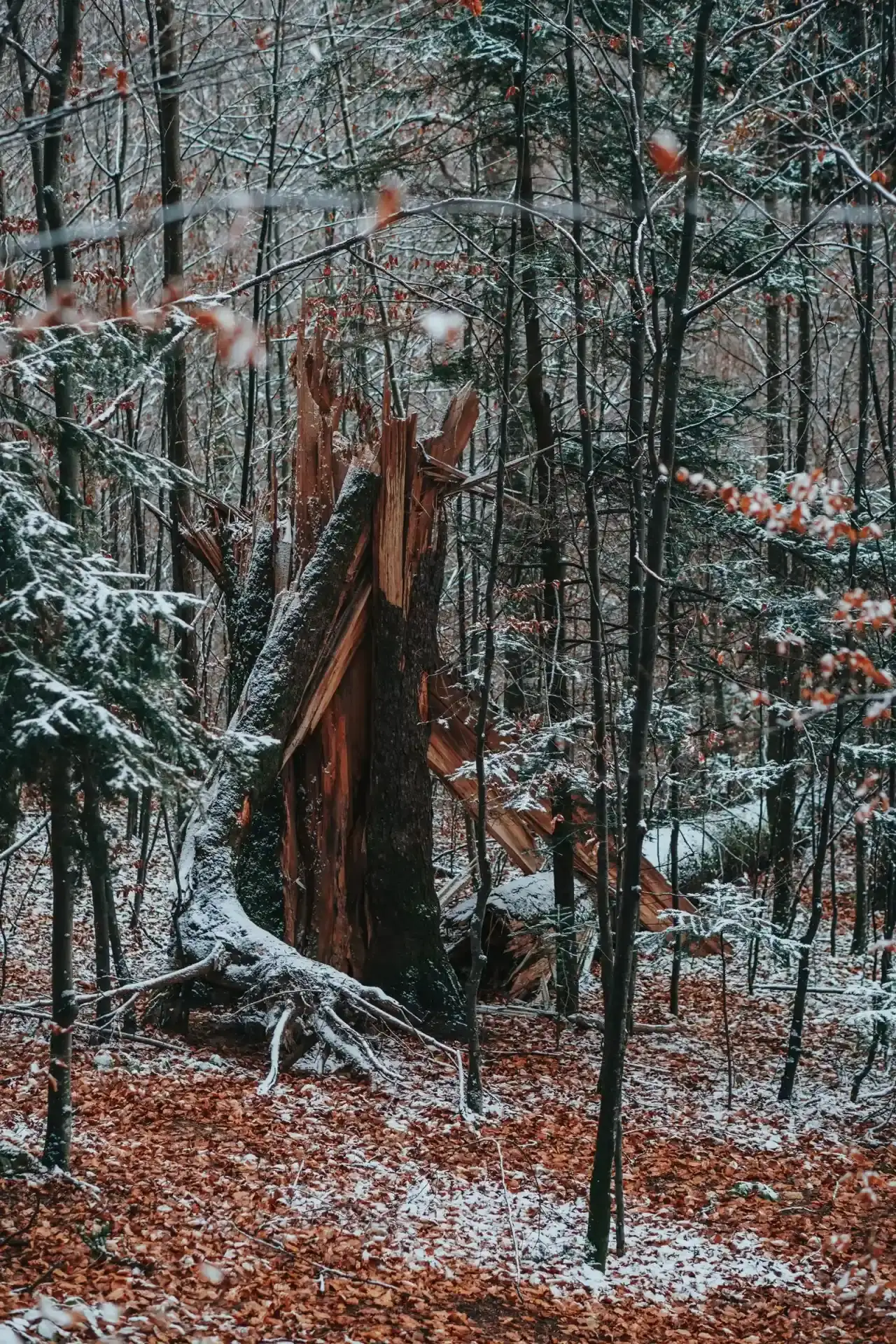
Old storm wounds with decay
Trees that survived 1991 may have rotted inward at broken limbs.
Heavy limbs over roofs after a winter of ice
Small cracks open further each season.
Ash thinning from the top
Emerald ash borer has spread through Monroe County.
Maples with dead tops
Salt, compaction and age along streets.
Restore or remove a damaged tree
Restore
- Lost less than half the crown
- Sound trunk
- Species that sprouts and recovers, such as many maples and lindens
- Corrective pruning over several years
Remove
- Lost three quarters of the crown
- Split trunk
- Decay at major wounds
- Weak species likely to fail again
The 1991 study supports keeping moderately damaged trees and investing in their pruning. Removing every damaged tree after a storm sacrifices canopy that could have recovered.
After an ice storm in Rochester
Stay clear until thaw
Iced limbs keep falling for hours.
Report lines down
To RG&E.
Remove hangers
Broken limbs caught in crowns come first.
Prune broken stubs cleanly
Back to a branch or the collar.
Reassess in summer
See how the tree leafs out before deciding its future.
Rochester tree questions
Who handles street trees in Rochester?
The city's Forestry Division manages trees in the public right-of-way.
Did lilacs really survive the ice storm?
Yes. County parks staff reported that lilacs held up well while many larger trees were destroyed.
Are ice storms still a risk?
Yes. Rochester sits in a region where freezing rain events recur, along with lake effect snow and windstorms.
What helps trees survive ice?
Strong species and early structural pruning. See young tree pruning for how that is done.
Reach a tree service in Rochester
Call to be connected with an independent tree company that works in the Rochester area, or leave your number and one will call you back.
(844) 955-1716Call availability varies by area and time of day
Limbwright is a referral service. Your call goes to an independent tree service company that sets its own schedule and terms. Ask for proof of insurance and a written scope before work starts. How this works
Call now
Talk to a tree service provider in your area. Have the tree's location and what it is near ready.
(844) 955-1716Call nowCall availability varies by area and time of day