
Downed power line, fire, gas smell or someone hurt? Call 911 first and stay at least 35 feet from any wire.
Storm damage · Ice
Ice Storm Tree Damage
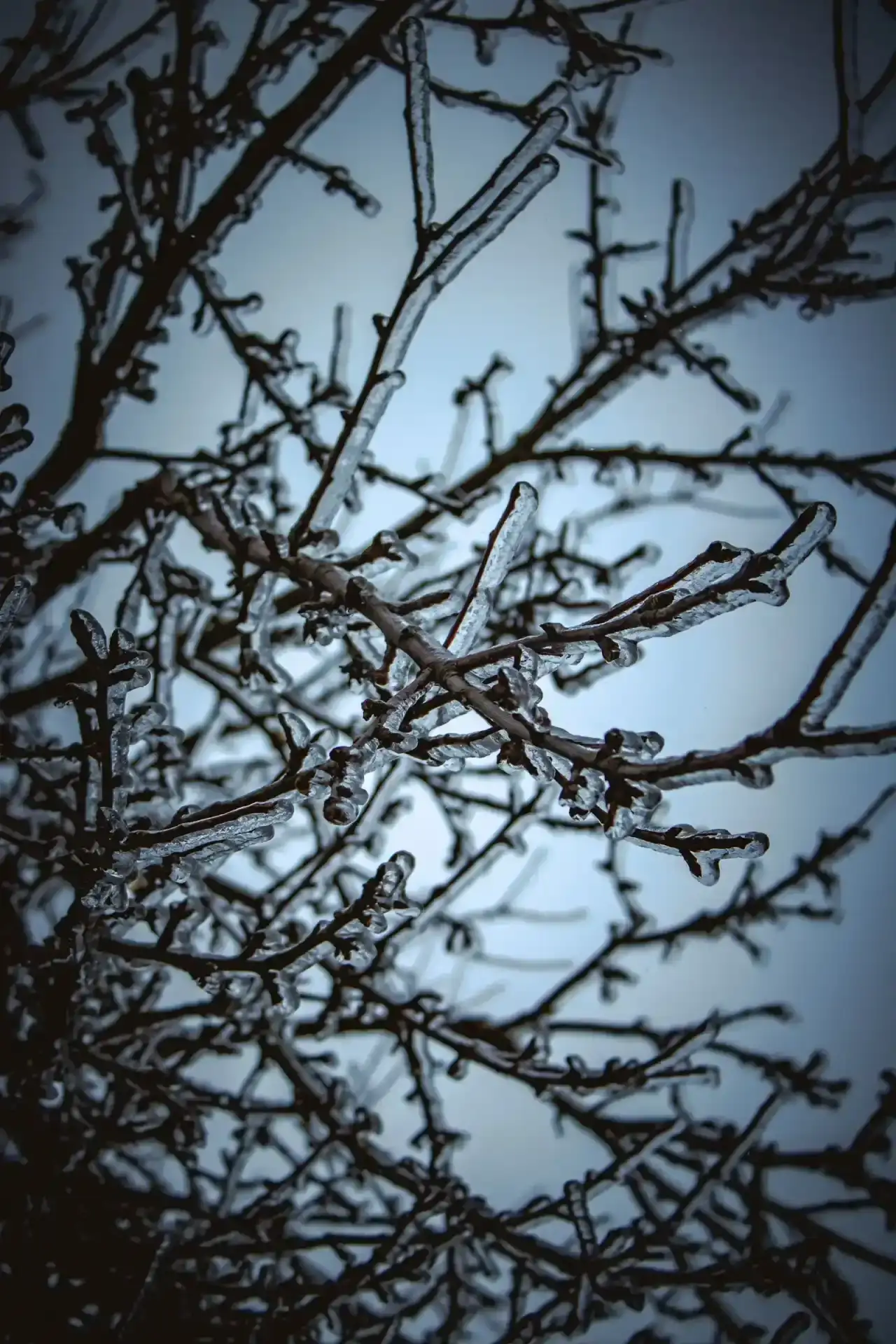
Half an inch of ice can add hundreds of pounds to a tree's branches. Trees bend, crack and shed limbs for hours after the ice stops falling, so the safest first step is to stay out from under them until they thaw.
Call availability varies by area and time of day. Calls are answered by an independent tree service provider.
What should I do with iced trees?
Nothing, until the ice melts. Do not shake branches or spray them with water. Stay away from trees near walks and drives, keep cars out from under them, and wait for thaw before assessing damage.
- Do not knock ice off
- Frozen branches are brittle and break more easily.
- Watch for lines
- Iced limbs often fall onto power lines.
- Assess after thaw
- Many bent trees spring back once the weight melts.
Which trees handle ice
| Tree | Ice tolerance | Typical damage |
|---|---|---|
| Bradford pear | Poor | Splits at narrow forks |
| Silver maple and Siberian elm | Poor | Large limb breakage |
| Birch | Poor | Bends to the ground and may not recover |
| Oaks | Moderate to good | Some limb loss |
| Ginkgo and hornbeam | Good | Minor twig breakage |
Damage that needs attention after thaw
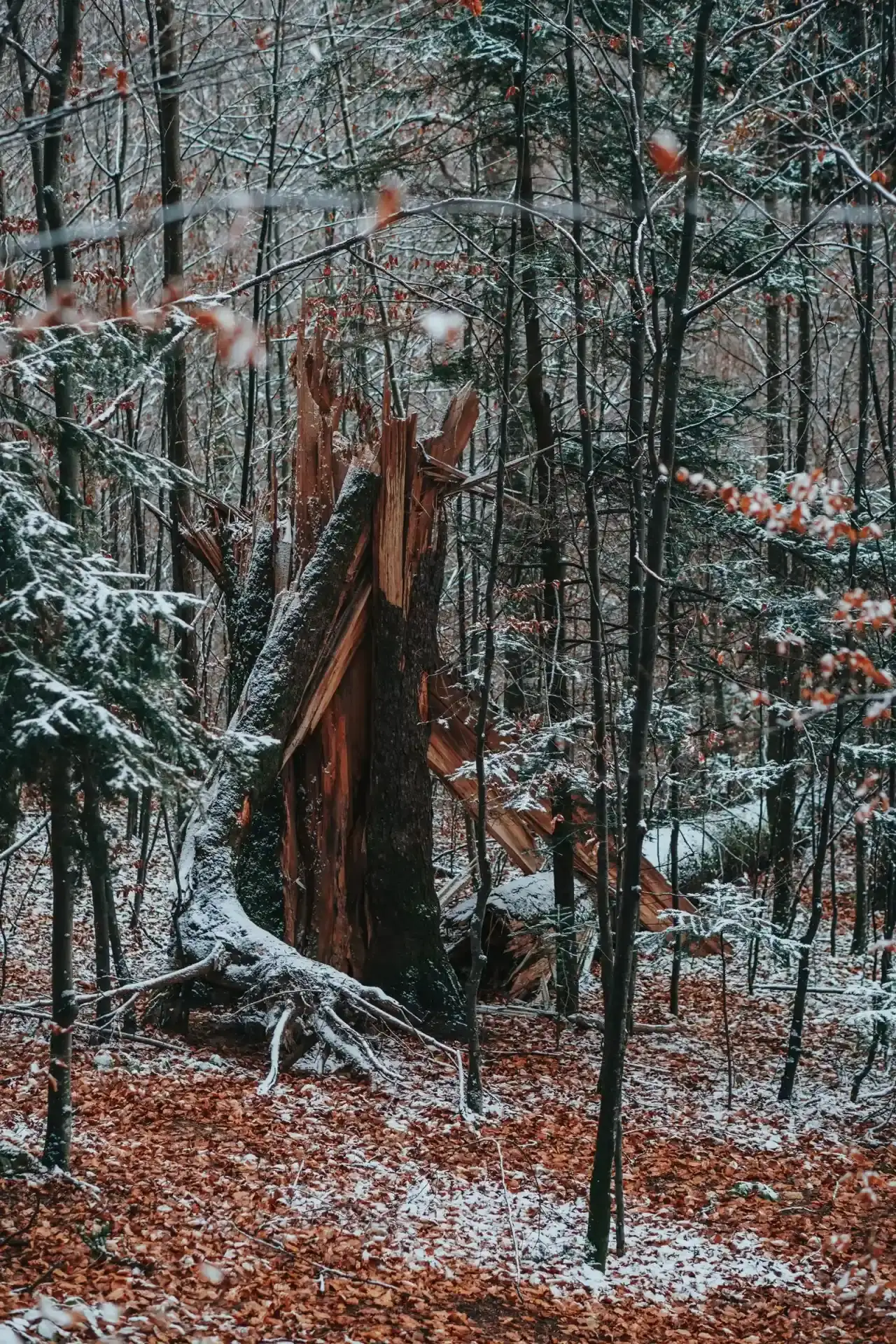
Broken leader or top
The main trunk snapped.
Split forks
Trunks torn apart at a V.
Hanging limbs
Caught in the crown and ready to fall.
Crown loss over half
Recovery is unlikely.
Bark torn from limbs
Long strips of bark where limbs broke.
Repair after an ice storm
Remove hangers
Broken limbs caught in the crown are cut down first, often from a bucket lift because climbing an ice-damaged tree is risky.
Make clean cuts
Broken stubs are cut back to the branch collar or a side branch.
Leave healthy wood
Avoid over-pruning the remaining crown.
Revisit later
Watch the next growing season for sprouting around wounds, then decide on structural pruning once the tree's response is clear.
Clear lines first
Branches on service drops are handled only after the utility has disconnected or confirmed the line is safe.
Repair the tree or take it down
Repair
- Less than half the crown lost
- Trunk intact
- Species that recovers well
Remove
- Trunk split
- Most of the crown lost
- Poorly structured species that will break again
Bradford pears damaged in ice storms rarely recover well. Many owners replace them with stronger species.
Bent trees and birches
Young trees and birches can bend to the ground under ice. Many will straighten within days or weeks after the ice melts. Do not prop them up while they are still frozen.
Trees that stay bent after a growing season may never stand up straight. Small ones can be staked for a year. Larger ones are often removed.
Clump birches and multi-stem trees are the most common casualties. Their thin stems arch outward under ice and some never return. If one stem in a clump stays bowed after a full summer, removing just that stem often keeps the rest of the clump looking natural.
Arborvitae and upright junipers splay open under ice and snow. Their stems can often be pulled back together and tied loosely with soft webbing in spring, then untied after a year once they have stiffened in place.
Where ice storms hit hardest
- Southern Plains
- Oklahoma and Texas see damaging ice storms; see Oklahoma City.
- Mid-South
- Kentucky, Tennessee and Arkansas see repeated ice events.
- Northeast
- The January 1998 ice storm damaged millions of acres of forest across northern New York, New England and eastern Canada.
- Upper Midwest
- Freezing rain on leafless maples and elms is a recurring winter risk in Iowa, Wisconsin and Michigan.
- Mid-Atlantic
- Freezing rain events are common in winter.
Ice storm questions
Can an ice-damaged tree recover?
Trees that lose less than half their crown and keep an intact trunk usually recover with proper pruning.
Should I wrap trees to protect them from ice?
No. Wrapping does not stop ice from forming.
When should ice damage be pruned?
Hazardous limbs right away, structural pruning in late winter or the next dormant season.
Do ice storms kill trees?
Sometimes directly, when a trunk splits or most of the crown is lost. More often they leave large wounds where limbs tore away, and decay entering those wounds shortens the tree's life over the following decade.
Does homeowners insurance cover ice storm tree damage?
Damage to the house and other covered structures from a falling tree is usually covered. Cleanup of trees that fell without hitting anything is often limited or excluded. Check the debris removal section of the policy.
Need a crew to look at it today?
Call and describe what the tree is on and whether lines are involved. You are connected with an independent tree company that handles urgent work in your area.
(844) 955-1716Call availability varies by area and time of day
Limbwright is a referral service. Your call goes to an independent tree service company that sets its own schedule and terms. Ask for proof of insurance and a written scope before work starts. How this works
Call now
Talk to a tree service provider in your area. Have the tree's location and what it is near ready.
(844) 955-1716Call nowCall availability varies by area and time of day