
Phoenix, Arizona
Tree Removal and Tree Service in Phoenix
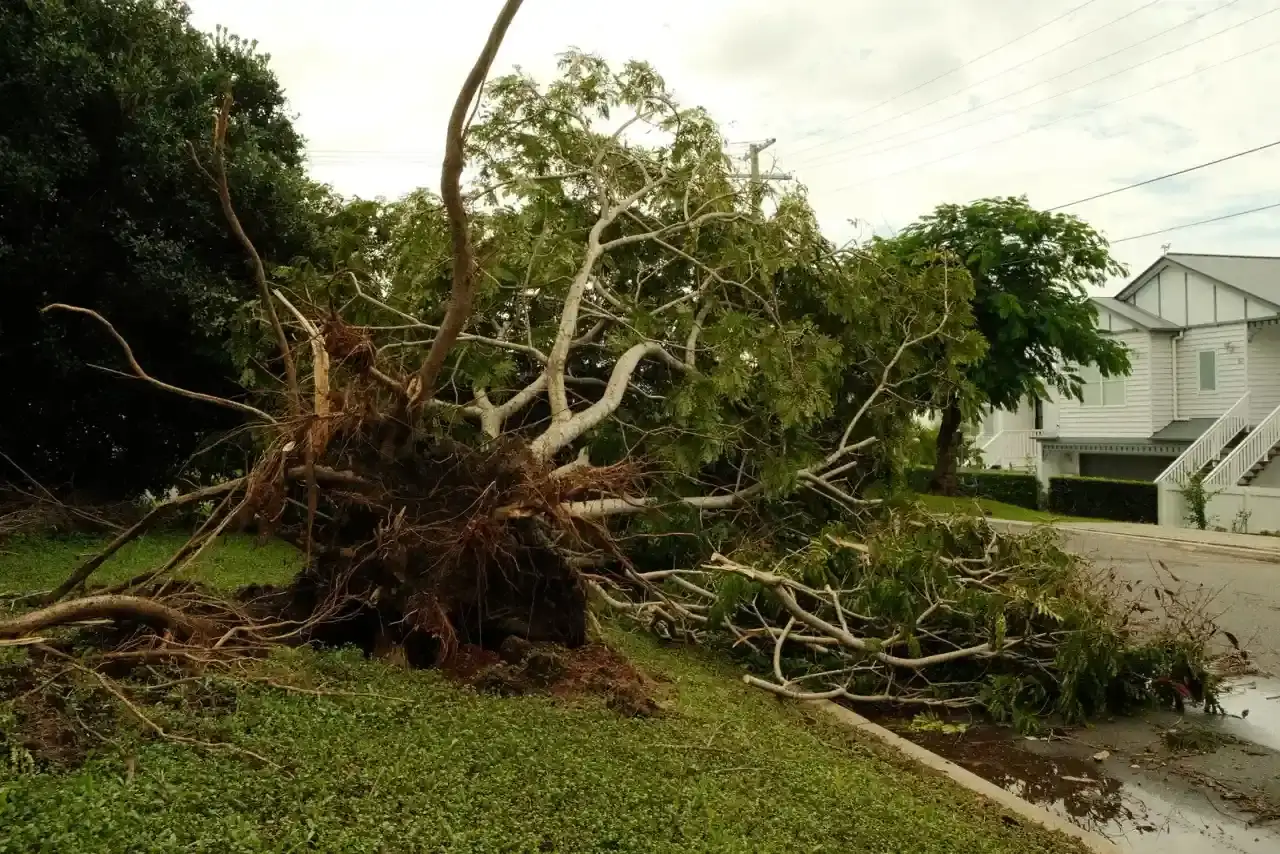
Phoenix has two kinds of urban forest. Older central neighborhoods are flood-irrigated and grow large ash, elm, pecan and citrus. Everything newer is desert landscaping on drip lines, where mesquite and palo verde blow over in the monsoon.
- County
- Maricopa
- Tree rules
- City of Phoenix for right-of-way and city trees. State native plant law.
- Key local rule
- No permit for ordinary trees on a single-family lot. Right-of-way trees need city approval.
- Electric utility
- Arizona Public Service and Salt River Project
- Main hazards
- Monsoon microbursts, extreme heat, sunburn after over-pruning
Do I need a permit to remove a tree in Phoenix?
For an ordinary tree on a single-family residential lot, the city does not typically require one. Trees in the public right-of-way do need city approval, and protected native plants fall under state law.
- Right-of-way
- Street trees and trees near sidewalks may be on public land even when they look like part of the yard. Ask the city first.
- Native plants
- Saguaro, ironwood, native mesquite and palo verde are covered by Arizona's native plant law, which has notice and permit steps.
- HOAs and historic districts
- Most newer subdivisions have landscape rules, and historic districts review visible changes.
City rules, HOAs and contractor licensing
Phoenix has strengthened its tree and shade requirements in recent years, but those rules are aimed at public, commercial and industrial property and new development. They do not regulate a homeowner removing a tree from a small private lot.
In practice the stricter rule usually comes from a homeowners association. Many require approval before a front-yard tree is removed and require a replacement. Read the landscape guidelines before you schedule work.
Arizona licenses landscaping and tree work through the Registrar of Contractors above a job-size threshold. Monsoon season brings many unlicensed crews. Look up the license number on the Registrar's site and ask for proof of insurance.
Flood irrigation and drip irrigation
In Arcadia, Encanto, Willo, Coronado and parts of the Biltmore area, yards are still flooded from canal water every couple of weeks in summer. The whole root zone is soaked deeply. Trees there grow large and root widely: Arizona ash, Chinese elm, pecan, mulberry, citrus and tall date palms.
Everywhere built since about 1980, water arrives through drip emitters set beside the trunk at planting and seldom moved. A mesquite or palo verde can put on a canopy 30 feet wide over a root system a few feet across.
That is the tree that goes over in July. The fix is simple and rarely done: thin the canopy correctly before the monsoon and move the emitters outward every few years.
Phoenix trees and their usual problems
| Tree | Where common | Usual problem |
|---|---|---|
| Hybrid mesquite and palo verde | Subdivisions, parking lots, medians | Blow over or split in monsoon wind |
| Indian rosewood, called sissoo | Yards planted since the 1990s | Aggressive surface roots that lift walls, pavers and pool decks |
| Arizona ash and Modesto ash | Flood-irrigated districts | Dieback, borers and sunburn in aging trees |
| Eucalyptus and Aleppo pine | Older large lots | Very large limb failures. Pines browning in heat. |
| Mexican fan palm | Citywide | Dead frond skirts. Annual trimming. |
| Citrus | Central and east Phoenix | Sunburned trunks when skirts are pruned up |
Heat as a cause of tree loss
- Record summers
- In 2023 the city recorded 31 consecutive days at or above 110 degrees, and 2024 was hotter overall. Trees that had coped for decades died.
- Night temperatures
- Pavement keeps nights above 90 degrees in midsummer, so trees get no recovery period.
- Sunburn
- Bark exposed by heavy pruning cracks and dies on the south and west sides.
- What helps
- Deep, infrequent watering, mulch, and leaving interior foliage to shade the limbs.
After a monsoon blowdown
Check for wires and gas
Stay away from anything touching a line and call the utility.
Photograph before moving anything
For insurance and for any HOA replacement requirement.
Decide quickly on small trees
A young tree stood back up within a day or two may survive. A mature one rarely does.
Use a licensed contractor
See fallen tree removal for what the job involves.
Phoenix tree service questions
Should I have my trees thinned before monsoon season in Phoenix?
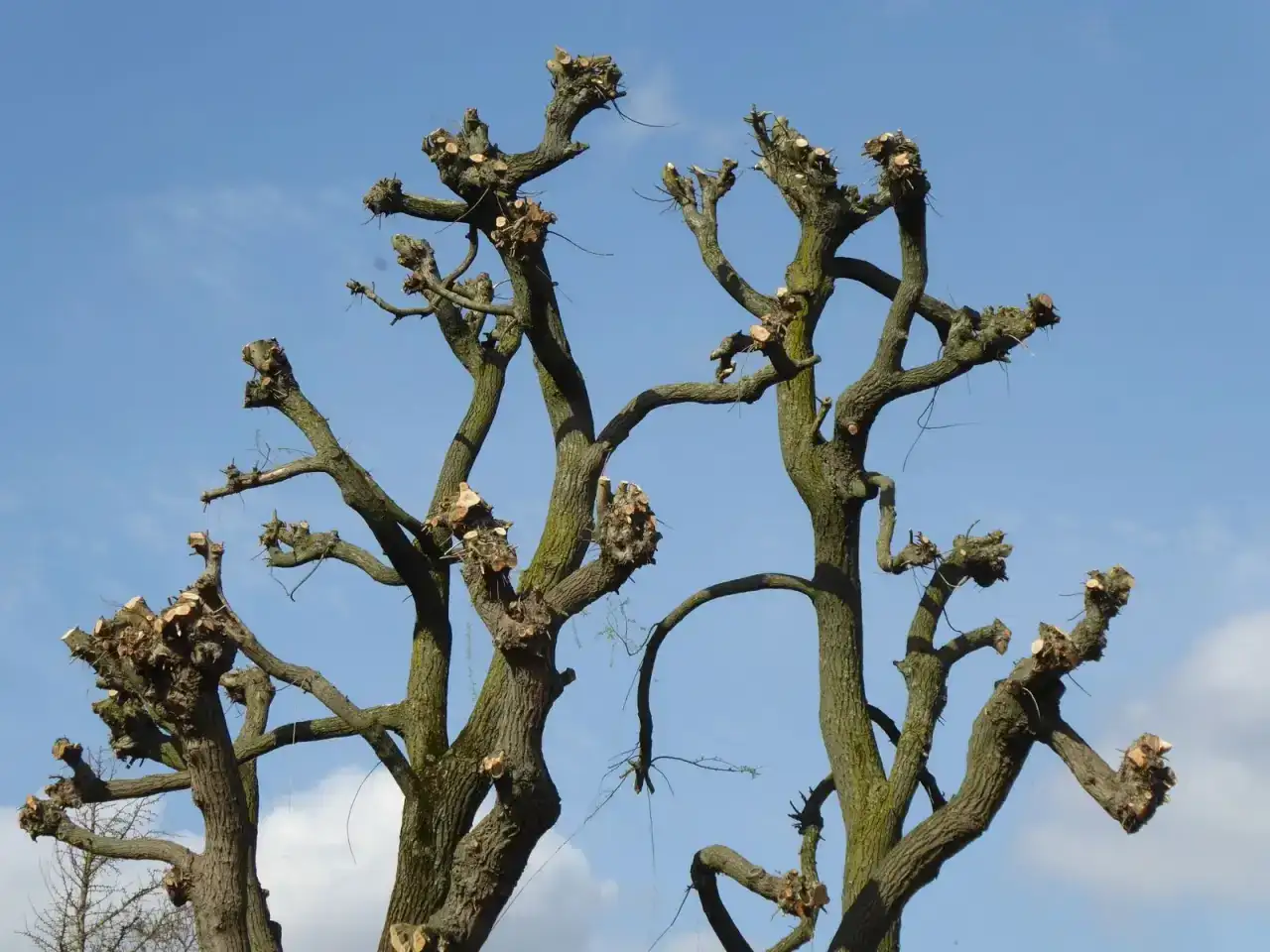
Yes, if it is done correctly: whole branches removed back to their origin, no more than about a quarter of the canopy. Stripping the interior or topping the tree makes failure more likely.
Are sissoo trees a problem?
Often. Indian rosewood grows fast and sends shallow roots under walls, patios and pools, with suckers coming up across the yard. Many owners remove them, and the stump must be treated or ground to stop resprouting.
Does my HOA have to approve a tree removal?
Frequently, for front-yard trees. Check your community's landscape guidelines. A dead or fallen tree is usually approved with a replacement.
When should palms be trimmed in Phoenix?
Early summer, after the flower stalks appear. Remove dead fronds and stalks only.
Reach a tree service in Phoenix
Call to be connected with an independent tree company that works in the Phoenix area, or leave your number and one will call you back.
(844) 955-1716Call availability varies by area and time of day
Limbwright is a referral service. Your call goes to an independent tree service company that sets its own schedule and terms. Ask for proof of insurance and a written scope before work starts. How this works
Call now
Talk to a tree service provider in your area. Have the tree's location and what it is near ready.
(844) 955-1716Call nowCall availability varies by area and time of day