
Tempe, Arizona
Tree Removal and Tree Service in Tempe
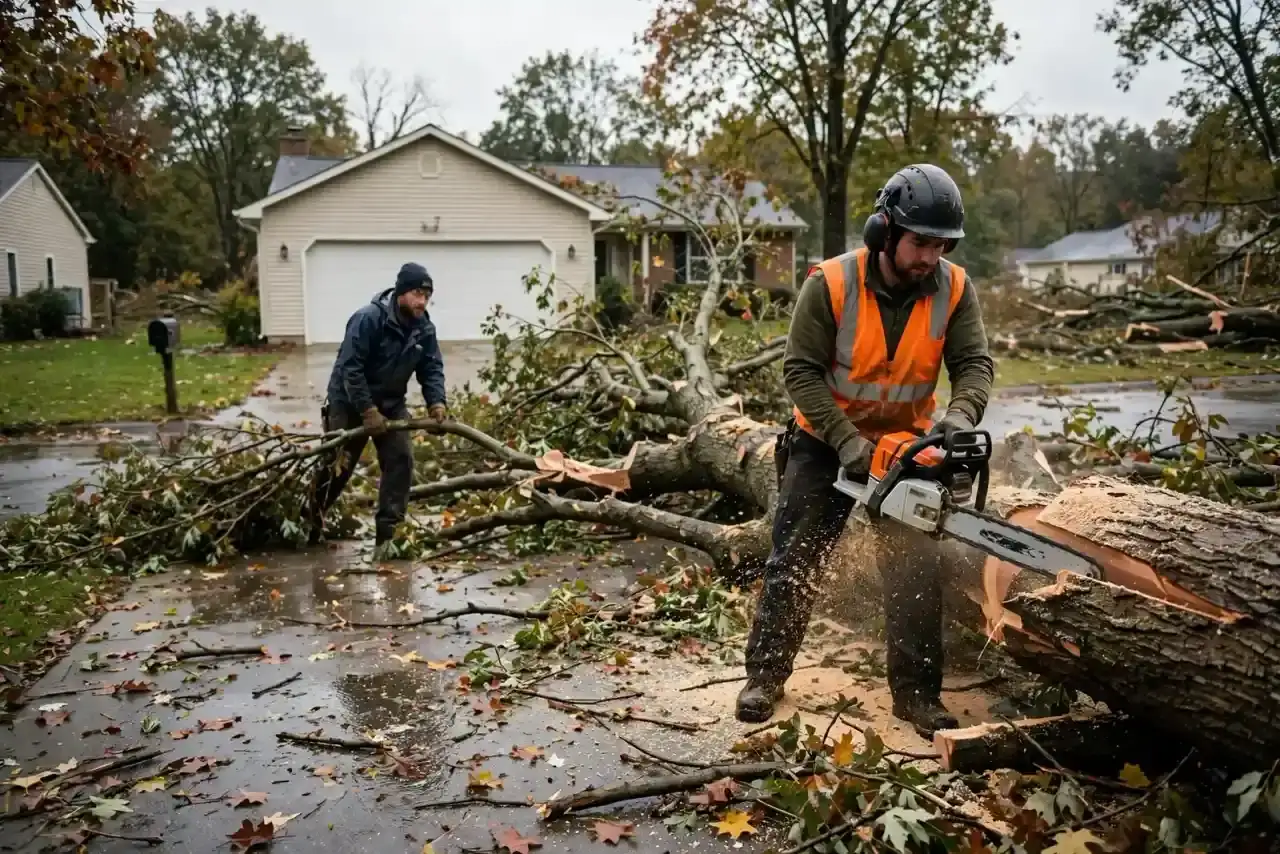
On October 10, 2025, a microburst hit Tempe with winds strong enough to damage more than 1,200 homes and buildings. About 500 trees came down in city parks alone, with hundreds more in rights-of-way and countless in yards. The mayor declared an emergency, and the city and SRP have since teamed up to replant with native trees placed away from power lines.
- County
- Maricopa
- Tree rules
- City of Tempe forestry for park and right-of-way trees
- Key local rule
- City trees in parks and rights-of-way are managed by the city; private trees are the owner's responsibility
- Electric utility
- Salt River Project (SRP) and APS
- Main hazards
- Monsoon microbursts, extreme heat, overwatered shallow roots, palms near lines
October 10, 2025
Microbursts are columns of air that drop out of a thunderstorm and spread across the ground at high speed. The one that hit Tempe arrived after the usual monsoon season and with little warning. City figures later counted 1,001 damaged households and 144 destroyed, and more than 1,200 damaged structures in all.
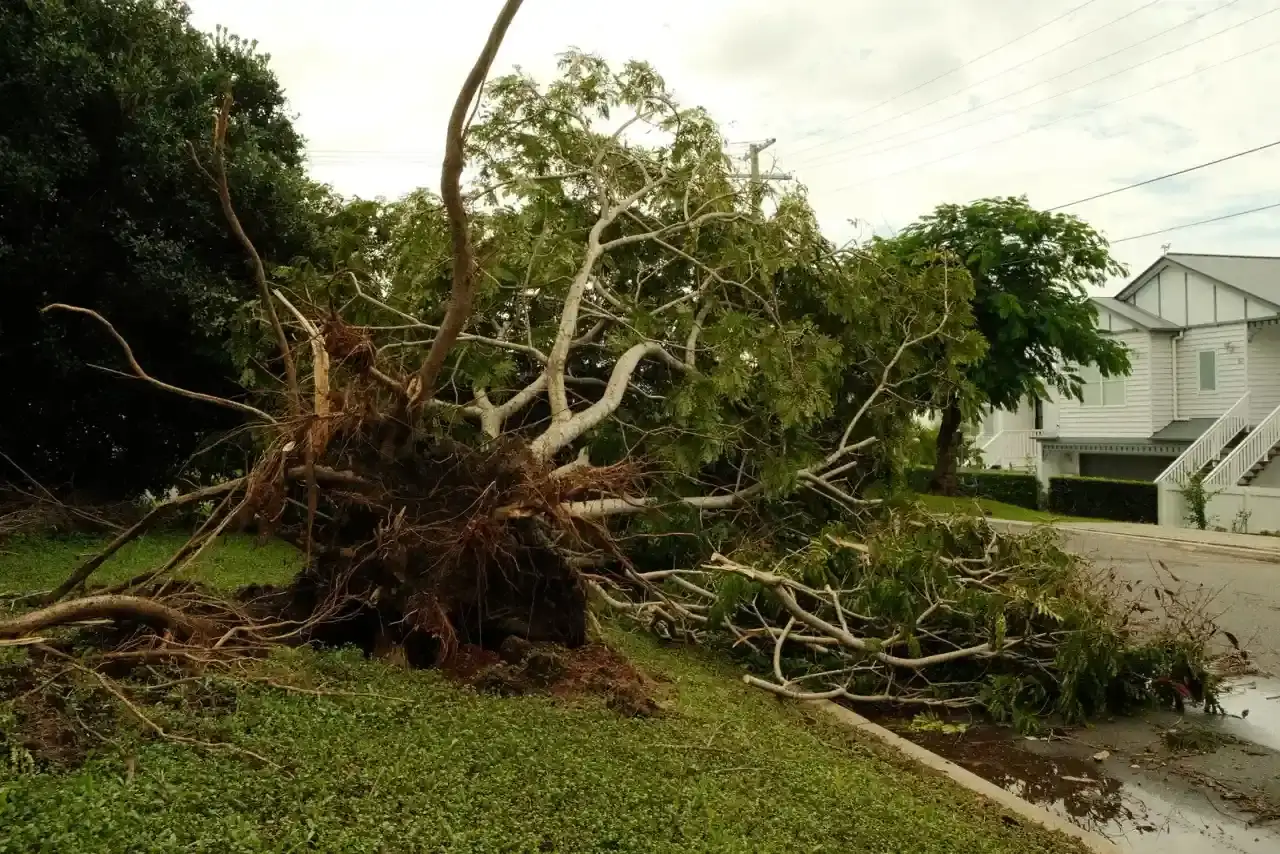
Trees were among the biggest casualties. Mature mesquites, eucalyptus, pines and ash in parks were uprooted or snapped, and many fell on houses, cars and power lines. Crews spent weeks clearing debris.
A year later, the city urged residents to prepare for storm season by assessing and pruning trees before monsoon winds arrive.
Why do so many Valley trees blow over?
Mostly because of how they are watered. Frequent shallow irrigation keeps roots in the top few inches of soil, so a big crown has little anchoring it. Dense, unthinned canopies catch more wind. Trees planted in narrow strips between pavement have nowhere to spread roots.
- Water deeply
- Less often, to drive roots down.
- Thin before monsoon
- Light structural pruning, not stripping.
- Right tree, right place
- Native species away from lines.
Trees in Valley storms
| Tree | Wind performance | Notes |
|---|---|---|
| Native mesquite and palo verde | Good when watered deeply and pruned | Fail when shallow-rooted |
| Eucalyptus | Poor near structures | Tall and brittle |
| Aleppo and Afghan pine | Moderate | Large crowns catch wind |
| Date palm | Good | Keep dead fronds trimmed |
| Ironwood | Very good | Slow-growing native |
Getting trees ready for storm season
Change the watering
Deep and infrequent, out at the canopy edge.
Thin dense crowns lightly
Remove crossing and weak limbs.
Remove dead palm fronds and seed pods
Before summer storms.
Check lean and roots
Have damaged survivors assessed.
Keep trees off lines
Contact SRP or APS for line clearance.
Recovery and replanting
After the microburst, the city removed high-risk trees to prevent further outages and began replanting native trees in safer locations away from power lines, in partnership with SRP. Trees in parks and city rights-of-way are managed by the city.
Private trees damaged in the storm are the owner's responsibility. Many owners have had to decide whether a leaning or split tree can be saved.
Trees to check after a Valley storm
Trees still leaning since the storm
Roots partly torn; likely to fail again.
Mesquites with dense, top-heavy crowns
Need thinning before monsoon.
Eucalyptus near houses
Tall and prone to limb drop.
Palms with dead fronds
Projectiles in high winds.
Tempe tree questions
Can a mesquite that blew over be stood back up?
Small trees can sometimes be righted and staked. Large trees with torn roots usually cannot and should be removed.
Is a microburst the same as a tornado?
No. A microburst is a downdraft that spreads straight out from a storm, but its winds can be as damaging as a weak tornado.
Who removes downed trees in city parks?
The City of Tempe. Private trees are the owner's responsibility.
What should I plant after losing a tree?
Native desert trees such as palo verde, mesquite, ironwood or desert willow, watered deeply and placed away from lines and walls.
When is monsoon season?
Officially June 15 through September 30, though the 2025 microburst came in October.
Reach a tree service in Tempe
Call to be connected with an independent tree company that works in the Tempe area, or leave your number and one will call you back.
(844) 955-1716Call availability varies by area and time of day
Limbwright is a referral service. Your call goes to an independent tree service company that sets its own schedule and terms. Ask for proof of insurance and a written scope before work starts. How this works
Call now
Talk to a tree service provider in your area. Have the tree's location and what it is near ready.
(844) 955-1716Call nowCall availability varies by area and time of day