
Tree removal · Oaks
Oak Tree Removal
Oaks are the trees cities protect most often, the heaviest common wood to rig, and in many states the host of oak wilt. Removing one usually means checking a permit, choosing the season and planning for weight.
Call availability varies by area and time of day. Calls are answered by an independent tree service provider.
Do you need a permit to remove an oak?
Often. Many cities protect oaks above a set trunk diameter, and some protect particular species from a small size. Live oaks in Southern cities and coast live oaks in California are among the most protected trees in the country.
- Dead or hazardous oaks
- Some cities waive or speed up permits with documentation.
- HOAs
- Homeowners associations may have their own approval requirements on top of the city.
Oak wilt timing
Oak wilt spreads when sap beetles carry spores from infected trees to fresh wounds on healthy oaks. The risk is highest in spring and early summer. Texas and the Upper Midwest advise against pruning or wounding oaks during that period.
Removing an oak in the risk season can also put spores on nearby oaks if the wood from an infected tree is moved or stored as firewood. Infected wood should be handled according to state guidance.
Oak species and removal considerations
| Oak | Where | Removal notes |
|---|---|---|
| Live oak | Southeast, Texas, Gulf coast | Wide limbs and heavy wood; often protected |
| Water and laurel oak | Southeast | Short-lived, prone to decay and breakage around 50 to 70 years |
| Red oak group | East and Midwest | Very susceptible to oak wilt |
| White and bur oak | East, Midwest, Plains | Long-lived, resistant to oak wilt, worth saving |
| Coast live oak | California | Sudden oak death, strict local protection |
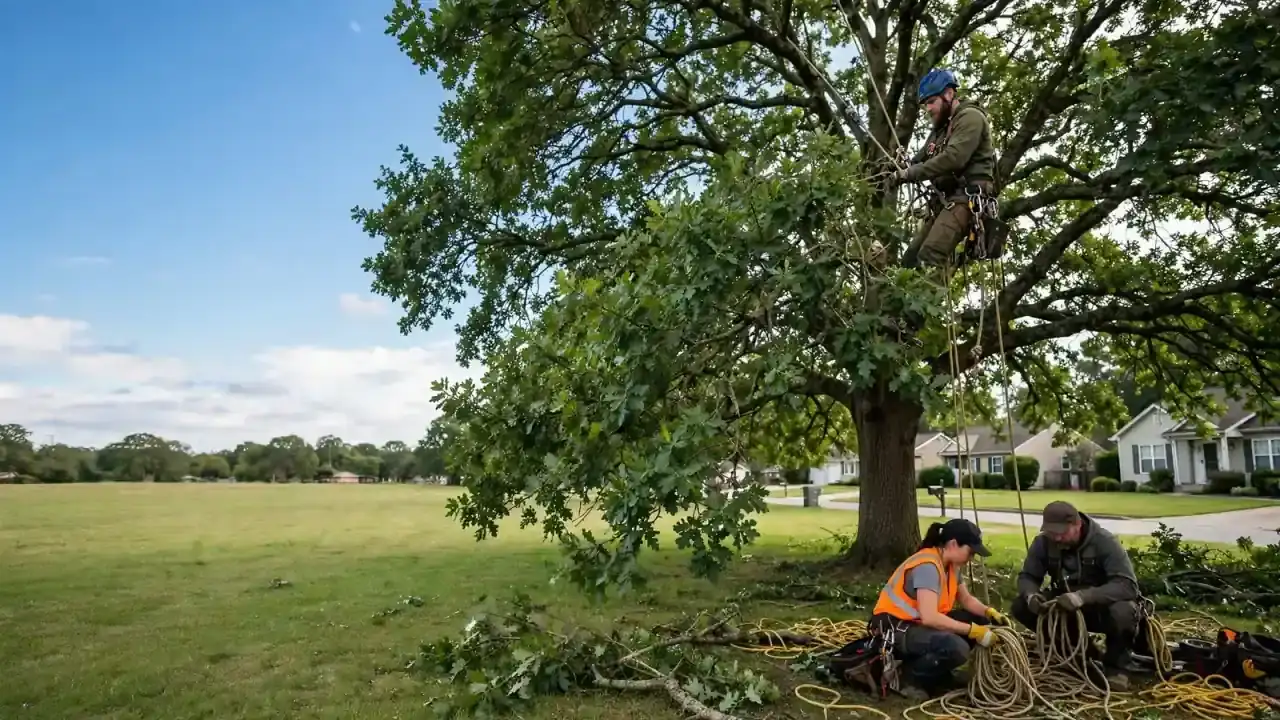
How a large oak is removed
Check permit and season
Confirm local approval and avoid wounding healthy oaks in high-risk wilt periods.
Plan rigging
Oak wood is dense, so limbs are cut smaller and lowered with heavier gear than for pine.
Remove limbs
Long horizontal limbs are cut in sections, often with a crane in tight yards.
Section trunk
The trunk is cut into pieces that equipment can handle.
Stump
Oak stumps grind slowly but rarely resprout once the tree is mature.
Signs an oak may need to come down
Leaves browning from edges inward in summer
Possible oak wilt in red oaks, which can die in weeks.
Mushrooms at the base
Root rot fungi such as Armillaria and Ganoderma weaken the roots.
Large dead limbs
Oaks shed big limbs as they decline.
Cavities in the trunk
Some cavities are stable. Large ones need assessment.
Keep or remove an oak
Keep
- Sound trunk and roots
- White oak group with good vigor
- Pruning can solve clearance issues
Remove
- Confirmed oak wilt in a red oak
- Major decay or root failure
- Short-lived species at the end of its life
Mature oaks are hard to replace. When in doubt, get a risk assessment first.
What makes oak removal more involved
- Weight
- Green oak weighs far more than pine per cubic foot, so pieces are smaller.
- Spread
- Wide crowns may reach over multiple roofs or property lines.
- Permits
- Applications, inspections and replacement plantings take time.
- Disease handling
- Infected wood may need to be debarked, covered or kept on site.
Oak removal questions
When is the best time to remove an oak?
In oak wilt areas, the dormant season or the hottest part of summer is safer for nearby oaks. Hazardous oaks should be removed whenever needed.
Can I keep firewood from an oak with oak wilt?
Follow state guidance. Infected wood should usually be split, dried and covered with plastic sealed to the ground until it is fully dry.
Why does oak take so long to grind?
Oak is dense, so the cutter wheel removes less wood per pass.
Do oaks have to be replaced?
Many protected tree ordinances require replacement planting, sometimes inch for inch of the removed trunk diameter. The permit will state what is required.
Is a hollow oak always dangerous?
No. Oaks can stand for decades with a hollow if enough sound wood remains around it. An arborist can measure the shell thickness with a resistance drill or sounding.
Talk to a oak tree removal provider
Call to be connected with an independent tree service company near you.
(844) 955-1716Call availability varies by area and time of day
Limbwright is a referral service. Your call goes to an independent tree service company that sets its own schedule and terms. Ask for proof of insurance and a written scope before work starts. How this works
Call now
Talk to a tree service provider in your area. Have the tree's location and what it is near ready.
(844) 955-1716Call nowCall availability varies by area and time of day