
Clearing · Wildfire
Defensible Space Tree Clearing
Defensible space is the area around a house where trees and plants are managed so a wildfire slows down and embers find less to ignite. It does not mean removing every tree. It means spacing them, limbing them up and keeping the area closest to the house almost bare of fuel.
Call availability varies by area and time of day. Calls are answered by an independent tree service provider.
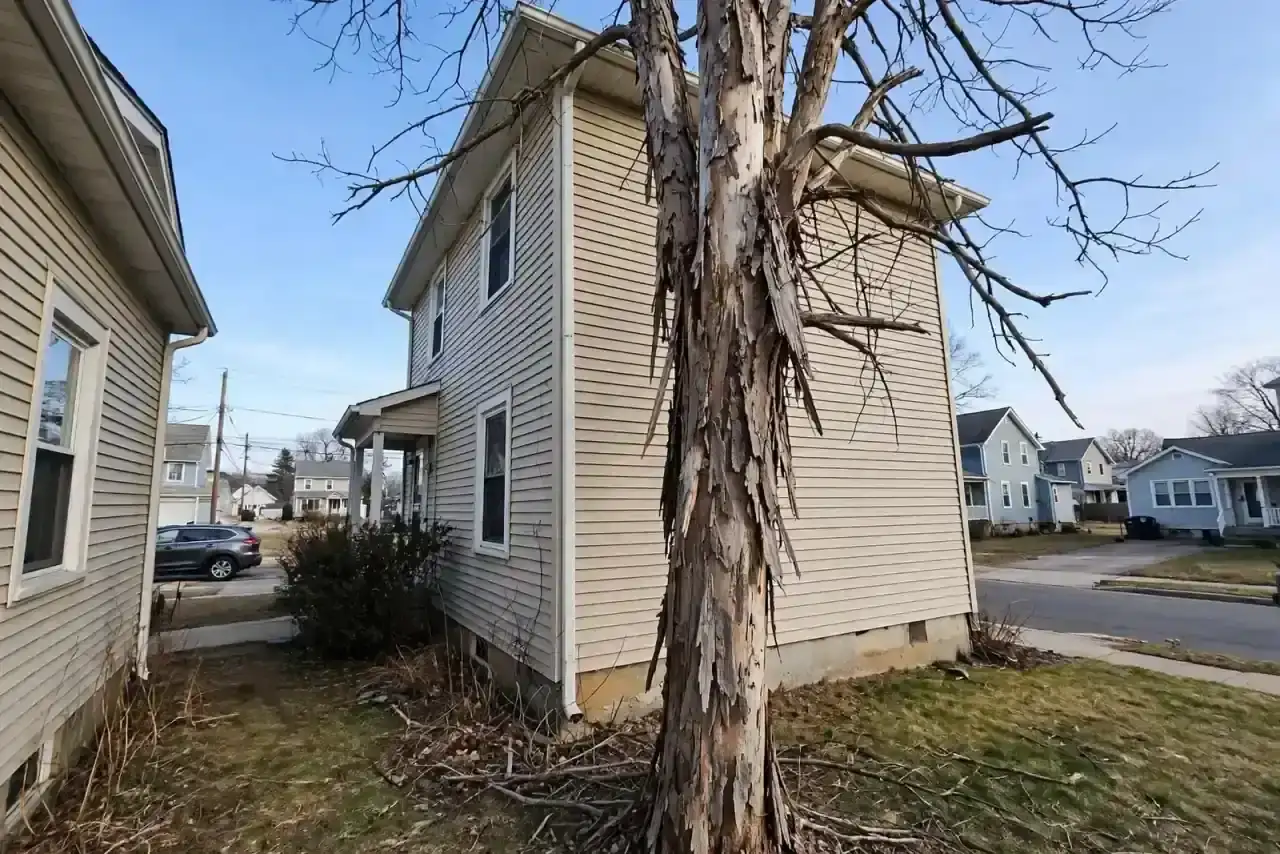
The three defensible space zones
| Zone | Distance from house | What to do with trees |
|---|---|---|
| Zone 0, ember-resistant | 0 to 5 feet | No trees or branches overhanging the roof; no mulch or dead material against walls |
| Zone 1, lean, clean and green | 5 to 30 feet | Remove dead plants and branches, space trees, keep branches 10 feet from chimneys |
| Zone 2, reduced fuel | 30 to 100 feet | Thin trees and shrubs, remove ladder fuels, mow grass to about 4 inches |
These zones follow CAL FIRE guidance. Other western states and Firewise USA use similar distances.
Legal requirements in California
California Public Resources Code 4291 requires owners of buildings in or next to mountainous, forest, brush or grass-covered land in state responsibility areas to maintain 100 feet of defensible space, or to the property line if closer. Local fire agencies enforce similar rules in many cities and counties.
A 2020 state law added the 0 to 5 foot ember-resistant zone, with detailed rules being developed by the Board of Forestry. Inspectors check clearance each year in many high-risk areas, and some insurers ask for proof of compliance.
Tree spacing by slope
Horizontal spacing is measured between the edges of tree canopies, not between trunks. Steeper slopes need more space because fire runs uphill faster.
| Slope | Space between tree canopies | Space between shrubs |
|---|---|---|
| Flat to mild, under 20 percent | 10 feet | Twice the height of the shrub |
| Mild to moderate, 20 to 40 percent | 20 feet | Four times the height of the shrub |
| Moderate to steep, over 40 percent | 30 feet | Six times the height of the shrub |
Spacing figures are from CAL FIRE's defensible space plant spacing guide.
How a defensible space job is done
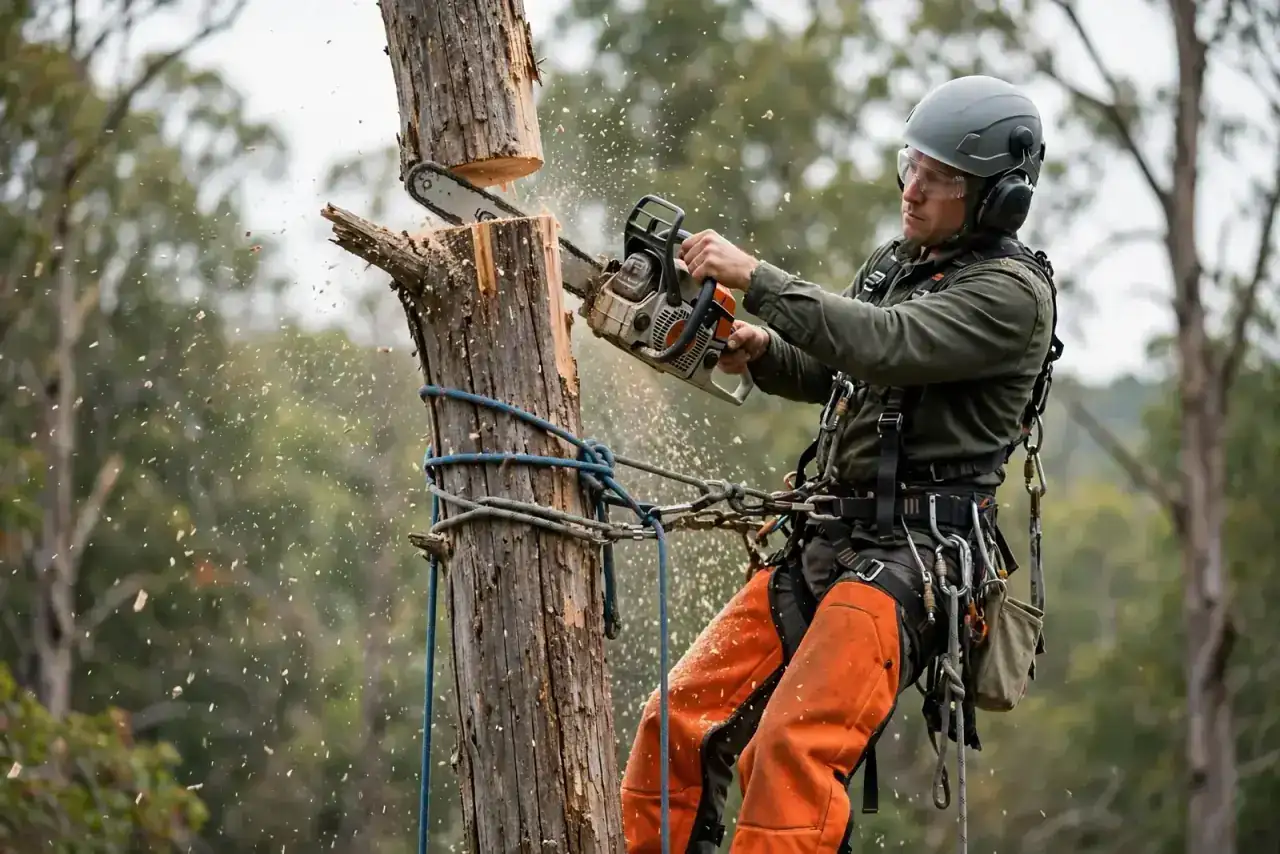
Walk the zones
Measure out 5, 30 and 100 feet from the house and note trees, shrubs and slope.
Remove dead trees
Dead and dying trees within 100 feet are taken out first.
Limb up
Lower branches are removed to at least 6 feet above the ground, or more on taller trees.
Thin for spacing
Trees are removed to reach the canopy spacing for the slope.
Clear under and around
Shrubs below trees are removed or spaced to stop fire climbing.
Fire risks around a house
Branches over the roof
Embers and burning debris land on roofs and in gutters.
Dead needles in gutters
Common ember ignition point.
Shrubs under trees
Ladder fuels that carry fire into the canopy.
Junipers and other oily plants near walls
Burn fast and hot.
Dead trees on the lot
Dry wood that burns readily.
Thinning or clear-cutting
Thinning
- Keeps shade and a natural look
- Removes ladder fuels and crowded trees
- Meets most defensible space rules
Clear-cutting
- Removes all trees
- Not required by defensible space rules
- Exposes soil to erosion and invites grass and brush that may burn faster
Well-spaced, limbed-up trees with clean ground beneath can be safer than an open lot of dry grass.
Where defensible space work is common
- California
- Statewide rules, with city programs in Los Angeles, San Diego and Oakland.
- Colorado Front Range
- Foothill communities west of Denver follow Colorado State Forest Service guidance.
- Pacific Northwest
- Eastern Oregon and Washington, and Oregon's statewide wildfire programs.
- Intermountain West
- Boise foothills, northern Arizona and New Mexico.
Defensible space questions
Do I need to remove all trees near my house?
No. Healthy, well-spaced trees with branches cleared from the roof and lower trunk are allowed in most rules.
How high should tree branches be limbed?
At least 6 feet from the ground, and higher for tall trees. Shrubs below trees call for extra clearance.
Who enforces defensible space rules?
In California, CAL FIRE and local fire departments. Elsewhere, local fire districts and some homeowners associations.
When should defensible space work be done?
Before fire season, which in much of California and the West means late spring.
Talk to a defensible space tree clearing provider
Call to be connected with an independent tree service company near you.
(844) 955-1716Call availability varies by area and time of day
Limbwright is a referral service. Your call goes to an independent tree service company that sets its own schedule and terms. Ask for proof of insurance and a written scope before work starts. How this works
Call now
Talk to a tree service provider in your area. Have the tree's location and what it is near ready.
(844) 955-1716Call nowCall availability varies by area and time of day