
Question guide
Tree Roots in the Sewer Line: What to Do
Updated · Limbwright editorial
Short answer
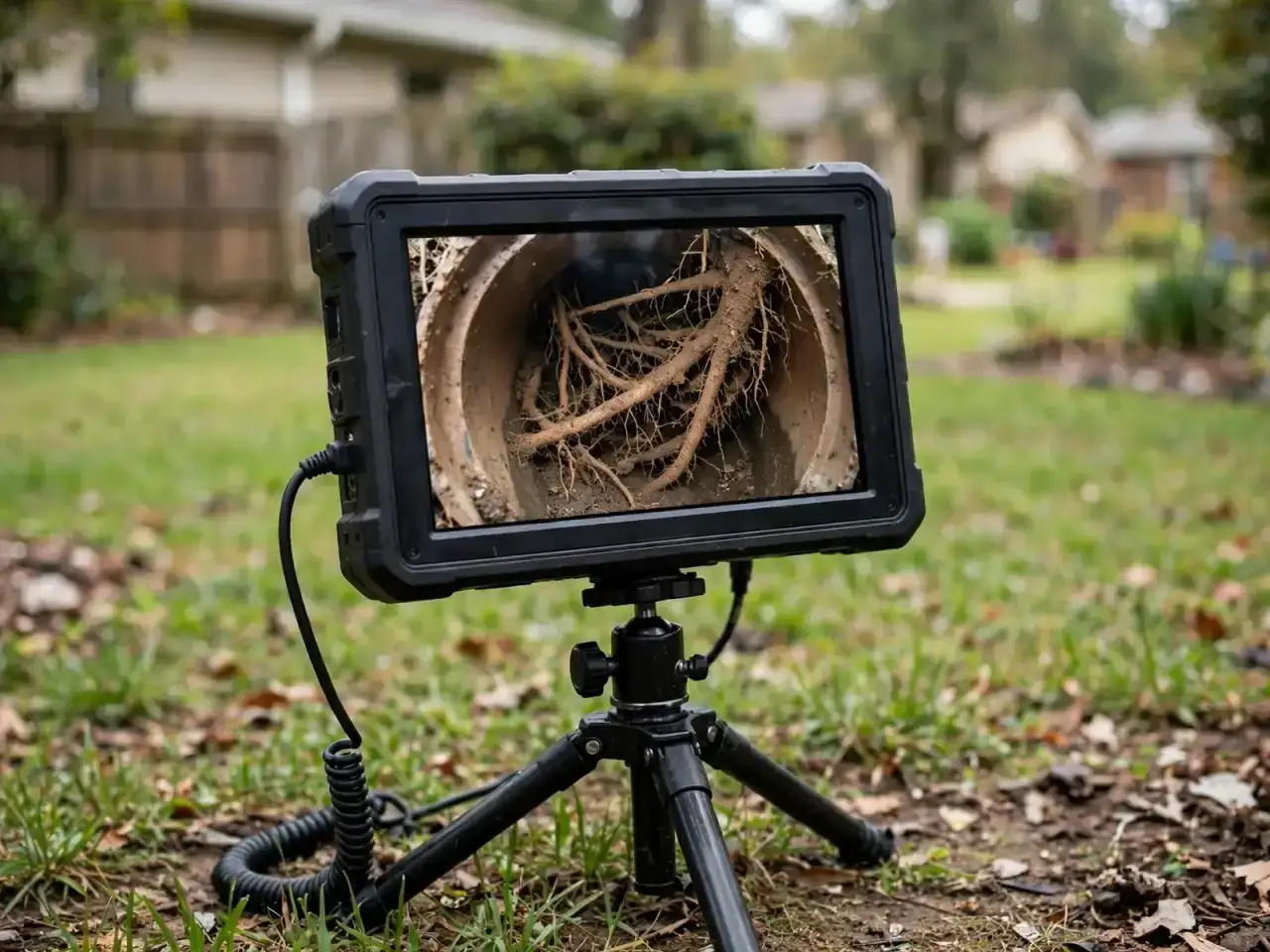
Roots do not break into sound pipes. They find small leaks at cracks and joints in old clay or cast iron lines and grow toward the moisture. Clearing the roots and repairing or lining the pipe fixes the problem. Removing the tree alone often does not, because other trees' roots will find the same leak.
Do I have to remove the tree?
Usually not. A plumber clears the roots and repairs or lines the pipe. Removal makes sense when the tree is right over the line, is a fast, water-seeking species, or is unhealthy anyway.
- Fix the pipe
- The real cure.
- Keep the tree
- If it is healthy and not right on top of the line.
- Remove
- When the tree sits over the pipe or is failing.
Signs of roots in the line
Slow drains throughout the house
Especially the lowest fixtures.
Gurgling toilets
Air trapped behind a partial blockage.
Repeated backups
Roots regrow after each clearing.
Lush patches of lawn over the line
A leak feeding the grass.
Common fixes
| Fix | What it does |
|---|---|
| Mechanical clearing | Cuts roots out of the pipe; they regrow if the pipe is cracked |
| Camera inspection | Shows where and how the pipe is damaged |
| Pipe lining | Seals cracks from inside, stopping root entry |
| Pipe replacement | For collapsed or badly damaged sections |
Trees most often blamed
- Willows and poplars
- Aggressive, water-seeking roots.
- Silver maple
- Fast-growing with extensive shallow roots.
- Sycamore and elm
- Large trees with strong roots.
- Any tree near an old clay line
- The pipe is the weak point.
Sewer root questions
Who is responsible if a city tree's roots are in my line?
Rules vary. In many cities the private lateral is the owner's responsibility regardless of the tree.
Do root-killing products work?
Some slow root growth in pipes but are restricted in places. They do not fix the crack.
Can I plant trees near my sewer line?
Choose smaller species and plant well away from the line.
Why old pipes let roots in
After a repair, keep an eye on drains for the first year. If slow drains return, a quick camera check can show whether roots have found another joint further along the line.
Many homes built before the 1980s have sewer laterals made of clay tile or cast iron with joints every few feet. Over decades, joints shift, gaskets fail and pipes crack, letting a small amount of water and nutrients leak into the soil. Fine roots sense that moisture, grow into the gap and then thicken inside the pipe, catching paper and waste until the line slows or blocks.
Plastic pipes with sealed joints resist root entry much better. A camera inspection is the best way to see the pipe material, the condition of each joint and exactly where roots are entering. With that information, a plumber can recommend clearing, lining or replacing a section, and you can decide whether the nearby tree also needs attention.
Who to call
Call a plumber for the pipe. If the tree needs to come out, or its roots need cutting near the house, a tree crew handles that safely. See tree root removal and tree removal.
This guide is general information, not professional, legal or insurance advice. Tree conditions, local rules and policy terms vary. Have a qualified arborist inspect the tree, and confirm regulations and coverage with your city and insurer.
Want someone to look at the tree?
Call to be connected with an independent tree service company in your area.
(844) 955-1716Call availability varies by area and time of day
Limbwright is a referral service. Your call goes to an independent tree service company that sets its own schedule and terms. Ask for proof of insurance and a written scope before work starts. How this works
Call now
Talk to a tree service provider in your area. Have the tree's location and what it is near ready.
(844) 955-1716Call nowCall availability varies by area and time of day