Question guide
A Storm Is Coming: What About My Trees?
Updated · Limbwright editorial
Short answer
Trees with dead limbs, decay, a lean or recent root damage are the most likely to fail. In the days before a storm, move cars and outdoor furniture away from them, clear loose debris, and avoid heavy pruning, which cannot be finished safely in time. During the storm, stay in rooms away from big trees.
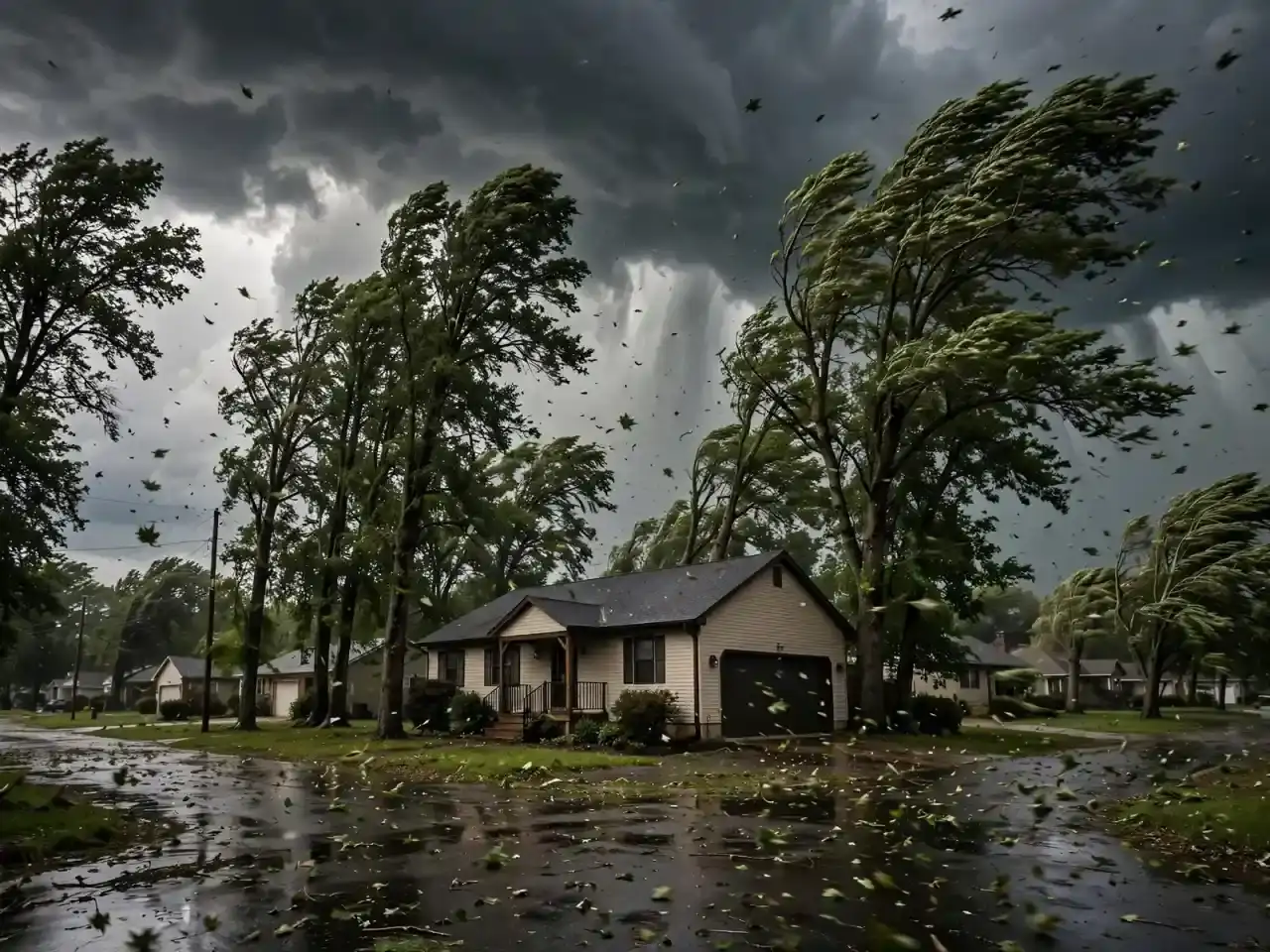
Trees most likely to fail
Dead trees and dead limbs
The first to break.
Leaning trees with lifted soil
Roots already moving.
Fungus or cavities at the base
Decay.
Trees with recent root damage
From trenching or construction.
Weak species
Bradford pear, silver maple, water oak.
In the days before
Move cars
Away from large trees.
Clear the yard
Loose branches and furniture become projectiles.
Remove coconuts and dead palm fronds
If it can be done safely.
Skip big pruning jobs
There is no time to finish and clean up.
During the storm
Stay indoors, in rooms on the side of the house away from large trees. Do not go out to check trees until the wind has passed. If a tree hits the house, move away from that area and call 911 if anyone is hurt or you smell gas.
- Pick a safe room
- Away from big trees.
- Stay inside
- Until the storm passes.
- Know the shutoffs
- Gas and electric.
After the storm
- Look for wires first
- Assume any downed line is live.
- Look up
- For hanging limbs before walking under trees.
- Photograph damage
- For insurance.
- Call in the right order
- Trees on houses and blocking exits first.
Storm tree questions
Should I cut down big trees near my house before hurricane season?
Only those that are dead, failing or very likely to hit the house. Healthy, well-structured trees often protect a house from wind.
Does thinning a tree help in a storm?
Heavy thinning does not. Removing dead wood and shortening long limbs does more.
How soon can I get help after a storm?
Trees on occupied homes come first. Others may wait days in a big storm.
Healthy trees and wind
Ice storms are a separate case. Ice adds great weight to branches, and trees with narrow forks or long horizontal limbs suffer most. Pruning weak forks while trees are young is the best long-term protection.
Well-structured, healthy trees with good root systems often come through storms with only minor damage, and they can break the force of the wind on a house. Native species adapted to local storms, such as live oaks along the Gulf Coast, are known for holding up well. Removing every large tree out of fear can expose the house to more wind and take away valuable shade.
The trees worth worrying about are the ones with problems you can see: dead limbs, cavities, leaning trunks, mushrooms at the base, or roots cut by recent construction. Having those checked and dealt with months before the season gives crews time to work properly. After a big storm, demand is high and waits can be long, so preparation is easier.
Plan ahead next season
The best time to prepare trees is months before storm season. See storm preparation pruning, and after a storm, storm damage tree removal.
This guide is general information, not professional, legal or insurance advice. Tree conditions, local rules and policy terms vary. Have a qualified arborist inspect the tree, and confirm regulations and coverage with your city and insurer.
Want someone to look at the tree?
Call to be connected with an independent tree service company in your area.
(844) 955-1716Call availability varies by area and time of day
Limbwright is a referral service. Your call goes to an independent tree service company that sets its own schedule and terms. Ask for proof of insurance and a written scope before work starts. How this works
Call now
Talk to a tree service provider in your area. Have the tree's location and what it is near ready.
(844) 955-1716Call nowCall availability varies by area and time of day