Question guide
Is It Safe to Cut Down a Tree Myself?
Updated · Limbwright editorial
Short answer
A small tree in open ground, cut from the ground with the right protective gear, is a reasonable homeowner job. Anything near a house, fence or wire, any tree taller than the clear space around it, and any work off a ladder with a chainsaw are jobs for a trained crew.
DIY or call
Be honest about the tree and the space around it.
- Act now
The tree is near any wire
Do not cut. Call the utility and a crew.
- This week
The tree could hit a house, fence or car
Call a crew.
- This week
You would need a ladder and a chainsaw
Call a crew.
- Plan it
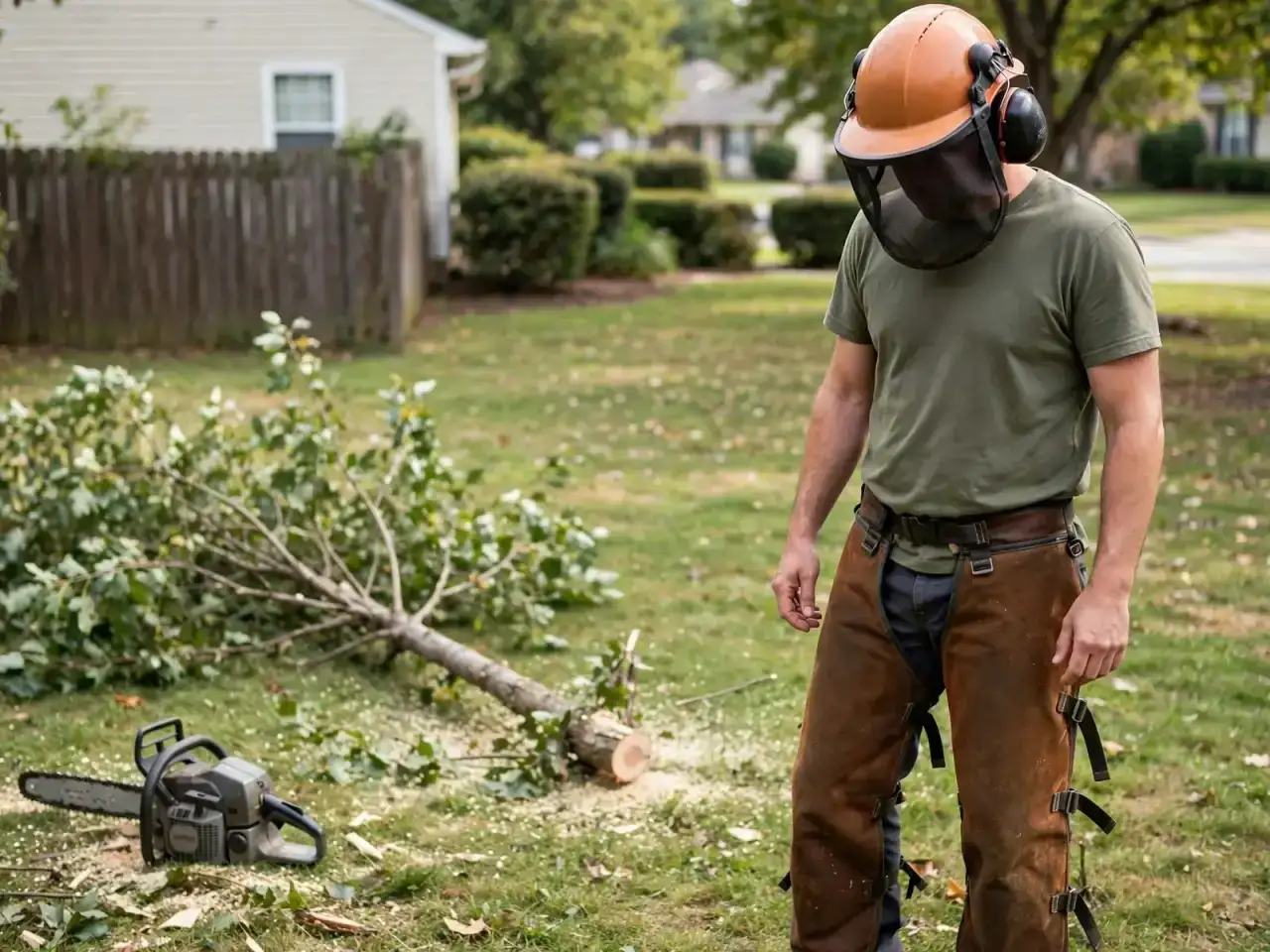
Small tree, open ground, cut from the ground
Reasonable DIY with protective gear.
Protective gear for chainsaw work
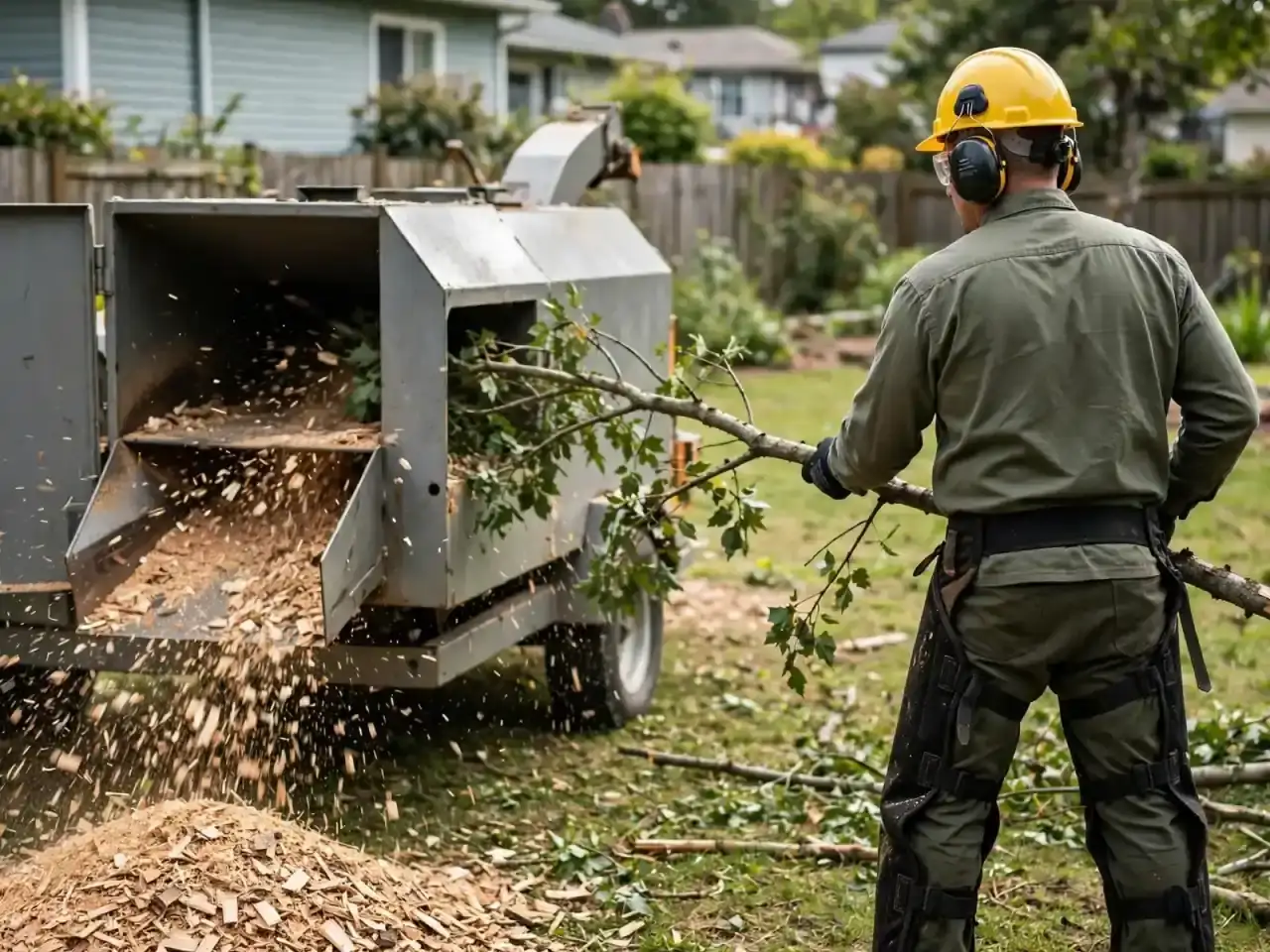
- Helmet with face screen
- Protects against falling branches and kickback.
- Eye and ear protection
- Chainsaws are loud and throw debris.
- Chainsaw chaps
- Fibers designed to stop a moving chain.
- Gloves and boots
- Sturdy boots with good grip.
What injures homeowners most
Kickback
The saw jumping back toward the user.
Ladder falls
Cutting while balanced on a ladder.
Barber chair splits
A trunk splitting upward and kicking back during felling.
Hung-up trees
Trees caught in other trees, which fall unpredictably.
The rule of thumb
If the tree is taller than the open space it could fall into, or if anything of value is within reach, leave it to professionals. Professionals control where wood goes with notches, hinges, ropes and rigging, which takes training and practice.
- Open space
- Longer than the tree is tall, with an escape path.
- No targets
- Nothing within reach.
- From the ground
- Never above shoulder height.
DIY questions
Can I rent a chainsaw and do it?
For small trees and logs on the ground, maybe. Felling anything near a structure is another matter.
What about a tree already on the ground?
Cutting up a fallen tree can still be dangerous because of trapped tension in bent branches.
Does homeowners insurance cover DIY mistakes?
Policies vary, and damage from your own cutting may not be covered.
Why felling is hard to control
Professionals control the direction of a falling tree with a carefully cut notch and a hinge of uncut wood that steers the trunk as it falls. Getting the hinge right depends on the tree's lean, weight distribution, wood type and any hidden decay. A hinge that is too thin, or a tree with rot inside, can twist, drop straight down or fall the wrong way.
Trees near houses are usually taken down in pieces instead, with a climber or lift cutting sections that are lowered on ropes. That rigging takes specialized gear, training and a ground crew working together. It is the main reason removal near structures is a professional job, even when the tree itself does not look very large.
When in doubt, call
A crew can often remove a small tree in an hour or two. See small tree removal and tree removal for how the work is done.
This guide is general information, not professional, legal or insurance advice. Tree conditions, local rules and policy terms vary. Have a qualified arborist inspect the tree, and confirm regulations and coverage with your city and insurer.
Want someone to look at the tree?
Call to be connected with an independent tree service company in your area.
(844) 955-1716Call availability varies by area and time of day
Limbwright is a referral service. Your call goes to an independent tree service company that sets its own schedule and terms. Ask for proof of insurance and a written scope before work starts. How this works
Call now
Talk to a tree service provider in your area. Have the tree's location and what it is near ready.
(844) 955-1716Call nowCall availability varies by area and time of day