Question guide
Can I Cut Down a Tree on My Own Property?
Updated · Limbwright editorial
Short answer
In many US cities you can, but not everywhere and not for every tree. Cities such as Atlanta, Austin, Oakland and Washington, DC regulate large or protected private trees, and some protect certain species at small sizes. A short check before cutting avoids penalties and replanting orders.
The short answer
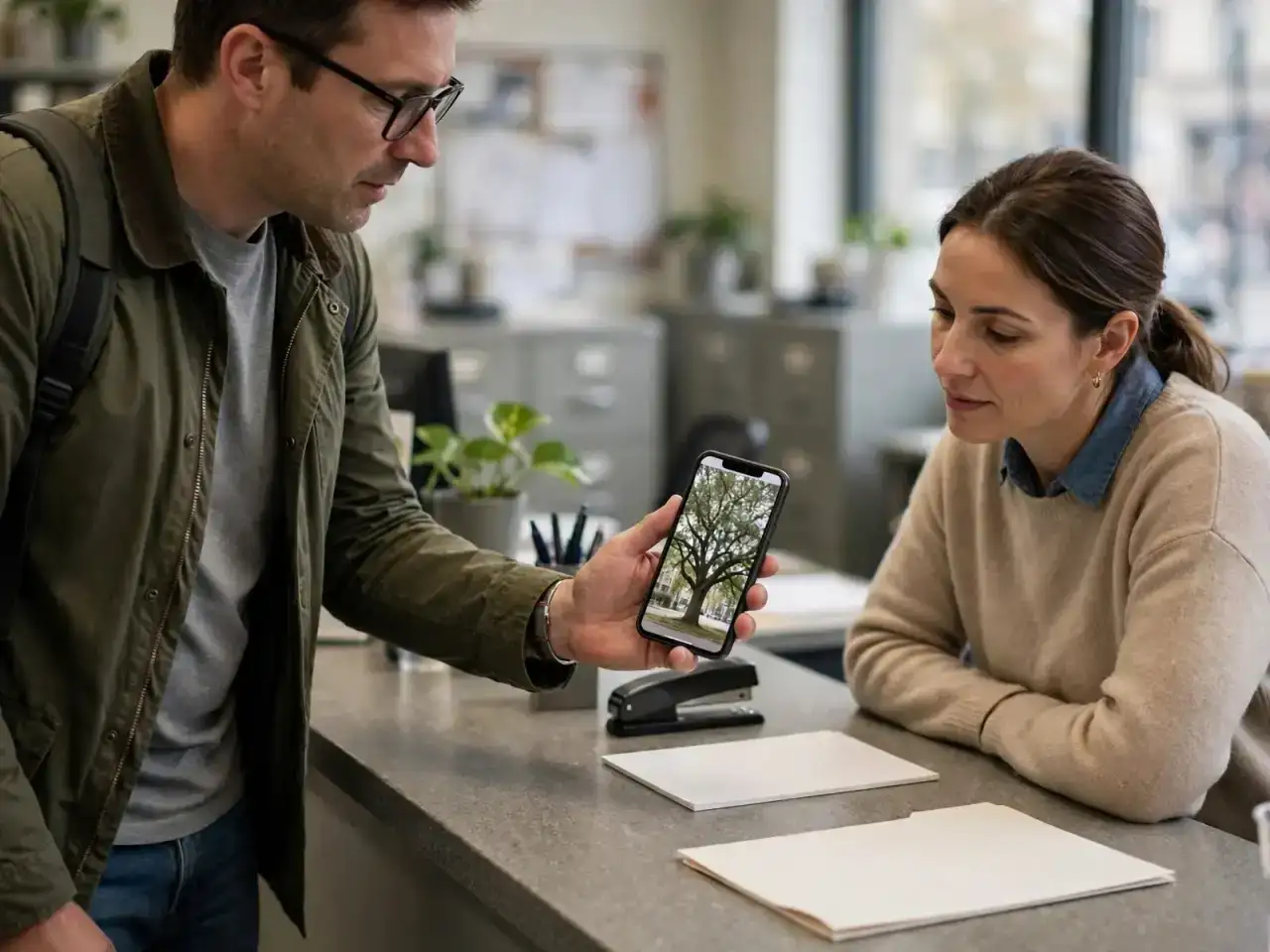
Often yes, but check three things first: whether your city has a private tree ordinance, whether the tree is big enough or a protected species, and whether it sits in a special area such as a stream buffer, historic district or the public right-of-way.
- City rules
- Some cities regulate private trees, many do not.
- Size and species
- Thresholds range from a few inches for native oaks in some California cities to 24 inches or more elsewhere.
- Location
- Street trees, buffers and historic districts carry extra rules.
How to check in ten minutes
Search your city's code
Look for a tree protection, tree preservation or landscape ordinance on the city website.
Measure the trunk
Wrap a tape around the trunk 4.5 feet up and divide by about 3.14 to get the diameter most codes use.
Identify the species
Oaks, native trees and heritage species are protected at smaller sizes in many places.
Find the property line
Trees in the strip between sidewalk and street usually belong to the city.
Call if unsure
A quick call to the city arborist or planning office settles it.
How much the rules vary
| City | Example of what is regulated |
|---|---|
| Oakland, California | Coast live oaks from 4 inches, most other trees from 9 inches |
| Austin, Texas | Protected trees from 19 inches, heritage trees from 24 inches |
| Washington, DC | Special Trees from 44 inches around the trunk |
| Cary, North Carolina | State law keeps the town's tree rules off single-family lots |
Our city pages explain each local rule with sources. Rules change, so confirm with the city.
What can go wrong if you skip the check
Stop-work orders
Especially when the removal is tied to a building project.
Replacement orders
Some cities require several new trees for each one removed.
Penalties
Assessed per tree or per inch of trunk in some cities.
Neighbor disputes
Shared and boundary trees need the other owner's agreement.
More permit questions
Does a dead tree still need a permit?
In many cities a dead tree is exempt or fast-tracked, but some still want photos or a short application.
Can a tree company check the rules for me?
Yes. Local tree companies deal with the same city every week and usually know the thresholds.
Do HOA rules count?
They are private covenants, separate from city law, but they can still require approval.
Why cities regulate private trees
Cities that protect private trees usually do it to keep a mature canopy, which shades streets, slows stormwater runoff and lowers summer temperatures in dense neighborhoods. Because a large oak takes decades to replace, ordinances tend to focus on the biggest and oldest trees and on native species that are hard to establish again. That is why a small ornamental can often be cut freely while a broad shade tree next to it cannot.
Most ordinances also carve out exemptions. Trees that are dead, dying or an immediate hazard are commonly exempt or approved quickly, and invasive species are sometimes excluded entirely. Emergency work after a storm is usually allowed first, with paperwork afterward. Keep photos of the tree before and after any emergency cut, because the city may ask for proof that the tree really posed a danger.
When a permit check is worth a call
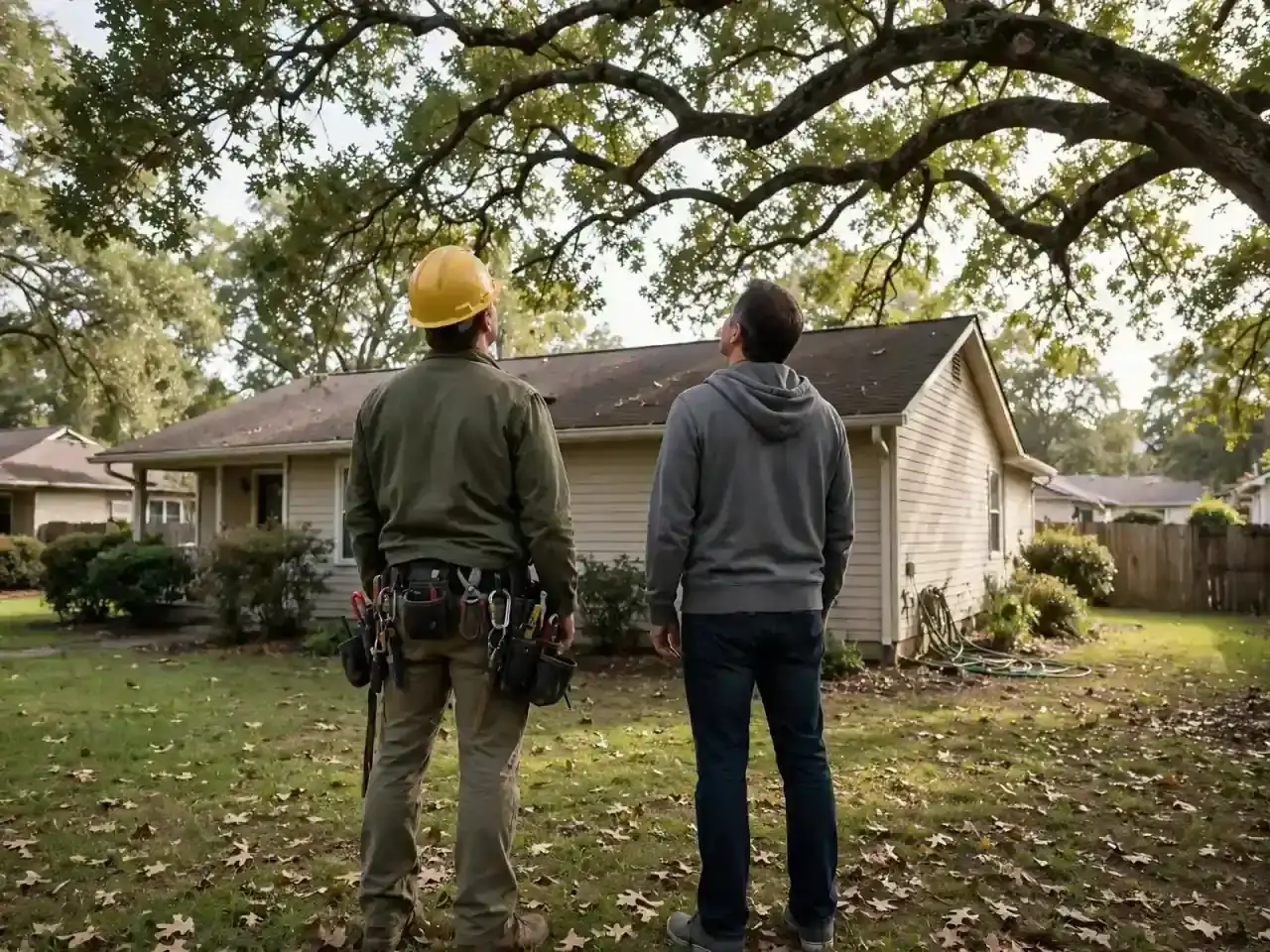
If the tree is large, near the house or in a city with a tree ordinance, call before cutting. A tree professional can confirm whether a permit applies, measure the tree properly and, where needed, prepare the documentation the city wants. See tree permit help and tree removal.
This guide is general information, not professional, legal or insurance advice. Tree conditions, local rules and policy terms vary. Have a qualified arborist inspect the tree, and confirm regulations and coverage with your city and insurer.
Want someone to look at the tree?
Call to be connected with an independent tree service company in your area.
(844) 955-1716Call availability varies by area and time of day
Limbwright is a referral service. Your call goes to an independent tree service company that sets its own schedule and terms. Ask for proof of insurance and a written scope before work starts. How this works
Call now
Talk to a tree service provider in your area. Have the tree's location and what it is near ready.
(844) 955-1716Call nowCall availability varies by area and time of day