
Highland Park, Illinois
Tree Removal and Tree Service in Highland Park
Highland Park's tree preservation ordinance protects any tree 8 inches or more in diameter, or multi-stem trees with stems totaling 15 inches, with buckthorn and willow excluded. Even a dead or hazardous protected tree needs an approved permit application, though it is spared the replacement requirement.
- County
- Lake
- Tree rules
- City of Highland Park tree preservation ordinance; Forestry Section of Public Works
- Key local rule
- Protected trees: 8 inches DBH or more, or 15 inches combined for multi-stem trees, except buckthorn and willow
- Electric utility
- ComEd
- Main hazards
- Ravine and bluff erosion, oak wilt, emerald ash borer, lake winds
Which Highland Park trees are protected?
Any tree 8 inches or more in diameter at breast height, or a multi-stem tree with an aggregate diameter of 15 inches or more. Buckthorn and willow are excluded. Removing a protected tree needs an approved permit application through the city's online portal.
- Healthy protected tree
- Permit, with replacement or a payment as the ordinance requires.
- Dead, dying or hazardous
- Permit still required, but replacement and removal charges are waived when city staff confirm the condition.
- Buckthorn and willow
- Not protected.
Trees of the bluffs and ravines
- Bur and white oaks
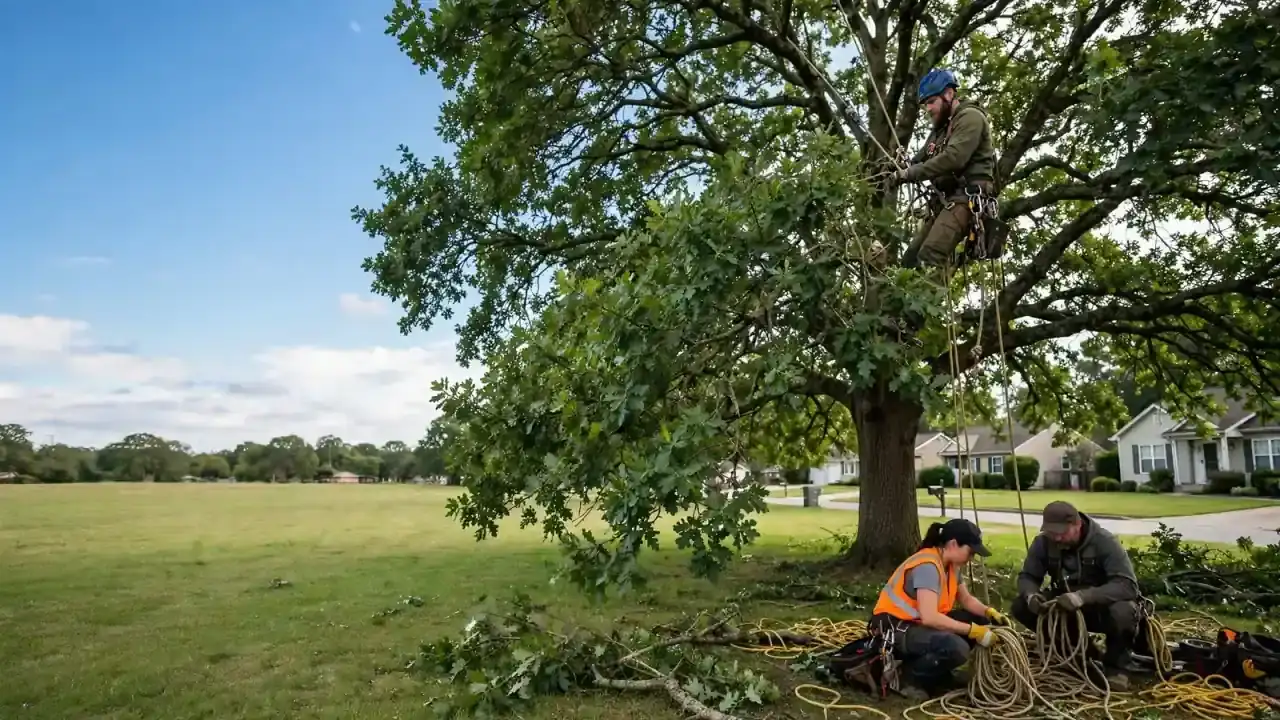
- Native oak savanna remnants, some of them centuries old.
- Red oaks
- Very susceptible to oak wilt.
- Sugar maples and basswood
- In the cooler, shaded ravines.
- Ash
- Many already lost to emerald ash borer.
- Buckthorn
- An invasive shrub that fills ravine slopes and is excluded from protection.
- Shagbark hickory and black walnut
- Large native hardwoods in older estates, valued for their age and often subject to extra review at large sizes.
How the ordinance works
The ordinance is administered by the Forestry Section of Public Works. Applications go through the city's online permit portal. A tree found by city staff to be dead, dying, diseased or hazardous avoids removal charges and replacement, but the application is still required so staff can confirm its condition.
Larger heritage oaks, elms, hickories and walnuts may face additional review. Ravine and lakefront bluff properties also have separate protections for steep slopes, where removing trees and roots can accelerate erosion.
Highland Park lies along roughly six miles of Lake Michigan shoreline, cut by deep wooded ravines that drain to the lake. Trees on those slopes hold the soil in place, and the city treats ravine work as more than an ordinary removal.
North Shore warning signs
Red oak leaves wilting in July
Possible oak wilt. Avoid pruning oaks in spring and early summer.
Trees leaning toward a ravine
Slope erosion undercutting roots.
Ash with woodpecker flecking
Emerald ash borer.
Dense buckthorn under oaks
Shades out young oaks and native plants.
Removing a protected tree
Measure
Single trunk at 4.5 feet, or add up the stems of a multi-stem tree.
Apply online
Through the city's Civic Access portal.
City review
Forestry staff confirm the species and condition.
Replacement
For healthy trees, as the ordinance requires.
Removal
After approval, with care on slopes.
Ravine lots and flat lots
Flat lots
- Standard removal methods
- Stumps can be ground
- Replacement planting straightforward
Ravine and bluff lots
- Rope work and cranes from the street
- Stumps often left to hold soil
- Extra review for slope protection
On a ravine lot, ask the city about slope rules before any removal.
Highland Park tree questions
Do I need a permit to remove buckthorn?
No. Buckthorn is excluded from the protected tree definition.
What about a dead ash?
A permit application is still required, but city staff can confirm its condition and waive replacement.
Who maintains parkway trees?
The city's Forestry Section.
When is the safest time to prune oaks?
Late fall through winter. Illinois guidance is to avoid pruning oaks in spring and early summer when oak wilt spreads.
Are multi-stem trees treated differently?
Yes. A tree with several trunks is protected when the stems add up to 15 inches or more in diameter, even if no single stem reaches 8 inches.
What about trees on the lakefront bluff?
Bluff and ravine properties face slope protection rules in addition to the tree ordinance. Removing vegetation there can speed erosion, so the city reviews that work closely.
North Shore and Chicago pages
- EvanstonPrivate tree permits from 6 inches.
- ChicagoDown the lake shore.
- Illinois tree serviceStatewide pests and storms.
- Oak wilt managementTiming, trenching and injection.
- NapervilleA suburb that chose to treat parkway ash rather than cut it, and what that kept alive.
- WilmetteHeritage oaks from 10 inches.
Reach a tree service in Highland Park
Call to be connected with an independent tree company that works in the Highland Park area, or leave your number and one will call you back.
(844) 955-1716Call availability varies by area and time of day
Limbwright is a referral service. Your call goes to an independent tree service company that sets its own schedule and terms. Ask for proof of insurance and a written scope before work starts. How this works
Call now
Talk to a tree service provider in your area. Have the tree's location and what it is near ready.
(844) 955-1716Call nowCall availability varies by area and time of day