
Tree support · Lightning
Lightning Protection for Trees
A lightning protection system gives a strike a path down the outside of the tree to a ground rod, instead of through its wet inner wood, where steam can split the trunk. It is used on tall, valuable or historic trees, and on trees close enough to a house that a strike could side-flash to it.
Call availability varies by area and time of day. Calls are answered by an independent tree service provider.
Which trees should have lightning protection?
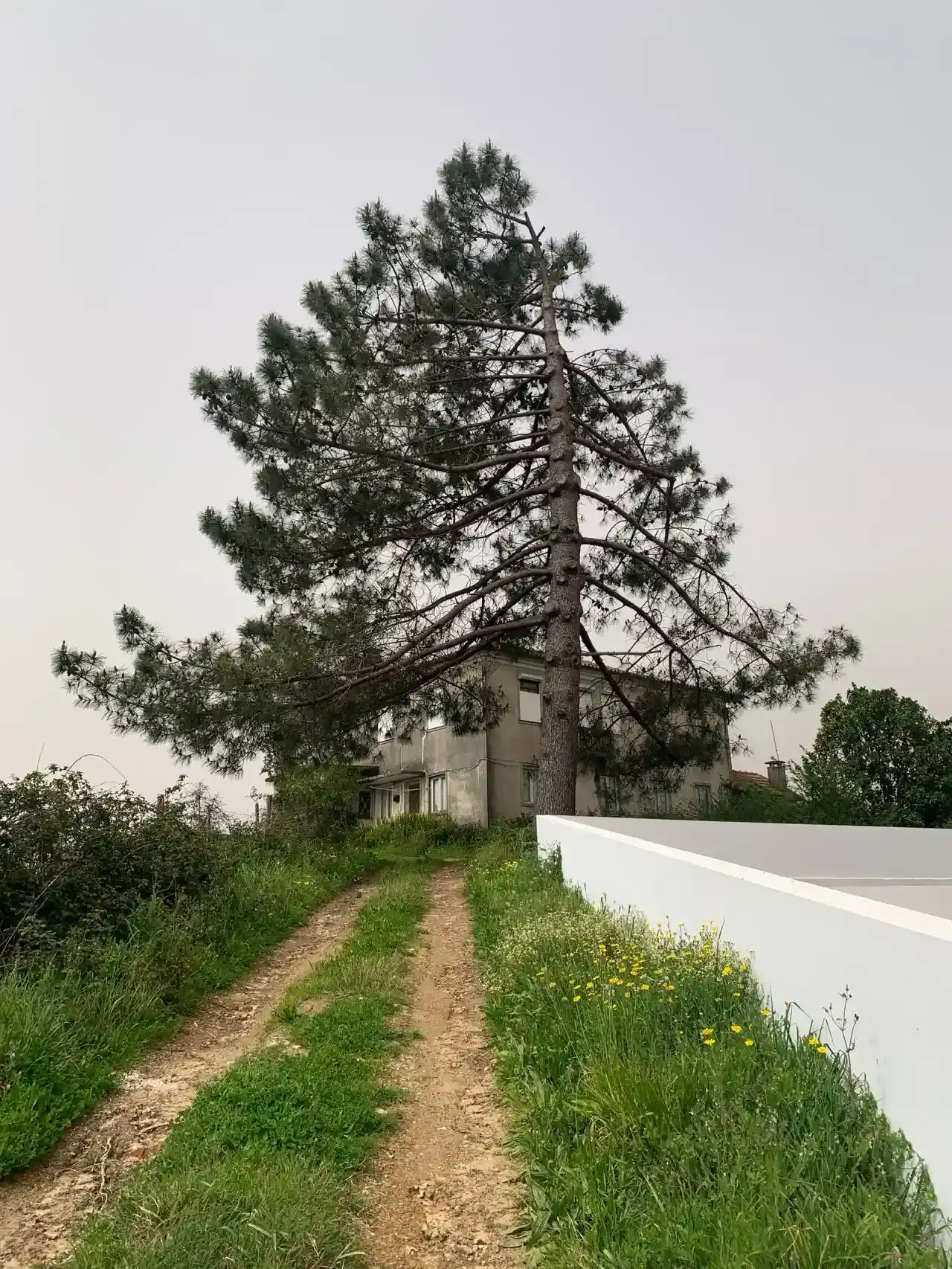
Trees that are tall relative to their surroundings, valuable or historic, or within about 10 feet of a building. Trees in open areas such as golf courses, parks and pastures, where people may shelter during storms, are also common candidates.
- Height
- The tallest tree on a property or ridge is the most likely to be struck.
- Value
- Specimen and heritage trees that cannot be replaced in a lifetime.
- Proximity
- Trees close to houses, where a strike could jump to the structure.
What lightning does to a tree
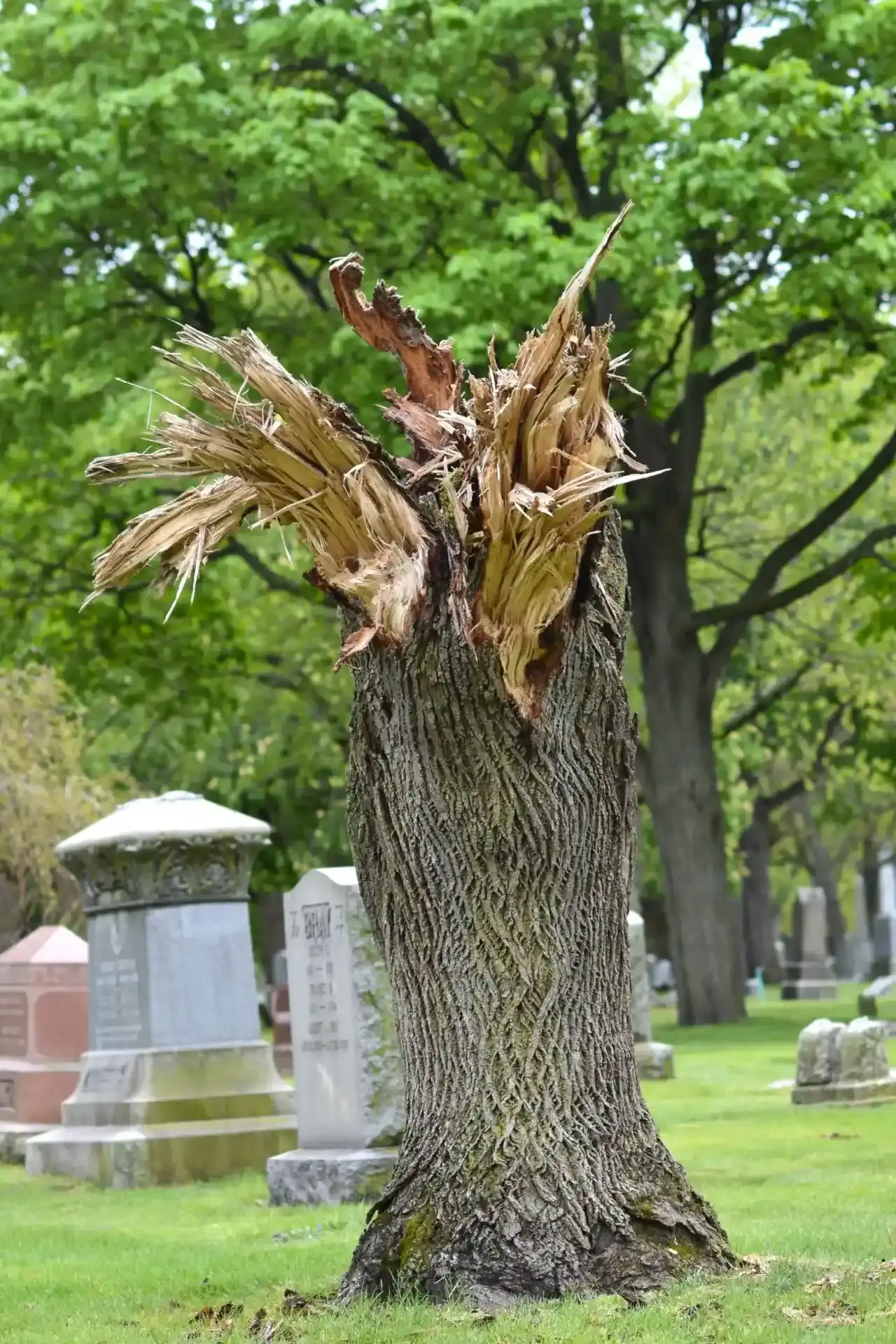
A lightning strike carries enormous current. When it passes through the moist wood just under the bark, the water turns instantly to steam. That expansion can blow strips of bark off, split the trunk or, in some cases, shatter the tree.
Some trees show only a narrow spiral scar down the trunk. Others look fine for weeks and then die as damage to roots and vascular tissue shows up. Bark beetles are attracted to struck pines, often killing them within a season.
A protection system does not attract lightning. It provides a low-resistance path down the outside of the tree, which carries the current to ground before it can enter the wood.
How a system is installed
Air terminal at the top
A copper terminal is fixed near the top of the main leader, with branch terminals on large secondary leaders.
Conductor down the trunk
Copper cable runs down the trunk, fastened with copper fasteners driven into the wood, which the bark grows around.
Trench to ground
At the base the cable runs through a shallow trench away from the trunk to avoid main roots.
Ground rods
Copper-clad rods are driven well out from the trunk, often at the drip line.
Bond to building ground
If the tree is near a protected building, the systems may be bonded.
Installation standards
Tree lightning protection in the United States is covered by the ANSI A300 standard for tree care operations (Part 4, lightning protection systems) and by NFPA 780, the standard for installing lightning protection systems. Both describe materials, conductor sizes and grounding.
Systems should be installed by a company that follows those standards and uses copper or bronze components. Mixing metals or using undersized cable can fail during a strike.
Where lightning is most common
| Region | Lightning frequency | Notes |
|---|---|---|
| Florida | Highest in the country | Central Florida sees more strikes per square mile than anywhere else in the US |
| Gulf Coast | Very high | Summer thunderstorms almost daily |
| Southeast and lower Mississippi valley | High | Tall pines and oaks are frequent targets |
| Midwest and Plains | Moderate to high | Spring and summer storms |
| Pacific Northwest | Low | Lightning protection is rarely needed |
Signs a tree has been struck
A long strip of bark missing
Often spiraling down the trunk.
Split or shattered wood
Large wood pieces scattered around the tree.
Wilting or browning crown weeks later
Hidden damage to roots and inner wood.
Beetle activity on pines
Pitch tubes appearing on a struck pine.
Protect it or accept the risk
Install protection
- Specimen or historic tree
- Within 10 feet of a house
- Tallest tree on an exposed site
- High lightning region
Skip it
- Tree is shorter than nearby trees or buildings
- Short-lived species
- Low lightning region
- Tree is already in decline
Systems last decades but need inspection every few years and extension as the tree grows taller.
Lightning protection questions
Does a lightning rod on a tree attract lightning?
No. It provides a safer path for a strike that would hit the tree anyway.
Can a struck tree be saved?
Sometimes. Trees with a single narrow scar often recover. Those with major splits or root damage often die. Wait a season and have it assessed.
How long does a tree lightning system last?
Copper systems can last for decades, but the upper terminal needs to be extended as the tree grows.
Is it safe to stand under a tree with lightning protection?
No. Never shelter under any tree during a thunderstorm.
Talk to a lightning protection for trees provider
Call to be connected with an independent tree service company near you.
(844) 955-1716Call availability varies by area and time of day
Limbwright is a referral service. Your call goes to an independent tree service company that sets its own schedule and terms. Ask for proof of insurance and a written scope before work starts. How this works
Call now
Talk to a tree service provider in your area. Have the tree's location and what it is near ready.
(844) 955-1716Call nowCall availability varies by area and time of day