
Tree removal · Cranes
Crane-Assisted Tree Removal
In a crane removal, a climber attaches the crane's line to a section of the tree, cuts it free and the crane lifts it over the house to a landing zone. Pieces that would take hours to lower by rope come out in minutes, and nothing swings into the roof.
Call availability varies by area and time of day. Calls are answered by an independent tree service provider.
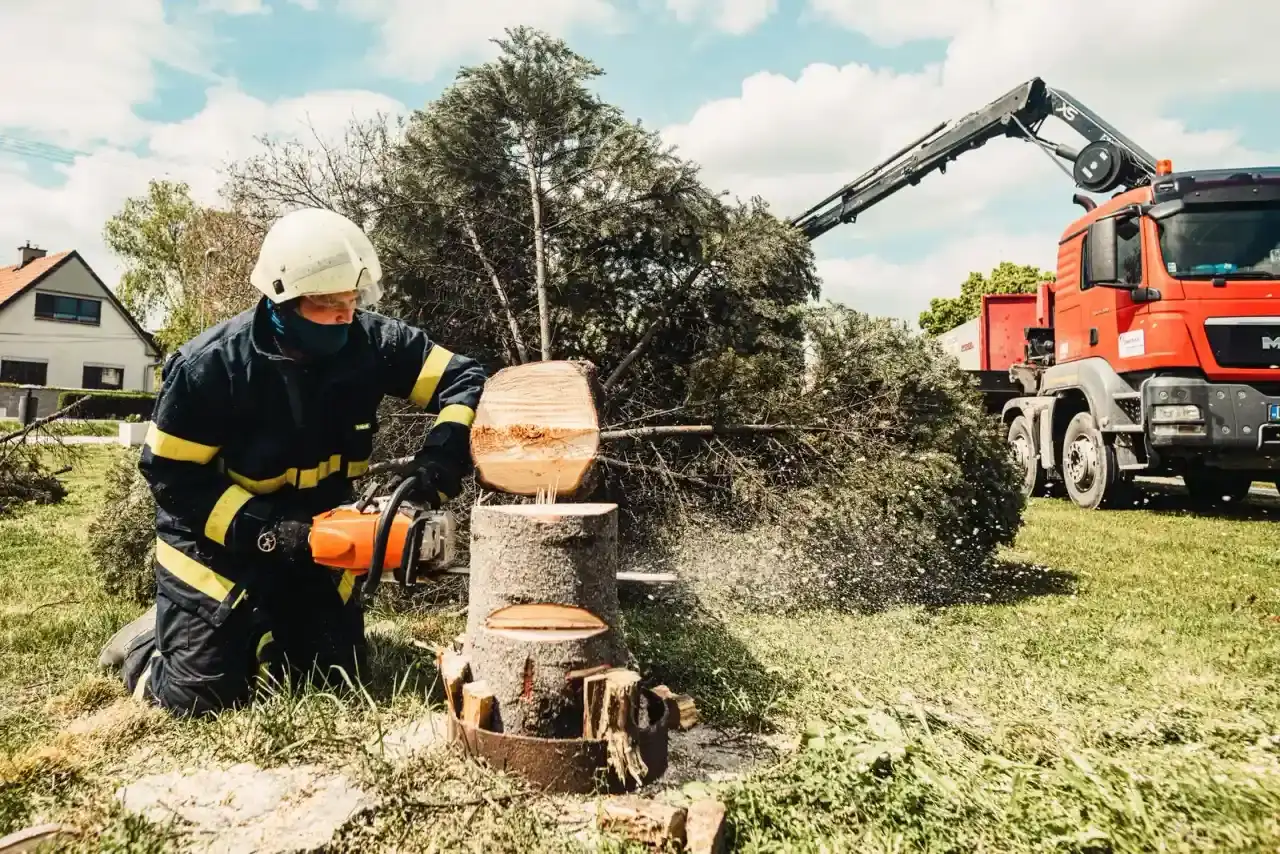
When is a crane needed for tree removal?
When the tree is large, hangs over a structure, and there is no open ground to drop pieces onto. A crane is also chosen when the tree is dead or damaged enough that a climber should not put full rigging loads on it.
- Over the house on every side
- Nothing can be dropped, and rope lowering would bring heavy wood near the roof.
- Dead or storm-damaged
- Brittle wood can fail under rigging forces. A crane holds the piece before it is cut.
- Tree on a structure
- Lifting a fallen trunk off a roof without dragging it is one of the main crane jobs.
What decides whether a crane can be used
- Setup space
- Truck cranes need a level spot and room to extend outriggers, usually on the street or driveway.
- Reach
- Lifting capacity drops the farther the boom reaches. A tree in a backyard behind the house needs a bigger crane than one by the curb.
- Ground strength
- Outrigger pads spread the load, but soft lawns, septic tanks and old drives can still give way.
- Overhead lines
- The boom must stay well clear of power lines, which sometimes rules a crane out.
- Street permits
- Many cities require a permit or police detail to block a lane or sidewalk.
- Landing zone
- Pieces need somewhere to go: the street, a driveway, or straight onto a log truck.
Running a crane job, pick by pick
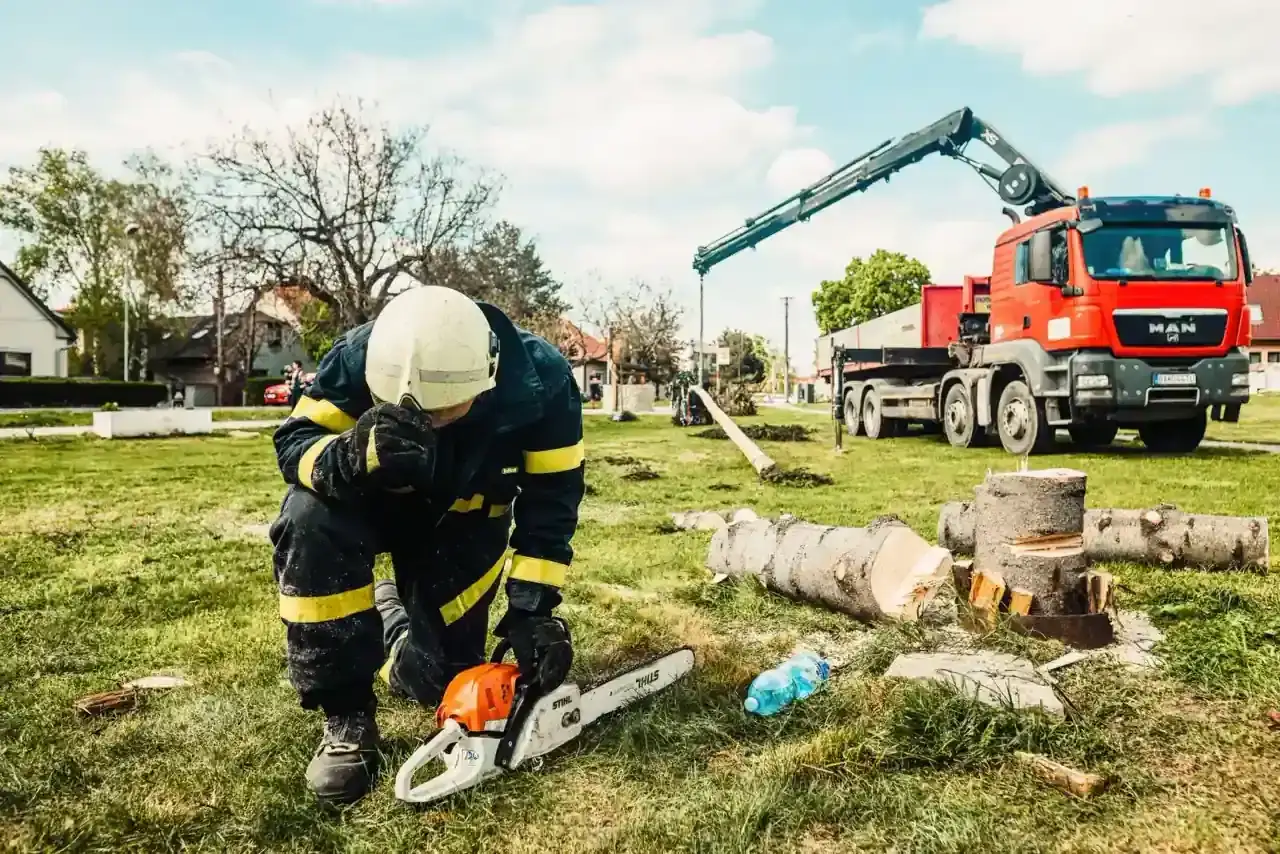
Plan the picks
The crew estimates the weight of each section from its size and species, and stays under the crane's chart at that reach.
Set up the crane
Outriggers go down on pads, the boom is raised and the operator confirms the radius.
Climber ties in
The climber is often lifted in by the crane or climbs independently, then rigs the first section to the hook.
Cut and lift
The section is cut while the crane holds its weight, then swung to the landing zone.
Process on the ground
Ground crew cuts the pieces up, chips branches and loads logs while the next pick is prepared.
Why section size matters
Green hardwood is heavy. Crews size each pick by species and diameter, not by guesswork.
| Section | What it typically includes | What controls it |
|---|---|---|
| First picks | Leafy upper limbs and smaller wood | Wind catching the leaves and branches |
| Main limbs | Heavy lateral limbs over the roof | Weight at the boom's radius |
| Upper trunk | Single trunk sections several feet long | Diameter and wood density |
| Lower trunk | Largest and heaviest sections | Crane capacity, and often dropped if space allows |
Oak, hickory and other dense hardwoods weigh far more per foot than pine or poplar of the same diameter.
Crane or rope rigging
Crane
- Pieces leave the tree without swinging
- Fast once set up
- Needs street or driveway access
- Weather and wind can stop picks
Rope rigging
- Works where no crane can reach
- Slower, with more cuts
- Loads go through the tree, which must be sound
- Needs a skilled ground crew to control lowering
Many jobs use both. Rigging handles the small upper wood and the crane takes the heavy pieces over the house.
What to do before crane day
Move cars
Clear the driveway and the street in front of the house if the company asks.
Tell neighbors
The street may be partly blocked for several hours.
Mark hidden things
Septic tanks, irrigation lines and drain fields should be pointed out so outriggers avoid them.
Keep pets and children inside
Pieces swing overhead and the landing zone is busy.
Crane work and safety rules
Crane operators in construction work must be certified under federal OSHA rules, and tree care cranes are covered by the same crane standards. The operator and climber communicate by radio or hand signals throughout every pick.
One of the main risks is underestimating weight. A section that is heavier than expected can overload the crane at its reach. Experienced crews cut conservative sections early and adjust once they see how the wood behaves.
Ask the company whether the crane is their own or hired, and who is responsible for the street permit. See also large tree removal for why big trees often need more than one approach.
Crane removal questions
Can a crane reach a tree in my backyard?
Often, if it can set up in the street or driveway and the tree is within its reach. Very deep lots may need a larger crane or a different method.
Will the crane damage my lawn?
Outriggers go on pads to spread the load. Some marks are normal. Cranes usually stay on hard surfaces when possible.
How long does a crane removal take?
Most single trees are done in a day. The crane time itself is often a few hours.
Can a crane remove a tree that fell on my house?
Yes, and it is often the safest way. See tree on house removal.
Talk to a crane-assisted tree removal provider
Call to be connected with an independent tree service company near you.
(844) 955-1716Call availability varies by area and time of day
Limbwright is a referral service. Your call goes to an independent tree service company that sets its own schedule and terms. Ask for proof of insurance and a written scope before work starts. How this works
Call now
Talk to a tree service provider in your area. Have the tree's location and what it is near ready.
(844) 955-1716Call nowCall availability varies by area and time of day