
Question guide
How Long Does a Stump Take to Rot?
Updated · Limbwright editorial
Short answer
A small softwood stump can rot in a few years. A large oak or other dense hardwood stump can take ten years or more. Moisture, contact with soil and fungi speed decay, but no home method turns years into weeks. Grinding removes the visible stump in about an hour.
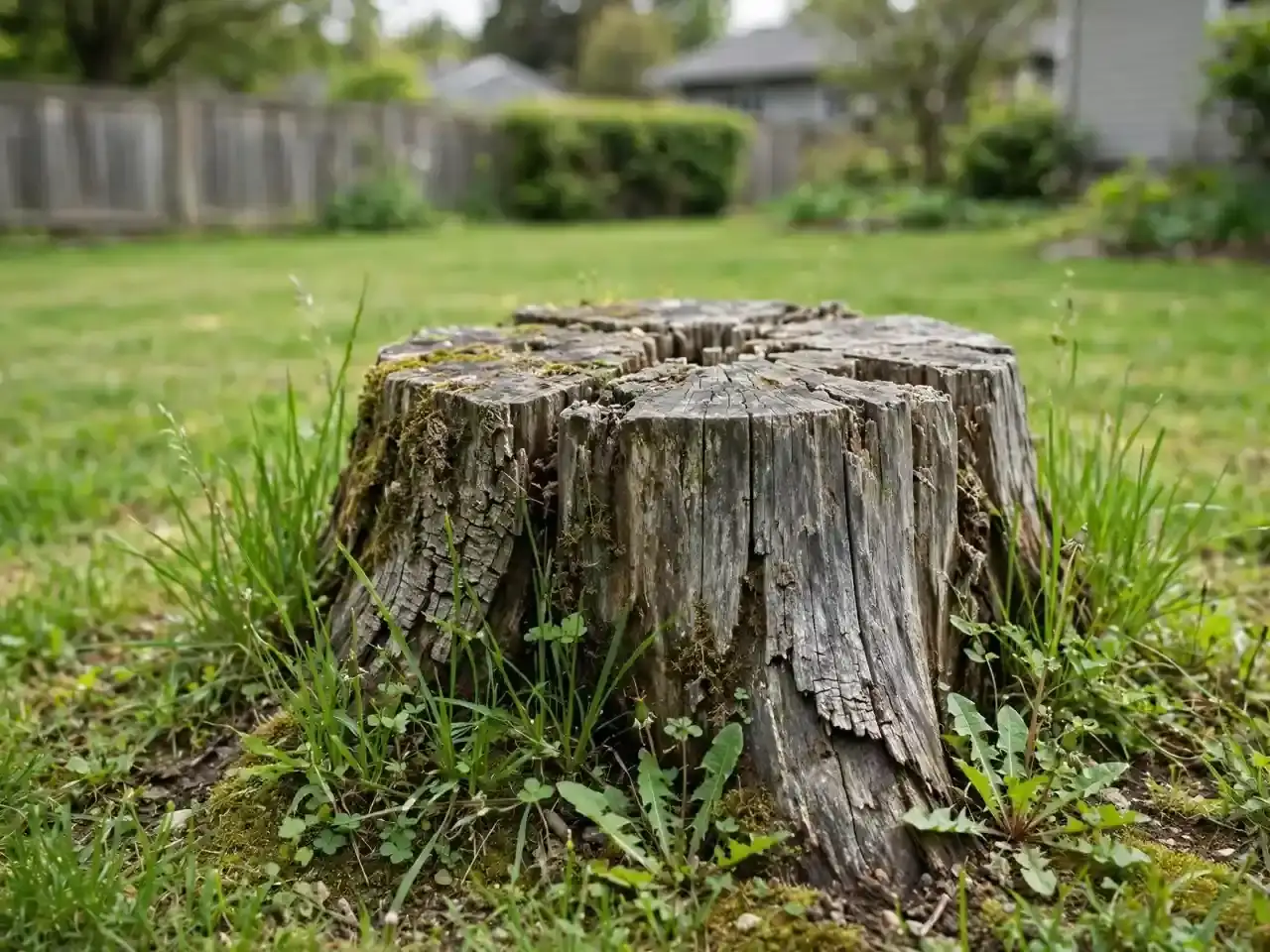
Rough timelines
| Stump | Typical time to break down |
|---|---|
| Small softwood, such as pine | 3 to 7 years |
| Medium hardwood, such as maple | 5 to 10 years |
| Large dense hardwood, such as oak | 10 years or more |
| Palm | Fibrous; breaks down faster than most hardwoods |
Warm, moist climates speed decay. Dry or cold climates slow it.
Can rotting be sped up?
A little. Cutting the stump low, drilling holes, keeping it moist and covering it with soil or mulch helps fungi work faster. Expect months of improvement at best, not days. Burning stumps is unsafe and banned in many places.
- Helps
- Low cut, holes, moisture, soil contact.
- Slow
- Any method still takes seasons.
- Avoid
- Burning, which risks fire and is often illegal.
Problems while you wait
Sprouts
Many species send up shoots for years.
Insects
Termites and carpenter ants move into rotting stumps.
Trip and mower hazard
Low stumps hide in grass.
Fungi
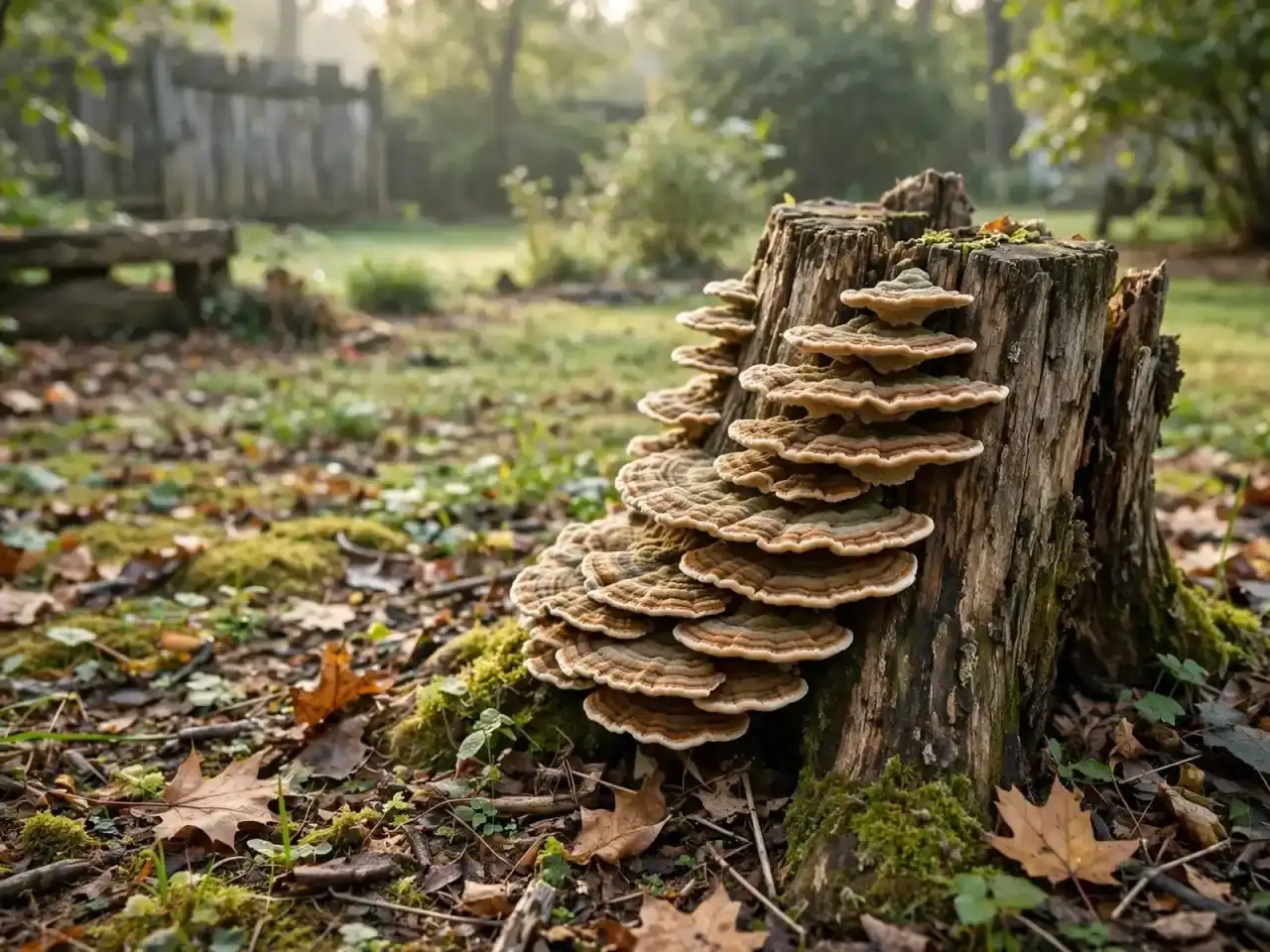
Mushrooms and shelf fungus grow on decaying wood.
Wait or grind
Let it rot
- No work now
- Years of an obstacle
- Possible sprouts and insects
Grind it
- Gone below grade in about an hour
- Roots decay underground
- Lawn back in one season
For a stump in the lawn, near the house or where you want to plant, grinding is usually worth it.
Stump questions
Do stump removal products work?
They speed decay somewhat but still take months, and must be used as the label says.
Will a stump attract termites to my house?
Stumps near the house can harbor termites. Removing them is wise in termite areas.
Can I plant on a rotting stump?
Plant a few feet to the side; the ground over a stump settles as it rots.
What grinding leaves behind
A stump grinder chips the stump to several inches below ground, usually four to twelve depending on the plan, and leaves a pile of mixed wood chips and soil. The large roots stay in the ground and decay slowly, which most lawns tolerate well. The chips can be used as mulch elsewhere or removed and replaced with topsoil so grass seed can take.
As the buried roots rot over the following years, the soil above them can settle slightly, so a small top-up of soil may be needed. If you plan to build a patio, shed or addition exactly over the spot, tell the crew, because they may grind deeper or remove the root mass instead. Always call 811 before grinding so buried utility lines near the stump are marked.
When grinding makes sense
If the stump is in the way now, stump grinding is the quick fix. For a patio, addition or replanting in the exact spot, stump removal takes out the root mass too.
This guide is general information, not professional, legal or insurance advice. Tree conditions, local rules and policy terms vary. Have a qualified arborist inspect the tree, and confirm regulations and coverage with your city and insurer.
Want someone to look at the tree?
Call to be connected with an independent tree service company in your area.
(844) 955-1716Call availability varies by area and time of day
Limbwright is a referral service. Your call goes to an independent tree service company that sets its own schedule and terms. Ask for proof of insurance and a written scope before work starts. How this works
Call now
Talk to a tree service provider in your area. Have the tree's location and what it is near ready.
(844) 955-1716Call nowCall availability varies by area and time of day