
Question guide
Can I Plant a Tree Under Power Lines?
Updated · Limbwright editorial
Short answer
Yes, if you choose a tree that stays under about 25 feet at maturity. Larger trees planted under lines grow into them and get cut back repeatedly by the utility, which leaves them lopsided and stressed. Plant large trees well away from wires, and call 811 before digging.
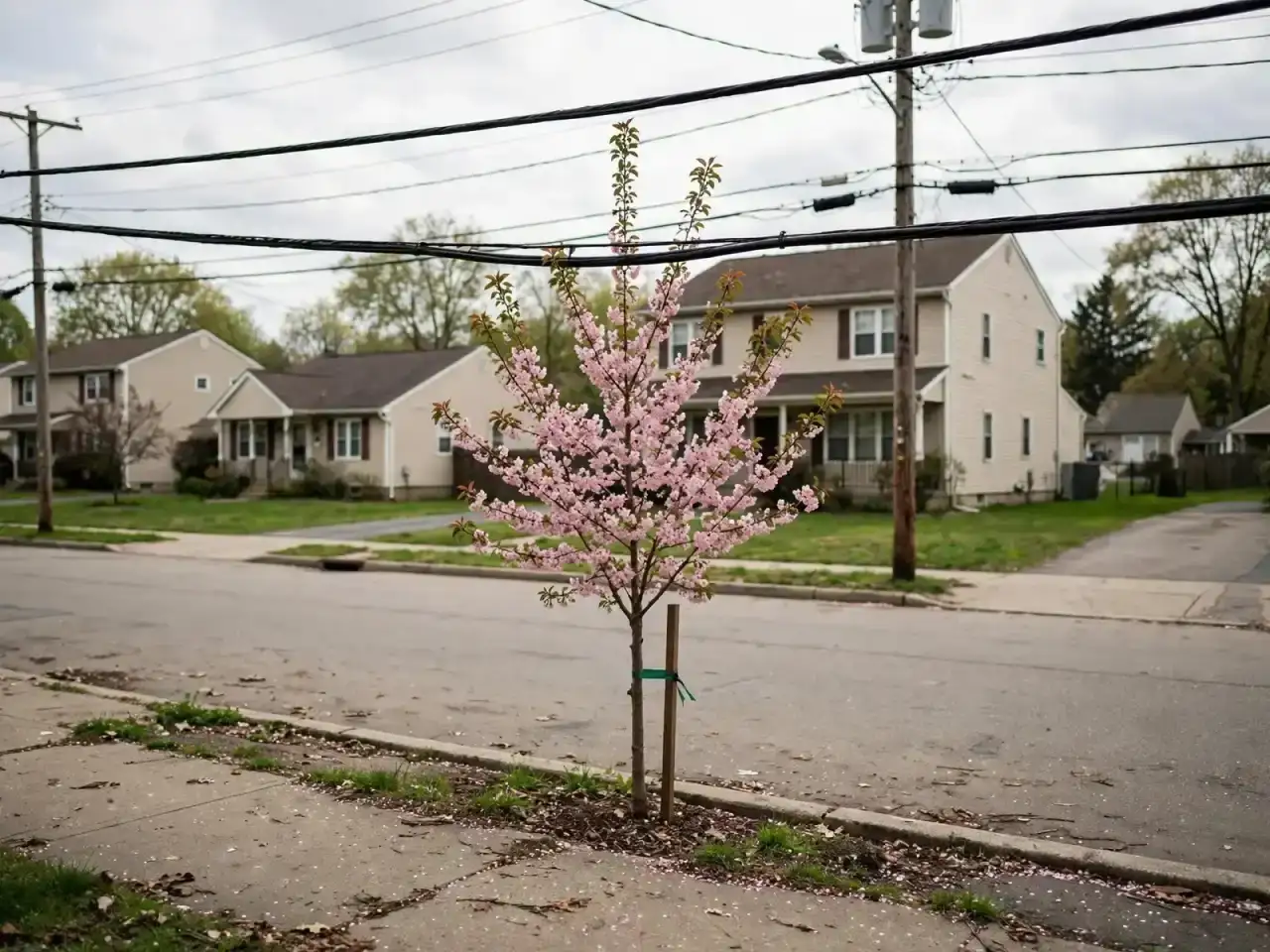
What fits under wires
Trees with a mature height under about 25 feet. Many utilities publish lists of approved small trees for planting near lines, and some offer them through planting programs.
- Under the lines
- Small trees only.
- Medium trees
- Set back from the lines.
- Large trees
- Well away, at least as far as their mature spread.
Small trees often suggested near lines
| Tree | Notes |
|---|---|
| Serviceberry | Spring flowers, berries for birds |
| Eastern redbud | Spring color, short-lived |
| Crape myrtle | Summer flowers in warm regions |
| Japanese tree lilac | Cold-hardy, early summer flowers |
| Flowering dogwood | Partial shade, eastern US |
Check with your utility and local extension office for species suited to your area.
Planting near lines safely
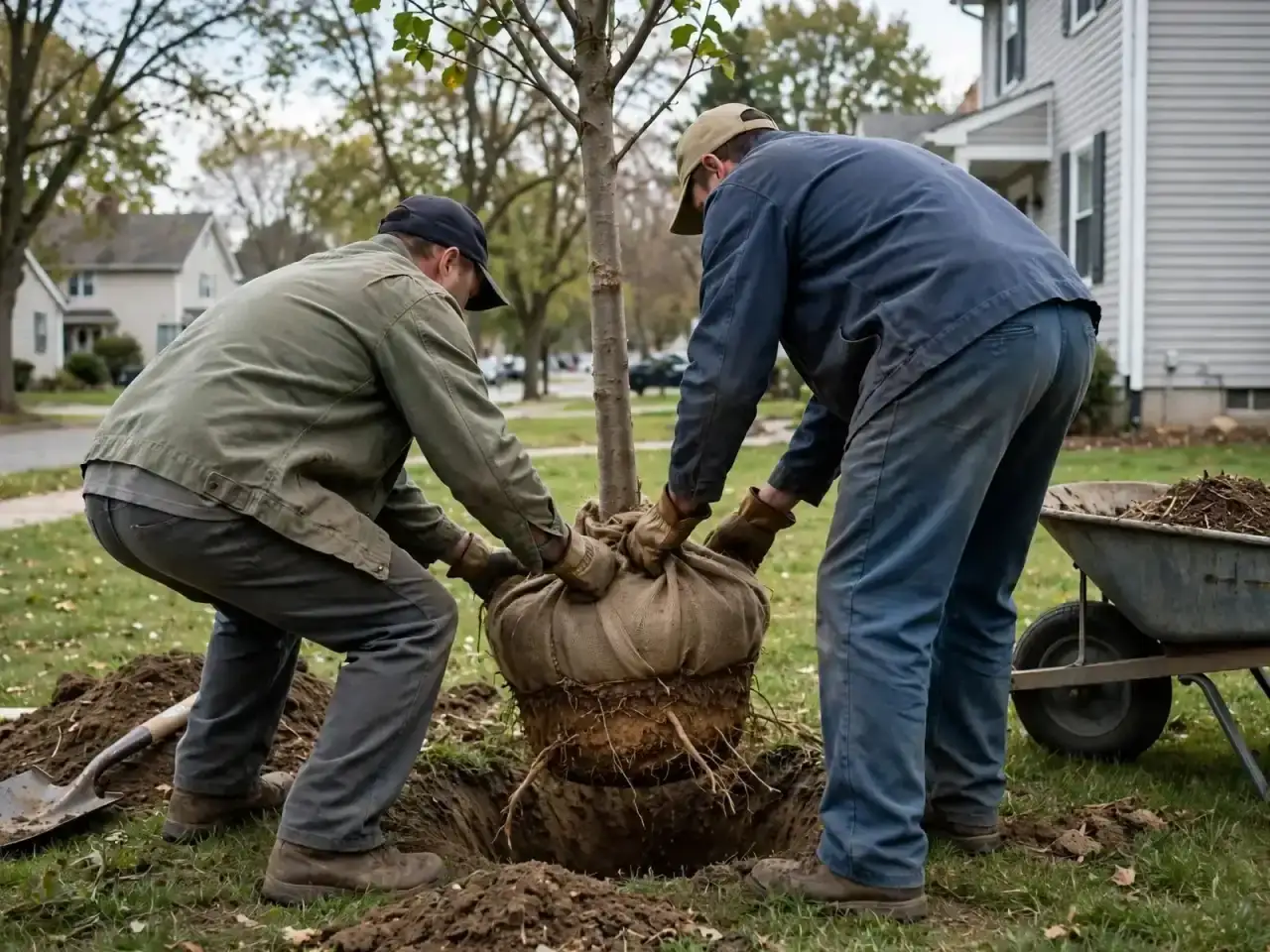
Call 811
A few business days before digging, so buried lines are marked.
Look up and down
Overhead wires and buried utilities.
Check mature size
Height and spread, not the size at the nursery.
Keep transformers clear
Utilities need access to pad-mounted equipment.
Signs an existing tree is too close
Branches touching wires
Call the utility.
A V-shaped notch cut in the crown
Utility line clearance pruning.
Lights flickering in wind
Branches brushing the service drop.
Planting near lines questions
Will the utility cut my tree?
Utilities prune trees near their lines on a cycle, and can remove trees that threaten lines.
Can I trim near the line myself?
No. Keep at least 10 feet from energized lines and call the utility.
Do utilities give free trees?
Some run tree planting programs with suitable species.
How utility pruning works
When you plant, also think about the roots. Large trees near buried electric, gas or water lines can interfere with repairs, and utility crews may need to dig through roots to reach a fault, which damages the tree.
Utilities are required to keep trees clear of their lines to prevent outages and fires, and most prune on a regular cycle of several years. Crews cut branches back to keep a set clearance from the wires, often creating a V or L shape through the crown. These cuts prioritize safety and reliability over the tree's appearance, which is why large trees under lines can end up looking unusual.
Choosing the right tree for the spot avoids this cycle. A small tree under the line never reaches the wires, and a large tree planted well away from them can grow into its natural shape. Many utilities only clear the main distribution lines, and the service drop to your house can be treated differently, so ask the utility before any work near it.
Replacing a tree that grew into the wires
If a tree under lines keeps getting cut back, replacing it with a small species is often the long-term fix. See tree removal near power lines and tree planting.
This guide is general information, not professional, legal or insurance advice. Tree conditions, local rules and policy terms vary. Have a qualified arborist inspect the tree, and confirm regulations and coverage with your city and insurer.
Want someone to look at the tree?
Call to be connected with an independent tree service company in your area.
(844) 955-1716Call availability varies by area and time of day
Limbwright is a referral service. Your call goes to an independent tree service company that sets its own schedule and terms. Ask for proof of insurance and a written scope before work starts. How this works
Call now
Talk to a tree service provider in your area. Have the tree's location and what it is near ready.
(844) 955-1716Call nowCall availability varies by area and time of day